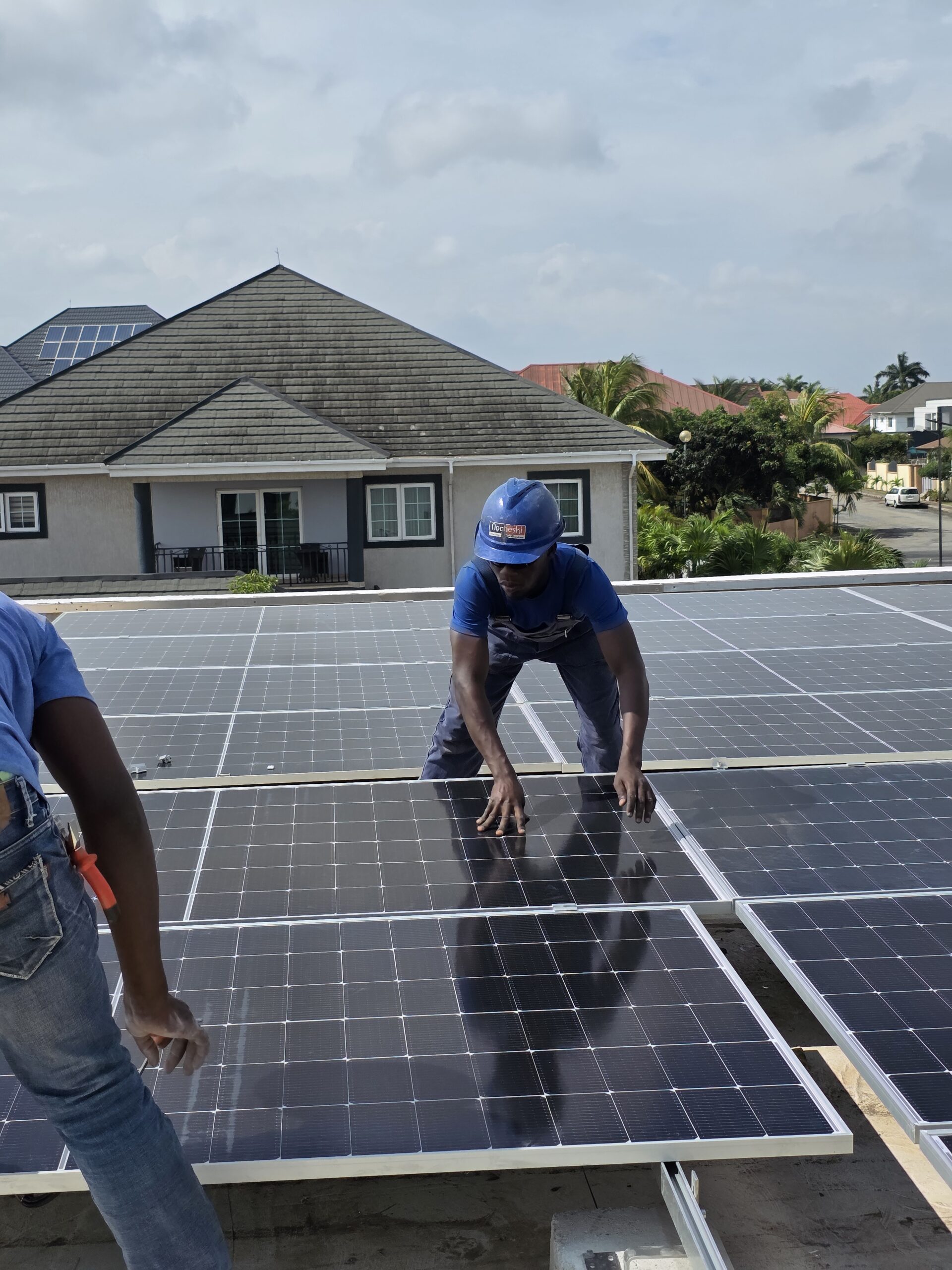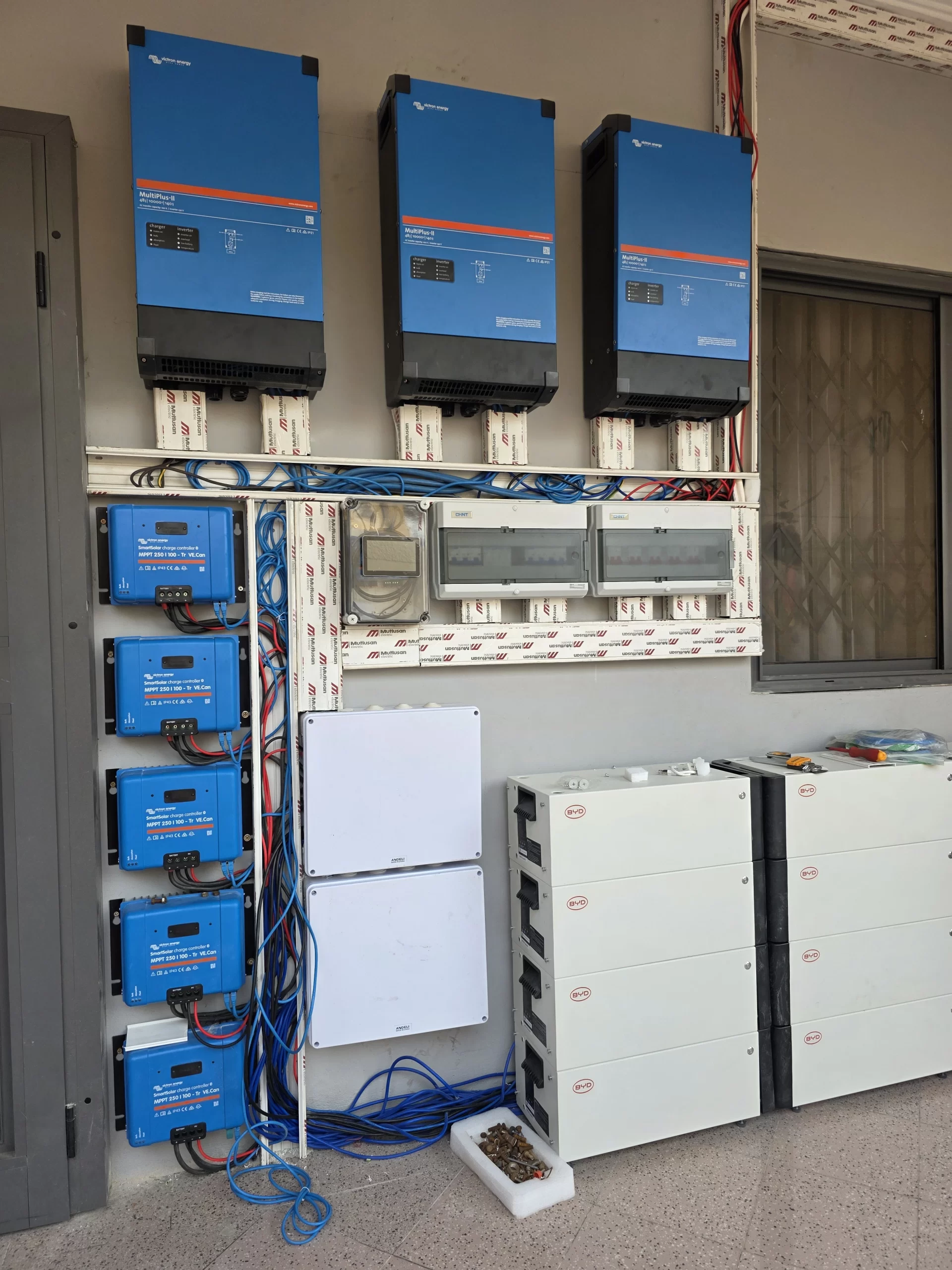
Dumsor is more than an inconvenience. It affects how we work, study, cook, preserve food, and run our businesses.

For many homes and companies in Ghana, the lights go off at the worst time. It may happen during an online meeting. It may happen when the fridge is full. It may also happen when children are studying or customers are waiting.

At the same time, ECG bills continue to rise. Diesel and petrol generators can help, but they are noisy and expensive to run. They also need fuel, servicing and regular repairs.

This is where solar battery storage becomes a practical solution for Ghana. It stores solar power during the day. You can then use that power when the grid goes off, when tariffs feel high, or when you want more control over your energy.

In this guide, Nocheski Solar explains how solar battery storage works, why it matters in Ghana, what it costs and how to get started.

Why Dumsor and High Electricity Costs Remain a Real Problem in Ghana

Every Ghanaian understands dumsor. It is not just “lights off”. It means lost time, lost comfort and sometimes lost income.

For a homeowner, dumsor may mean spoiled food, hot nights and interrupted entertainment. It may also mean children cannot study and security lights stop working.

For a business, the cost can be even higher. Workers may sit idle. Equipment may be damaged. Customers may leave. Sales may be lost.

Clinics, schools, cold stores, hotels, offices and warehouses all need reliable power. When electricity fails, planning becomes difficult.

Many people respond by buying a generator. This works for a while, but it brings other problems.

Generators need fuel. They need oil changes and servicing. They make noise and produce fumes. They also expose you to rising fuel prices and sudden breakdowns.

The national grid is still important. However, grid access is not the same as grid reliability. Even when power is available, voltage changes and unplanned outages can affect your appliances.

For businesses in Accra, Tema, Spintex, East Legon, Ashaiman, Kasoa, Takoradi and Kumasi, power is not a luxury. It is part of daily operations.

A cold room, pharmacy, printing press, hotel, church, school or office cannot afford repeated downtime.

This is why many Ghanaian households and organisations are now looking beyond ordinary backup power. They want a cleaner, quieter and smarter way to keep essential loads running.

That is where solar battery storage becomes relevant.

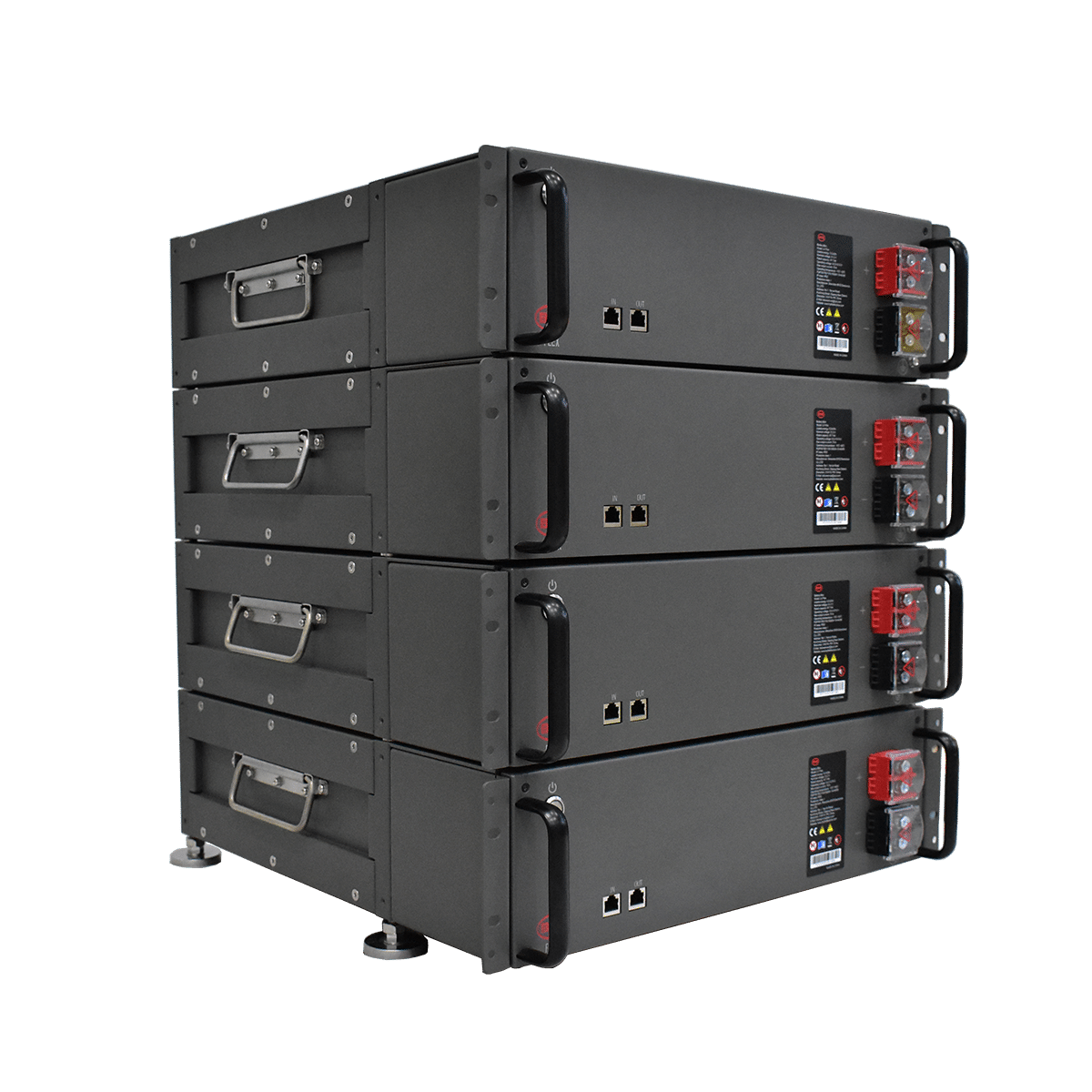
BYD LV FLEX BATTERY

BYD LV LIFEP04 FLEX BATTERY

Solar Battery Storage Explained: A Smarter Dumsor Solution for Homes and Businesses

Solar battery storage gives you stored energy that can be used when the grid fails. Instead of depending only on ECG or a fuel-powered generator, you can use power saved from the sun.

In simple terms, solar battery storage is a system that stores electricity for later use. When connected to solar panels, it captures energy from the sun during the day. You can then use that energy when you need it.

A typical system includes:

  • Solar panels to generate electricity from sunlight
  • An inverter to convert solar power into usable electricity
  • A battery bank to store extra energy
  • A charge controller or hybrid inverter to manage charging
  • Protection devices to keep the system safe
  • Monitoring tools to track performance

The biggest benefit is simple. When the grid goes off, your essential appliances can continue running.

These may include lights, fans, Wi-Fi, televisions, computers, fridges, security systems, tills, medical equipment and office machines.

Solar battery storage is different from a basic solar system without batteries. A grid-tied solar system can reduce daytime electricity use. However, many grid-tied systems shut down during a power cut for safety reasons.

A hybrid solar system with batteries is different. It is designed to provide backup power when the grid is unavailable.

It is also different from a generator. A generator creates power by burning fuel. A battery stores power and releases it quietly when needed.

When the battery is connected to solar panels, it can be charged by sunlight during the day. This makes the system cleaner, quieter and easier to manage.

For many Ghanaian users, the best solution is not to power everything at once. The smarter approach is to identify essential loads first.

These are the appliances and systems you cannot afford to lose during dumsor. This may include lighting, refrigeration, Wi-Fi, security, computers or selected business equipment.

Nocheski Solar helps clients make this decision properly. The goal is not to sell the biggest battery. The goal is to design the right system for your real energy needs.

How Solar Battery Storage Works in a Ghanaian Home or Business

A well-designed solar battery storage system can automatically decide when to use solar power, battery power or grid power.

The technology may sound complex, but the basic process is easy to understand.

During the day, your solar panels generate electricity. That power first serves the appliances that are running at the time.

If the solar panels produce more power than you are using, the extra energy charges the battery.

Later, when the sun goes down or solar production drops, the battery can release stored electricity. The same thing happens when the grid goes off.

The inverter then converts the stored power into electricity your appliances can use.

Depending on the setup, your home or business can draw power from:

  • Solar panels
  • Batteries
  • The grid
  • A generator

This is why hybrid systems are useful in Ghana. They allow different energy sources to work together.

For example, a home in Tema may use solar power during the day. In the evening, it may use battery power. It may only use ECG power when needed.

A business in Accra may use solar to reduce daytime electricity costs. It may then use battery storage during outages. A generator can remain available as a final backup for long emergencies.

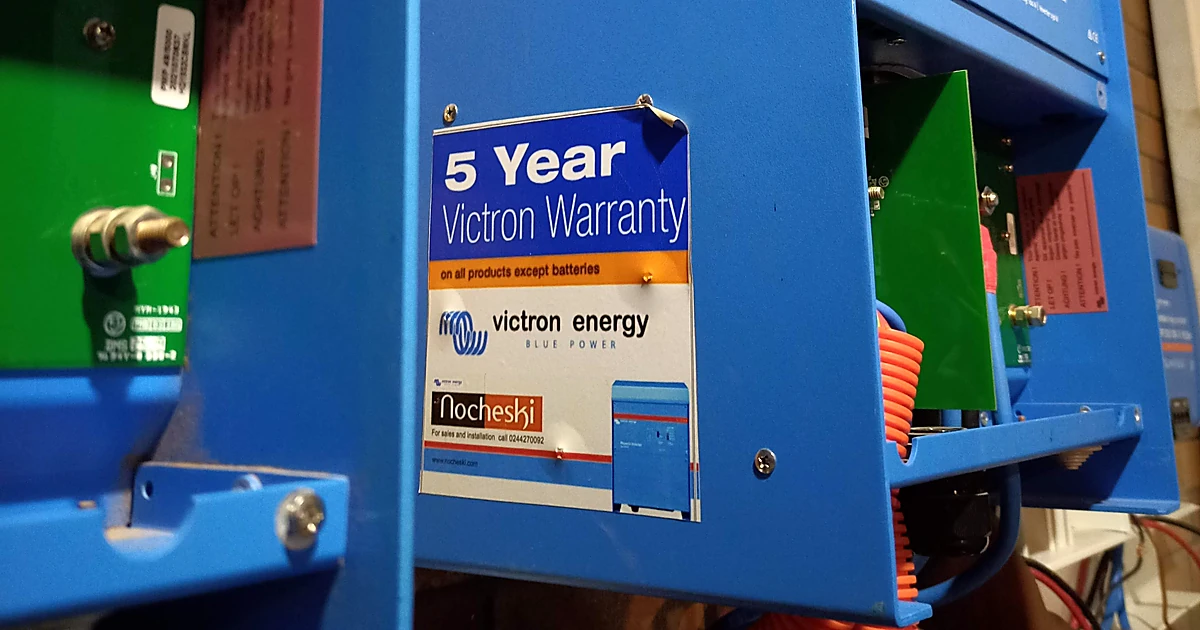
The quality of the inverter matters. Brands such as Victron Energy and Fronius are respected because they are reliable and intelligent.

A good inverter protects your system. It manages energy flow and allows better monitoring.

Battery quality also matters. Not all batteries are the same.

Some batteries are built for deep cycling. Others are only suited for occasional backup. Lithium battery systems are now popular because they are efficient, compact and long-lasting.

However, the brand alone is not enough. Good design and proper installation are just as important.

A professional design should consider:

  • Your daily electricity use
  • The appliances you want to back up
  • The number of backup hours you need
  • Your roof space
  • Solar panel capacity
  • Battery type and size
  • Inverter capacity
  • Safety protection
  • Future expansion
  • Budget and return on investment

This is why a site assessment is important. Guesswork can lead to problems.

If the system is too small, it will disappoint you. If it is too large, you may spend more than necessary.

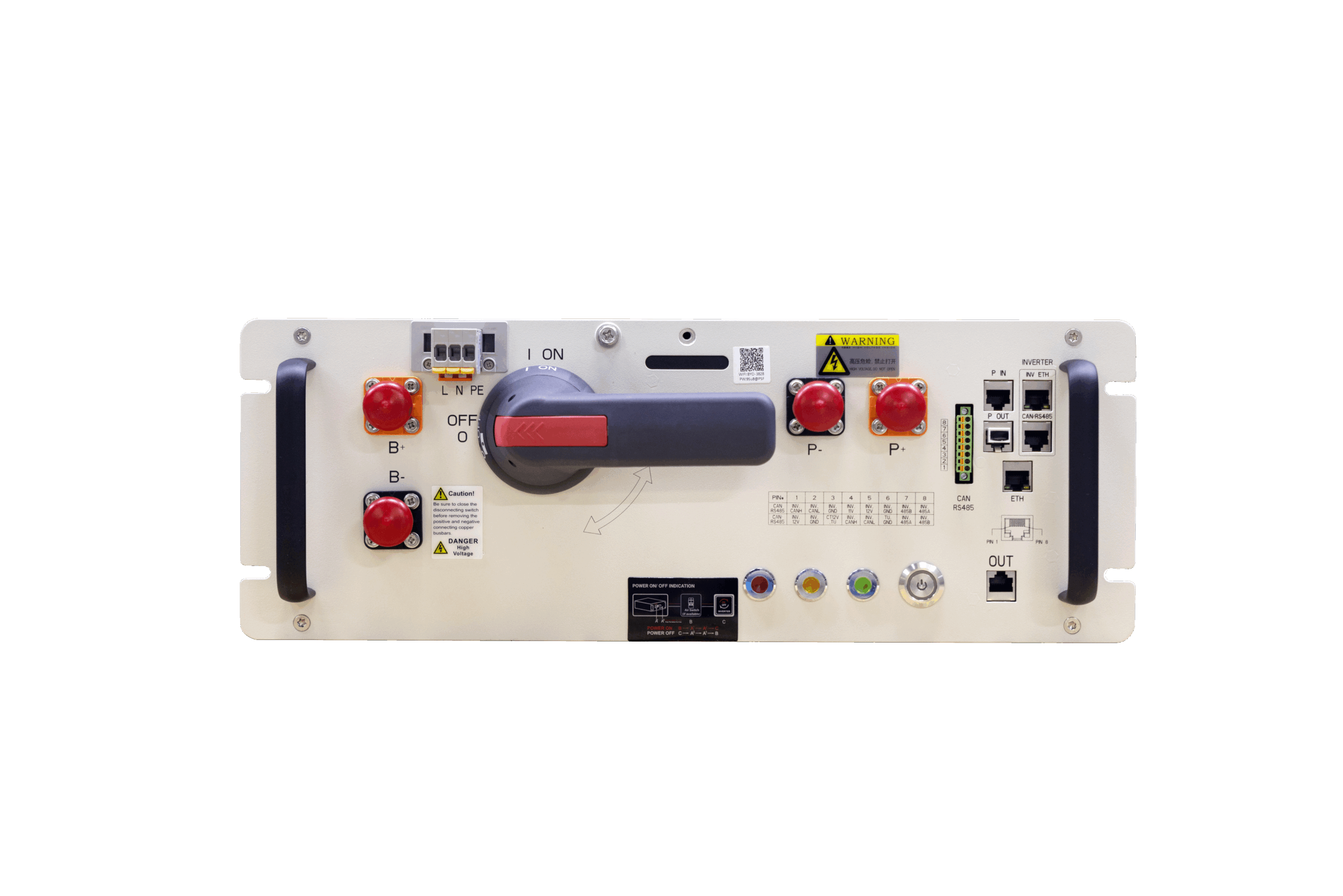
BYD Max Lite battery PDUReal-World Benefits of Solar Battery Storage in Ghana and West Africa

For Ghanaian businesses, solar battery storage can protect sales, stock, customer service and productivity during unexpected outages.

The first benefit is peace of mind. When dumsor happens, you do not have to panic.

Your lights, Wi-Fi, fridge, security system and key appliances can keep working.

For homes, this means more comfort. Children can study. Food can stay fresh. Mobile phones and laptops can remain charged.

Fans can also keep running during hot nights. Security lights and electric gates can continue to operate.

For businesses, the value is even greater.

A shop can keep serving customers. A pharmacy can protect temperature-sensitive products. A cold store can reduce the risk of spoilage.

An office can keep computers, routers and communication systems running. A hotel or guest house can also improve customer experience during outages.

Solar battery storage also reduces generator dependence. This means less noise, fewer fumes and lower fuel stress.

Many businesses still keep a generator for extreme backup. However, they use it less often. This can reduce maintenance costs and improve the working environment.

Another benefit is energy control. Electricity tariffs can change, and many consumers want to reduce how much power they buy from the grid.

Solar panels help you generate power during the day. Batteries help you use more of that power later.

There is also a wider African benefit. Solar plus storage supports decentralised energy.

It can help homes, schools, clinics, farms and small businesses operate in areas where grid reliability is weak.

In West Africa, sunlight is abundant. This makes solar panels, efficient inverters and battery storage a strong combination for energy resilience.

For environmentally conscious customers, battery storage also reduces reliance on fossil-fuel generators. It supports cleaner energy use and can form part of a company’s sustainability plan.

In simple terms, solar battery storage gives Ghanaian homes and businesses three things they need:

  • Reliability
  • Control
  • Long-term value

Cost, ROI and What to Consider Before Buying a Solar Battery System

The cost of a solar battery storage system in Ghana depends on the size and quality of the system.

A small home backup system will cost less than a large commercial hybrid system. A school, hotel, factory or office block will usually need a bigger design.

The cost also depends on your backup needs. It is affected by battery size, inverter capacity and the appliances you want to power.

The main cost factors include:

  • Number and wattage of solar panels
  • Battery capacity
  • Inverter brand and size
  • Type of battery technology
  • Electrical protection and installation materials
  • Roof structure and mounting needs
  • Monitoring and control features
  • Labour, testing and commissioning
  • After-sales support

It is tempting to compare systems only by price. However, this can be misleading.

A cheaper system may have a shorter battery life. It may also have poor protection, limited monitoring or weak after-sales support.

In solar energy, the lowest quote is not always the best investment.

The better question is this: what problem should the system solve?

For some homes, the goal is to power essential loads during dumsor. For others, the goal is to reduce ECG bills.

For businesses, the goal may be different. It may be to prevent downtime, protect stock, improve customer service or reduce generator fuel use.

Return on investment should include direct and indirect savings.

Direct savings may come from reduced grid consumption and lower generator fuel costs.

Indirect savings may come from avoiding spoiled goods, protecting equipment, keeping staff productive and serving customers without interruption.

A good ROI discussion should include:

  • Current monthly ECG bills
  • Monthly generator fuel cost
  • Generator maintenance cost
  • Value of lost business during outages
  • Cost of equipment damage
  • Battery lifespan
  • Expected solar production
  • Maintenance needs
  • Future expansion plans

For facilities managers, this analysis is very important.

Solar battery storage should not be treated as a gadget. It is energy infrastructure. When designed well, it becomes part of your business continuity plan.

Nocheski Solar can help you compare different system options. These may range from essential-load backup to larger hybrid solar systems.

The right choice depends on your load profile, budget, site conditions and energy goals.

How to Get Started with Nocheski Solar

Getting started with Nocheski Solar is simple. The first step is to understand your energy needs.

Nocheski Solar designs solar battery storage systems for homes, offices, shops, schools, clinics and commercial facilities in Accra, Tema and across Ghana.

Before recommending a system, Nocheski Solar will ask a few important questions.

What do you want to power? How long should backup last? Is your main concern dumsor, high ECG bills, generator cost or all three?

For a home, this may involve listing key appliances. These may include lights, fans, fridge, television, Wi-Fi router, laptops and security systems.

For a business, the process may involve reviewing equipment, operating hours, monthly bills and critical loads.

A typical process may include:

  • Initial consultation
  • Review of ECG bills and generator use
  • Load assessment
  • Site visit in Accra, Tema or your project location
  • Roof and electrical inspection
  • System design and quotation
  • Installation by trained technicians
  • Testing and commissioning
  • User training
  • After-sales support

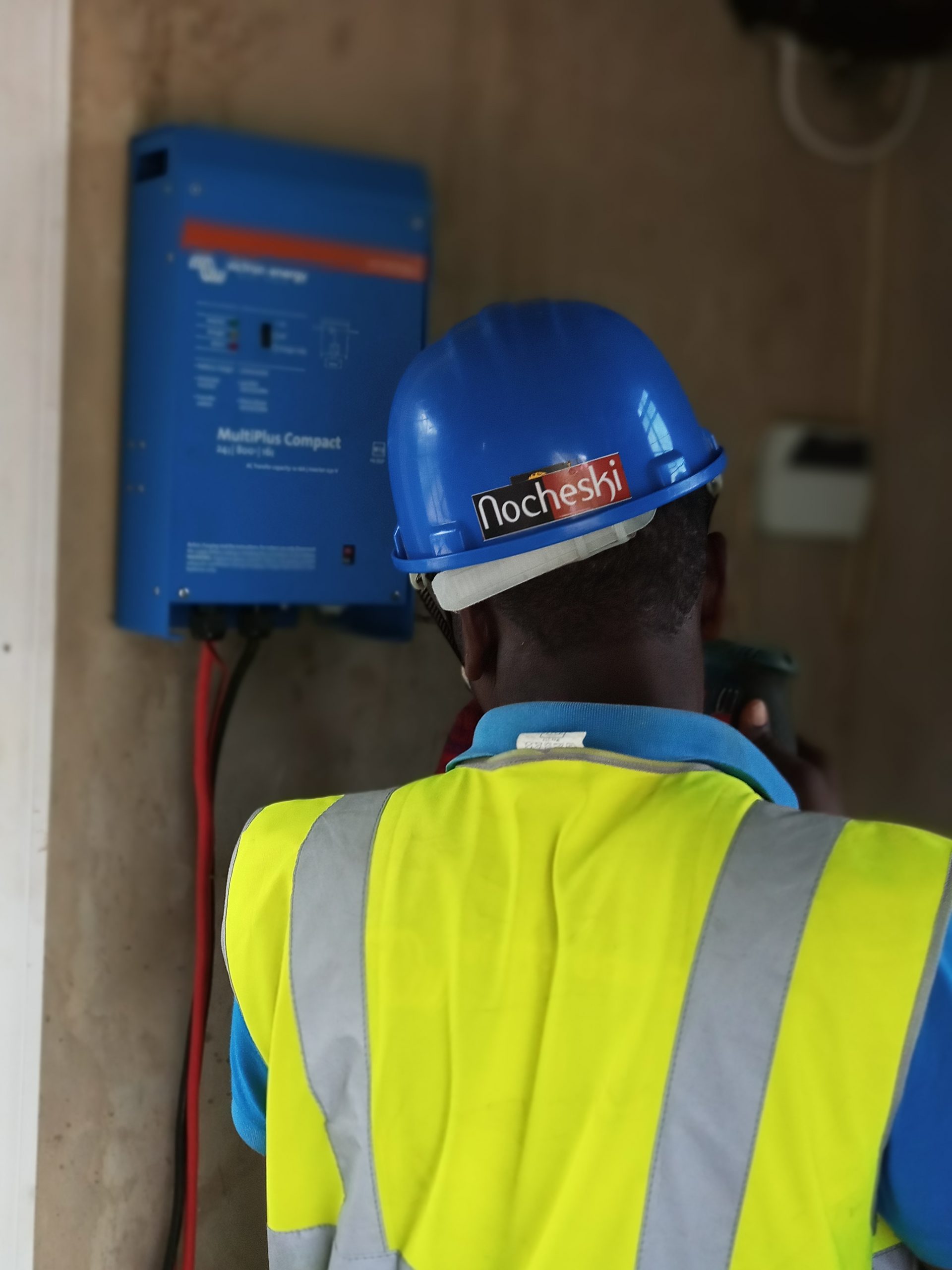
Nocheski Solar supplies and installs solar panels, inverters, battery storage systems and hybrid solar systems.

The company works with trusted technologies including Victron Energy ,BYD and Fronius. It also designs systems for Ghanaian conditions.

The most important advice is simple: do not buy a battery system blindly.

Battery storage must be properly sized and safely installed. Poor design can lead to frustration, wasted money and unsafe operation.

Whether you are a homeowner tired of dumsor or a business owner worried about downtime, Nocheski Solar can help.

The same applies if you are a facilities manager planning long-term energy resilience. A proper solar battery storage system can give you reliable backup and better control.

Conclusion

Dumsor may be a familiar Ghanaian problem, but your response to it can be modern, quiet and efficient.

Solar battery storage gives homes and businesses a practical way to keep essential appliances running. It also reduces generator dependence and helps you control electricity costs.

The right system starts with proper design. It should match your loads, budget, roof space and backup needs.

With quality solar panels, reliable inverters and well-sized batteries, you can turn sunlight into dependable power.

Ready to protect your home or business from dumsor? Visit nocheski.com or contact Nocheski Solar in Accra and Tema to discuss a solar battery storage system designed for your needs.


Commercial Solar Power in Ghana: Lessons from Total’s Solar-Powered Service Station

Commercial solar power in Ghana is becoming an increasingly important solution for businesses looking to reduce electricity costs and improve energy reliability

Ghana’s transition to renewable energy continues to gain momentum as more businesses explore solar power as a practical solution for reducing electricity costs, improving energy reliability, and supporting environmental sustainability.

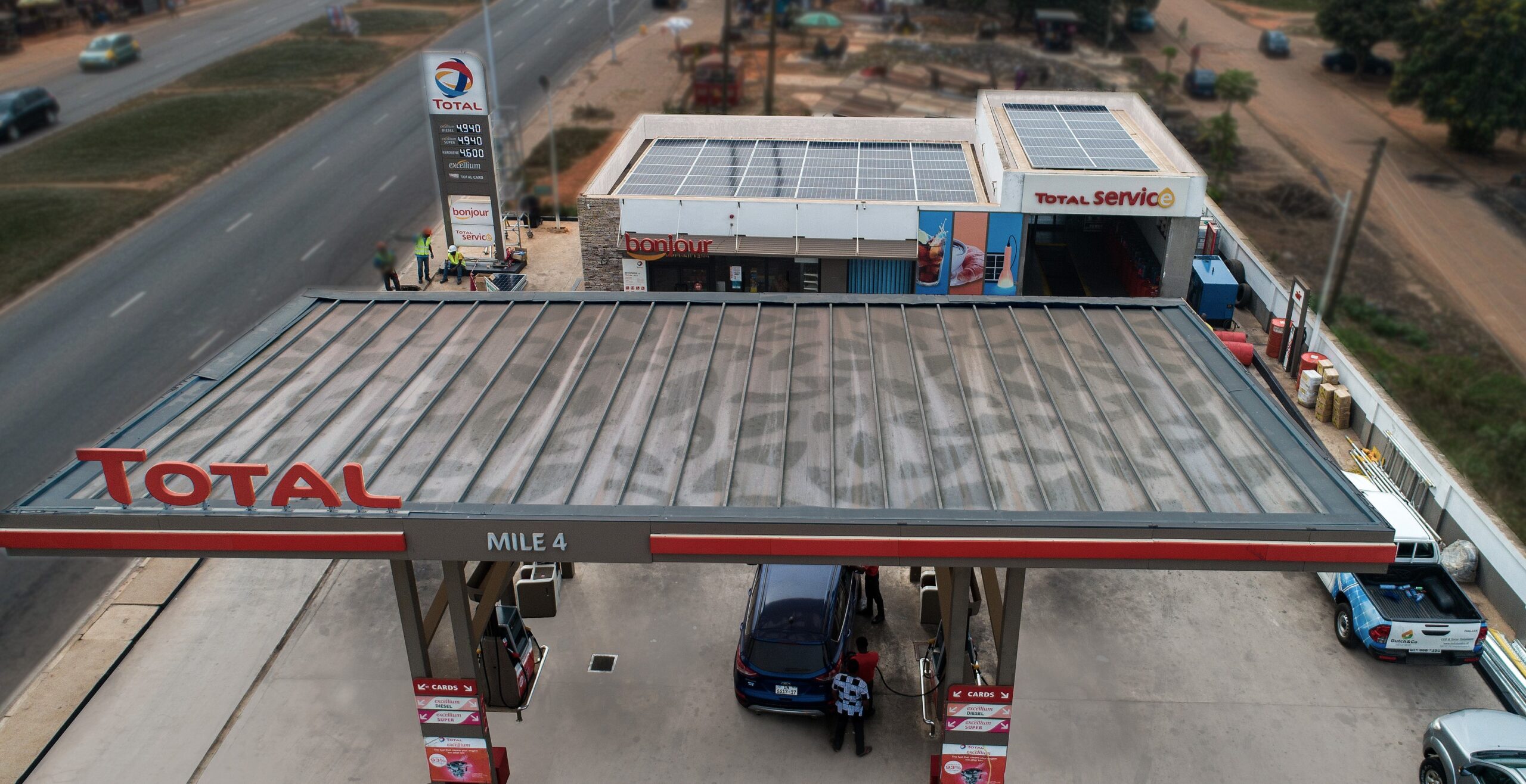
A major milestone in this direction was achieved when Total Ghana Limited commissioned its first solar-powered service station in Ghana at the Tema Main Harbour. The 35-kilowatt solar installation represents an important step for the petroleum retail sector and demonstrates how commercial solar power can be integrated into everyday business operations.

Total Ghana’s First Solar-Powered Service Station

The solar-powered service station at Tema Main Harbour is fitted with a 35kW solar energy system. The installation covers a total solar panel area of 225 square metres, with 165 square metres installed on the station’s shop and restaurant building and another 60 square metres mounted on the pump island canopy.

The station’s energy system combines solar panels, inverters, batteries, a generator, and the national grid. This hybrid energy architecture is particularly important for businesses in Ghana, where power reliability and rising energy costs remain key concerns.

By combining solar power with battery storage and backup generation, service stations and other commercial facilities can reduce their dependence on the national grid while maintaining operational continuity.

A New Direction for Commercial Solar in Ghana

According to Total Ghana’s Managing Director, Eric Fanchini, the company aims to solarize at least 50% of its network of 250 service stations within five years. This is a bold and forward-looking target that reflects the growing importance of solar energy in Ghana’s commercial sector.

For businesses, this move sends a clear message: solar power is no longer just an alternative energy source. It is becoming a mainstream business strategy.

Fuel stations, supermarkets, cold stores, hospitals, schools, factories, hotels, restaurants, and office complexes can all benefit from commercial solar installations. With the right system design, businesses can reduce electricity bills, protect themselves from power interruptions, and improve their environmental credentials.

Why Solar Power Makes Sense for Service Stations

Service stations consume electricity throughout the day and night. Their operations often include fuel pumps, lighting, refrigeration, security systems, restaurants, shops, offices, air compressors, and electronic payment systems.

This makes them ideal candidates for solar power.

A well-designed solar energy system can help service stations:

  • Reduce monthly electricity costs
  • Improve energy reliability
  • Support 24-hour operations
  • Lower diesel generator usage
  • Reduce carbon emissions
  • Improve brand reputation
  • Protect operations from rising utility tariffs

In Ghana’s competitive fuel retail market, solar energy can also become a strong brand differentiator. Customers increasingly associate businesses that invest in clean energy with innovation, responsibility, and long-term thinking.                                             Total Ghana’s investment shows how commercial solar power in Ghana can help fuel stations and other businesses reduce dependence on the national grid

Government Support for Renewable Energy in Ghana

The commissioning of Total Ghana’s solar-powered service station also aligns with Ghana’s broader renewable energy agenda.

At the event, Dr. Mohammed Amin Adam, Deputy Minister of Energy, commended Total for taking advantage of Ghana’s abundant renewable energy opportunities. He noted that the Ministry of Energy had started implementing the Scaling-Up Renewable Energy Program, aimed at expanding access to solar and other renewable energy systems across the country.

The programme includes plans for mini-grids, standalone solar home systems, and solar-with-storage systems for homes and small and medium-sized enterprises.

The Ministry of Energy is also working to promote solar power in public buildings and facilities. This is expected to reduce pressure on the national grid, cut energy costs, and improve the financial health of utility companies.

Solar Energy for Public and Private Institutions

The government’s plan to install solar systems on public buildings is a strong signal to the private sector. If ministries, public agencies, and state institutions are moving toward solar energy, then private businesses should also begin planning their transition.

Commercial solar energy is especially useful for institutions with high daytime electricity consumption. These include:

  • Government buildings
  • Schools and universities
  • Hospitals and clinics
  • Warehouses
  • Manufacturing plants
  • Shopping centres
  • Banks
  • Hotels
  • Petrol stations
  • Restaurants
  • Agribusiness facilities

For many of these institutions, solar power can provide immediate savings and long-term energy security.

The Role of Solar Companies in Ghana’s Energy Future

As more companies follow the example set by Total Ghana, the demand for experienced solar energy companies in Ghana will continue to grow. However, successful solar projects require more than just installing panels on a roof.

A proper commercial solar project requires:

  • Energy audits
  • Load assessment
  • Solar system design
  • Battery storage planning
  • Inverter selection
  • Safety protection systems
  • Professional installation
  • Monitoring and maintenance
  • Long-term technical support

This is where experienced solar companies such as Nocheski Solar play a critical role. Businesses need partners who understand Ghana’s energy environment, commercial power needs, battery backup requirements, and the importance of reliable system performance.

Why Businesses in Ghana Should Invest in Solar Now

Electricity costs remain a major expense for many Ghanaian businesses. At the same time, the cost of solar technology has become more competitive over the years. This makes now an excellent time for businesses to consider solar energy as part of their long-term cost reduction strategy.

Solar power is not just about saving money. It is also about energy independence, business continuity, sustainability, and future-proofing operations.

Companies that invest in solar today position themselves ahead of competitors who continue to rely entirely on the grid and diesel generators.

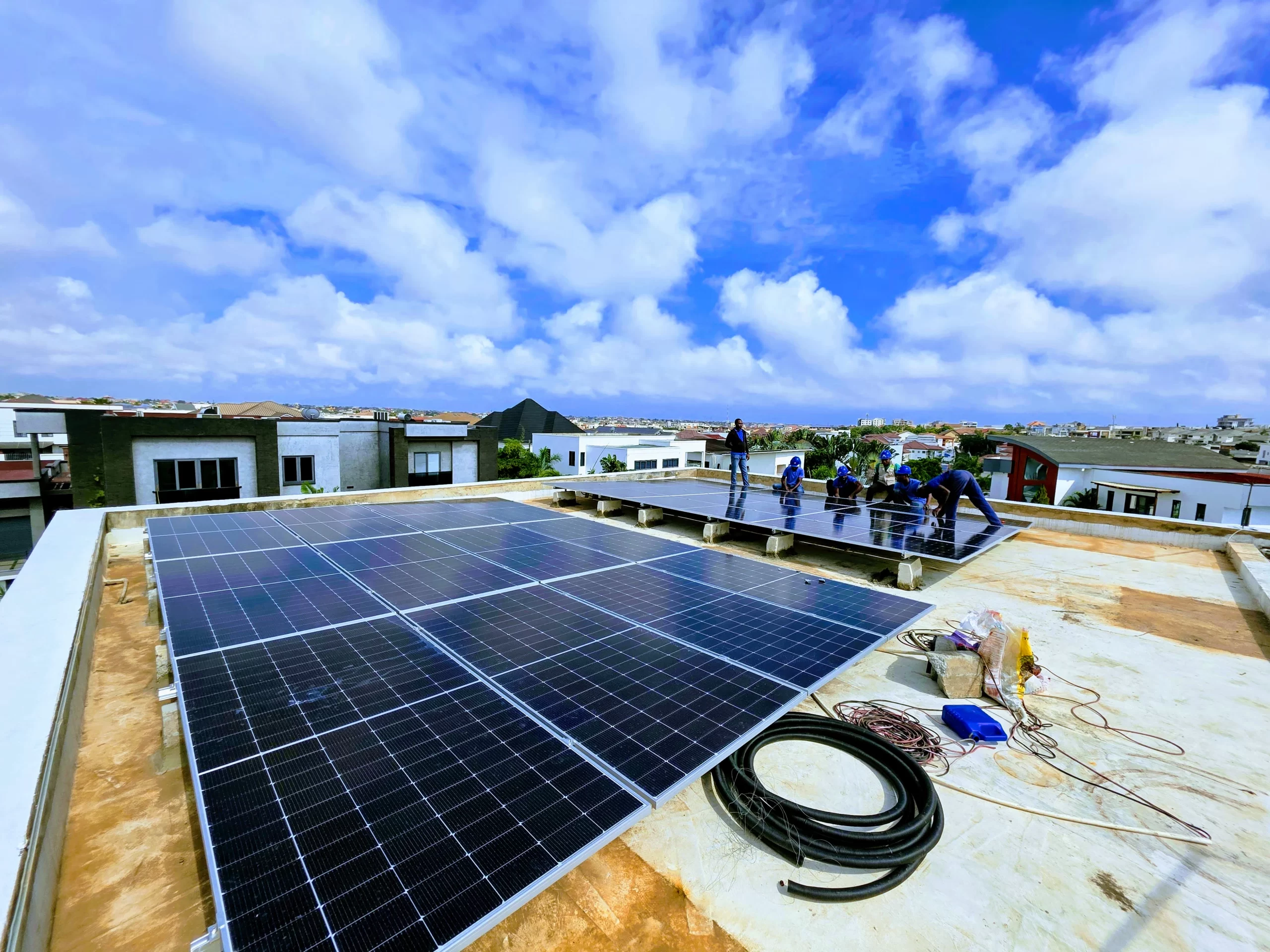
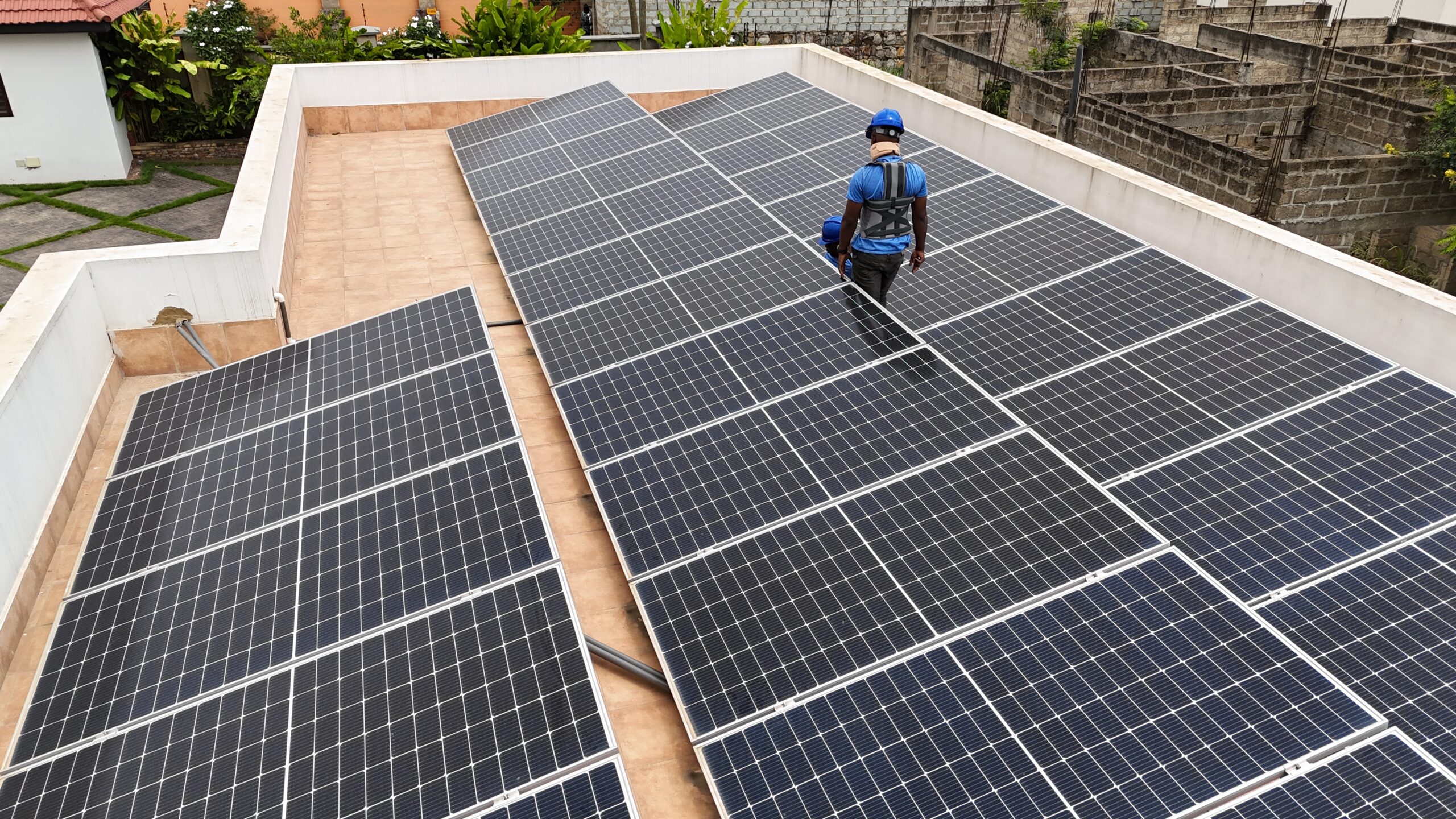
Nocheski Solar commercial solar installation in Ghana

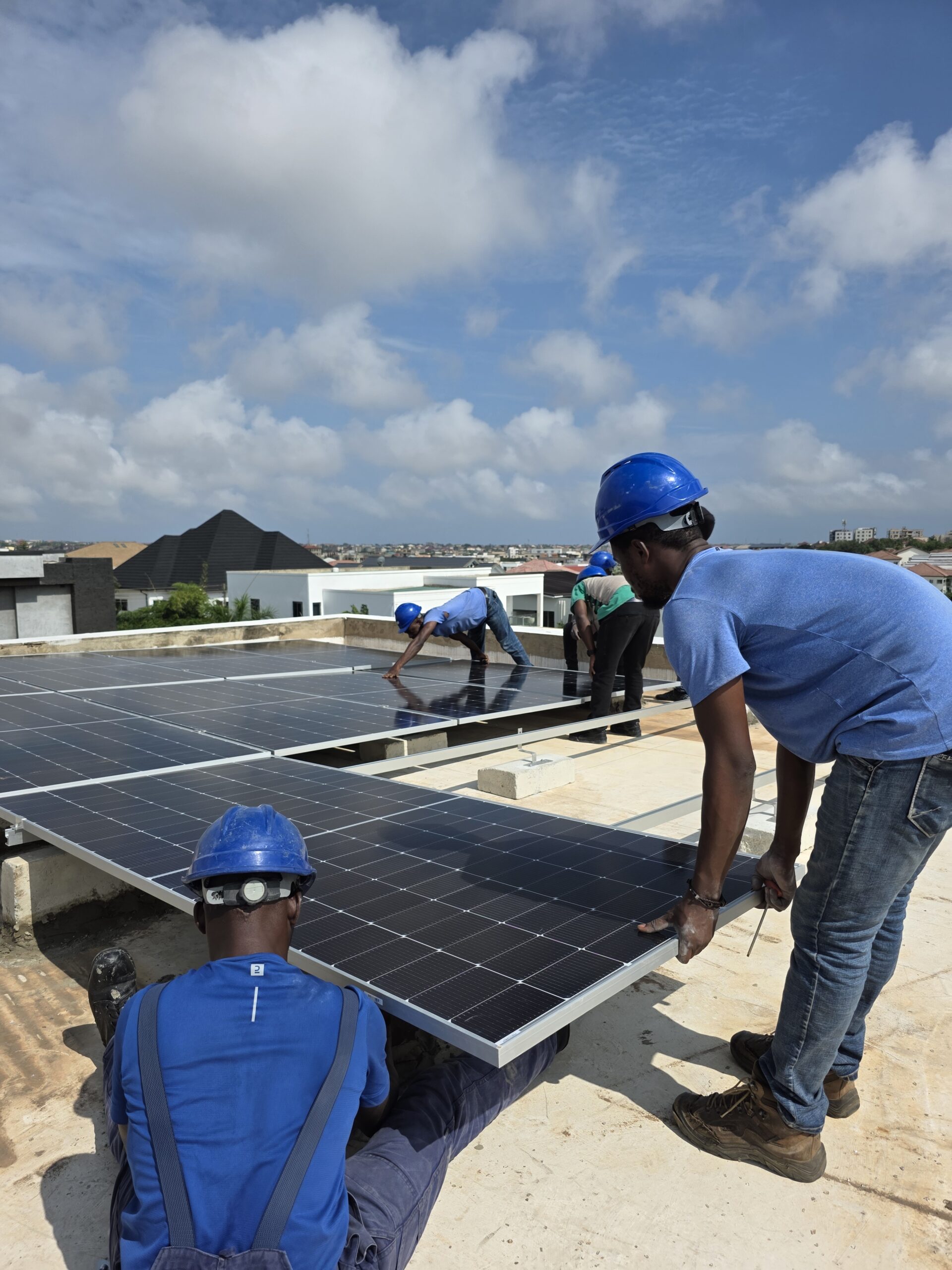
Nocheski Solar provides commercial solar power solutions for businesses and institutions across Ghana

Conclusion

Total Ghana’s first solar-powered service station at Tema Main Harbour is more than a corporate milestone. It is a strong example of how businesses in Ghana can use solar energy to reduce costs, improve reliability, and contribute to national renewable energy goals.

As Ghana continues to promote clean energy and sustainable development, commercial solar power will become an increasingly important part of the country’s business landscape.

For fuel stations, factories, schools, hospitals, offices, hotels, and SMEs, the message is clear: solar energy is no longer a future option. It is a present-day business advantage.

As electricity costs continue to rise, commercial solar power in Ghana offers businesses a practical path to lower costs, cleaner energy, and long-term energy security

Businesses that want to reduce their electricity bills, improve energy security, and adopt cleaner power should begin with a professional solar assessment.

Nocheski Solar provides reliable commercial solar solutions for businesses and institutions across Ghana. From system design to installation and long-term support, Nocheski Solar helps organisations take control of their energy future.


The Dawn of Smart Power in Africa

For decades, Africa’s energy landscape has been dominated by centralized fossil-fuel plants feeding aging transmission lines that struggle to meet modern demands. Blackouts, high costs, and limited access have defined much of the continent’s power experience.

But that narrative is shifting.

A bold transformation — Grid 2.0 — is underway. Across Africa, digital intelligence, energy storage, and green hydrogen are converging to create smarter, cleaner, and more resilient power systems. This is more than an upgrade; it’s a reinvention of how energy is generated, distributed, and consumed.

At its core, Grid 2.0 represents Africa’s leap from outdated infrastructure to a renewable, data-driven energy future.


1. Africa’s Energy Challenge

Despite being home to some of the world’s richest renewable resources, over 600 million Africans still lack access to reliable electricity. Those connected often face unstable supply and high tariffs.

Key pain points include:

  • Aging infrastructure: More than 60% of power transmission assets are over 25 years old.

  • Energy losses: Transmission losses average around 20%, double the global average.

  • Rising demand: Power needs are projected to triple by 2040 due to rapid industrialization and population growth.

The takeaway is clear — Africa cannot power its future using 20th-century grids. The continent must design a smarter, interconnected system capable of integrating large shares of renewables while maintaining stability.


2. Energy Storage — The Missing Link

Solar and wind energy are abundant but intermittent. Battery Energy Storage Systems (BESS) are the crucial bridge between renewable potential and grid reliability.

Why Storage Matters

  • Stabilizes supply: Captures excess solar or wind energy for use during nighttime or cloudy periods.

  • Reduces blackouts: Supports grid stability and frequency control.

  • Empowers communities: Enables microgrids and rural electrification projects to operate autonomously.

Momentum Across the Continent

  • South Africa leads with large-scale hybrid solar-storage installations under Eskom’s REIPPPP initiative.

  • Egypt’s Benban Solar Park integrates storage for consistent power dispatch.

  • Ghana, Kenya, and Nigeria are exploring storage systems for industrial and distribution-level resilience.

By 2030, Africa could surpass 30 GWh of installed storage capacity, making it the fastest-growing energy storage market in the world.

At Nocheski Solar, we see battery storage not just as a component — but as the heartbeat of Africa’s next-generation grid.


3. When Power Meets Intelligence — Smart Grids

Traditional grids assumed steady demand and centralized generation. Smart grids flip that logic, combining AI, IoT, and big data to create networks that learn, adapt, and self-correct.

The Smart Grid Advantage

  • AI-driven forecasting: Predicts demand and renewable output in real time.

  • IoT monitoring: Detects and isolates faults instantly to prevent cascading failures.

  • Blockchain integration: Enables transparent, peer-to-peer energy trading.

  • Digital twins: Model grid performance for predictive maintenance.

African Innovations

Smart grids form the digital backbone of Grid 2.0, ensuring renewable energy can scale beyond 50% penetration without compromising stability.


4. Hydrogen — The Long-Term Game Changer

While batteries balance short-term fluctuations, green hydrogen is emerging as Africa’s long-term energy storage and decarbonization solution.

Green Hydrogen Highlights

  • Namibia’s Hyphen Project targets 300,000 tonnes per year powered by 5 GW of renewables.

  • Egypt’s Suez Canal Zone is developing hydrogen export terminals for European markets.

  • South Africa’s Hydrogen Valley is integrating hydrogen into industrial and transport applications.

Hydrogen bridges the gap between renewable energy generation and industries that cannot easily electrify — like fertilizer, steel, and shipping. It also transforms excess renewable capacity into exportable green fuel, strengthening Africa’s global energy influence.


5. Financing the Future Grid

Building Africa’s Grid 2.0 will require over $120 billion in annual investment, yet current funding levels fall far short.

Emerging Financing Trends

  • Green bonds and carbon credits are unlocking new capital for grid and storage projects.

  • Development banks are shifting from generation funding to infrastructure and grid resilience.

  • Private investors are embracing “grid-as-a-service” models, monetizing data, reliability, and efficiency.

The next growth phase won’t be defined merely by who builds the power plants — but by who manages the data and intelligence that keep the grid balanced.


6. Policy, Integration, and Regional Power Pools

Technology alone cannot deliver energy equity — policy coordination and regional cooperation are essential.

Continental Progress

Liberalized markets are allowing independent power producers (IPPs) to sell directly to consumers, increasing competition and accelerating innovation.

Ultimately, Africa’s energy security will depend on a Pan-African Supergrid — powered by renewables, balanced by storage, and optimized through AI.


7. Powering the Vision — Nocheski Solar’s Perspective

At Nocheski Solar, we believe that Africa’s energy transition must be both technically advanced and socially inclusive.

Through our partnerships and expertise in solar, storage, and smart energy systems, we are helping communities and businesses transition into this new era — one project at a time.

Our vision for Grid 2.0 is clear:
A network where clean energy means empowerment, where data drives efficiency, and where Africa leads the world in sustainable energy innovation.


Final Thoughts — Power Reimagined

Grid 2.0 isn’t just about upgrading wires and transformers. It’s about redefining energy access, equity, and intelligence.

Africa stands on the brink of an energy renaissance — one built not on imitation, but innovation. The continent’s renewable abundance, combined with smart technologies and forward-thinking policy, is paving the way for a truly African energy revolution.

The future grid won’t just deliver power.
It will deliver progress, independence, and resilience — the true promise of Grid 2.0.


Net Metering in Ghana: What It Is & How It Empowers Solar Users in 2026

Net metering is becoming one of the most transformative renewable energy policies in Ghana, helping households, businesses and public institutions maximise solar power, reduce electricity bills, and contribute to a cleaner energy future. Ghana’s national rollout has gathered pace, with new digital tools and regulatory frameworks now in place to make adoption easier and more cost-effective. energycom.gov.gh+1


📌 What Is Net Metering?

Net metering (or net energy metering) is a billing mechanism that allows electricity consumers with solar panels to export surplus power they generate back into the national grid and receive credits on their electricity bills. Instead of losing excess energy produced during peak sunlight hours, Ghanaian prosumers — i.e., producer-consumers — can offset future electricity consumption with those credits. Wikipedia

This system is especially valuable in countries like Ghana where solar irradiance is high and energy costs are rising — letting solar owners benefit financially while strengthening energy resilience.


📈 Why Net Metering Matters for Ghana

Ghana’s renewable energy ecosystem has historically relied on hydro and fossil fuels. Net metering marks a significant shift toward distributed solar generation, enabling more citizens to participate in the energy grid as active stakeholders. Key benefits include:

Lower Electricity Bills

Solar users earn credits for excess power they export, which reduces their utility bills over time.

Boosts Solar Investment

Net metering attracts homeowners, SMEs, industries and public facilities to invest in rooftop solar systems — creating local jobs and stimulating the solar economy.

Energy Security & Grid Support

Distributed generation helps reduce pressure on the national grid and stabilises supply, especially during peak demand or outages.

Supports National Renewable Goals

The policy aligns with Ghana’s renewable energy targets under the Renewable Energy Act (Act 832) by diversifying the energy mix and incentivising clean power adoption. Wikipedia


https://www.youtube.com/watch?v=afmL5NjxkQw

⚙️ How Net Metering Works in Ghana

Here’s the simple process:

  1. Install a grid-connected solar PV system at your home or business.

  2. Receive a bi-directional smart meter that tracks both imported and exported energy.

  3. Export excess solar generation to the national grid when your system produces more than you consume.

  4. Earn credits based on that exported energy. These credits offset the electricity you draw from the grid later — such as at night or on cloudy days.

  5. Annual reset or rollover rules apply depending on PURC and Energy Commission guidelines. energycom.gov.gh+1

Unlike traditional feed-in tariffs, net metering credits are typically calculated against retail electricity prices — meaning homeowners get maximum value for their exported solar energy. Wikipedia


📊 Ghana’s Recent Net Metering Advancements (2025–2026)

The government has accelerated net metering implementation with key developments:

🌐 National Net Metering Web Application Portal

In late 2025, the Ministry of Energy and Green Transition launched an online portal that streamlines net metering applications — making it easier for households, businesses and institutions to apply for smart meters and participate in the programme. The Business & Financial Times

📦 12,000 Net Metered Solar Deployments

Under the Scaling-Up Renewable Energy Programme (SREP), the government plans to deploy 12,000 rooftop solar PV systems with net metering capability nationwide. This includes public facilities, SMEs and household installations. The Business & Financial Times

🤝 Funding & Partnerships

The rollout is supported by the African Development Bank (AfDB), Climate Investment Funds (CIF), the Swiss Government (SECO), and the Government of Ghana — combining financial support, expertise and implementation collaboration. News Ghana

📈 Tracking & Transparency

The digital portal also serves as a national database to monitor all solar installations, helping regulators and utilities manage the growing solar generation fleet. GBC Ghana Online


💡 Who Can Benefit from Net Metering in Ghana?

Net metering is designed for a wide range of electricity consumers:

  • Homeowners with rooftop solar installations

  • Small and Medium Enterprises (SMEs)

  • Industries and commercial buildings

  • Public institutions such as schools, hospitals, and government offices

To participate, properties must meet technical standards and grid connection requirements, including anti-islanding and appropriate interconnection agreements. The Business & Financial Times


📍 Practical Tips for Solar Prospective Users

Choose a certified installer who understands net metering requirements in Ghana.
Check eligibility with your utility (ECG, NEDCo, Enclave Power) before system installation.
Understand credit rollover rules, especially annual reset periods.
Monitor generation and export closely to maximise your bill savings.


🏁 Conclusion

Net metering in Ghana is no longer just a future ideal — it’s rolling out nationally with strong policy support, digital tools and international partnerships. For solar adopters, it’s a game-changer: cutting costs, increasing energy independence and helping Ghana meet its renewable energy goals.

If you’re considering solar in Ghana, net metering could be an essential part of your energy strategy — transforming your electricity consumption into a more sustainable, cost-efficient system.

At Nocheski Solar, we design and install net-metered solar PV systems fully compliant with Ghana’s Energy Commission and utility requirements. Contact 0244270092 0r 0303211743 for a site assessment today


Why Solar Power Systems Fail

When people search for why solar power systems fail, they are usually not asking an academic question.
They are asking because something has already gone wrong.

Batteries no longer last through the night.
Inverter systems trip under normal use.
Generators are running more than expected.
Confidence in solar power is lost.

In most cases, these problems are not caused by solar panels or battery technology.
They are caused by poor solar power system design.

Solar panels generate electricity reliably.
Modern inverter systems are robust.
Battery energy storage systems perform predictably when designed correctly.

Yet solar power systems continue to fail — not randomly, but predictably.

The common thread is design decisions made before installation:

  • load profiling based on estimates instead of measurements

  • battery storage sized without understanding night-time demand

  • inverter systems selected without accounting for peak loads

  • no allowance for environmental conditions or future growth

This article explains why solar power systems fail, what those failures have in common, and how proper system design prevents them.

WHY POORLY DESIGNED SOLAR POWER SYSTEMS FAIL IN GHANA

(And Why the Technology Is Usually Not the Problem)

Introduction: When “Solar Failed,” What Actually Failed?


When people say “solar didn’t work,” they are rarely describing a failure of solar technology.

In most cases, they are describing the failure of a poorly designed solar power system.

Solar power systems fail predictably, not randomly.
And those failures are almost always traced back to decisions made before installation — during system design.

Understanding this distinction is critical for anyone relying on solar power for homes, businesses, healthcare facilities, or institutions.


1. Solar Panels Are Not the Problem

Solar panels are mature, reliable technology.
They convert sunlight into electricity with predictable performance when installed correctly.

However, solar panels alone do not deliver reliable power.

Reliable electricity comes from a complete solar power system, which includes:

  • solar panels

  • an inverter system

  • a battery energy storage system (battery backup)

  • protection and control equipment

When a system fails, the issue is rarely the solar panels themselves.
The issue is how the system around them was designed.


2. Failure Begins With Guesswork, Not Measurement

One of the most common causes of failure is inadequate load profiling.

Instead of measuring how electricity is actually used, many systems are designed using:

  • rough estimates

  • nameplate ratings

  • assumptions about behavior

This leads to predictable errors:

  • inverter systems that cannot handle peak demand

  • battery storage that cannot supply night-time loads

  • systems that collapse under normal usage

A solar power system must be designed around real load behavior, not averages or guesses.

@nocheski

The failure of Solar power systems in Ghana begins with guesswork, NOT measurement .one of the most common causes of failure is indequate load profiling. @Chauvin Arnoux UK @Victron Energy @BYD @CA Messtechnik

♬ original sound – NOCHESKI SOLAR


3. Undersized Battery Energy Storage Systems

Battery energy storage is one of the most misunderstood parts of a solar power system.

A battery energy storage system (BESS) must be sized based on:

  • night-time energy demand

  • duration of autonomy required

  • critical vs non-critical loads

  • realistic depth of discharge

  • future growth

When battery storage is undersized:

  • power does not last through the night

  • generators are forced to run excessively

  • batteries degrade prematurely

  • confidence in solar power is lost

This is not a battery problem.
It is a design problem.


4. Inverter Systems Selected Without Context

Inverter systems are often selected based on:

  • headline power ratings

  • price

  • availability

Instead of:

  • surge requirements

  • motor starting currents

  • simultaneous load behavior

  • environmental conditions

An inverter system that is not designed for real operating conditions will:

  • trip under normal load

  • shut down during peaks

  • reduce system reliability

Again, the failure is not the inverter technology.
It is the absence of proper system design.


5. Ignoring Environment and Operating Conditions

Solar power systems do not operate in laboratories.

They operate in:

  • heat

  • dust

  • humidity

  • unstable usage patterns

  • environments with limited maintenance capacity

Design that ignores these realities leads to:

  • accelerated wear

  • overheating

  • frequent faults

  • shortened system life

A well-designed solar power system accounts for environment from the start, not after failure.


6. Price-Driven Design Is the Fastest Path to Failure

When the primary design constraint is price, reliability is always compromised.

This usually results in:

  • reduced battery storage

  • minimal protection

  • no allowance for growth

  • no redundancy for critical loads

The system may appear functional initially, but degradation begins immediately.

Lower upfront cost often produces higher lifetime cost.


7. Why Two Systems With the Same Solar Panels Perform Differently

It is common to see two installations using the same solar panels with completely different outcomes.

The difference is not the solar panels.
The difference is system design quality.

Design determines:

  • how long battery storage lasts

  • how often generators run

  • whether critical loads are protected

  • whether the system scales with demand

  • whether power remains reliable over time


8. Solar Power Systems That Work Are Rarely Dramatic

Well-designed solar power systems tend to be unremarkable.

They:

  • do not trip frequently

  • do not require constant intervention

  • do not surprise operators

They simply deliver power — day after day.

This is not luck.
It is engineering.


9. How to Avoid Solar Power System Failure

Reliable solar power systems share common characteristics:

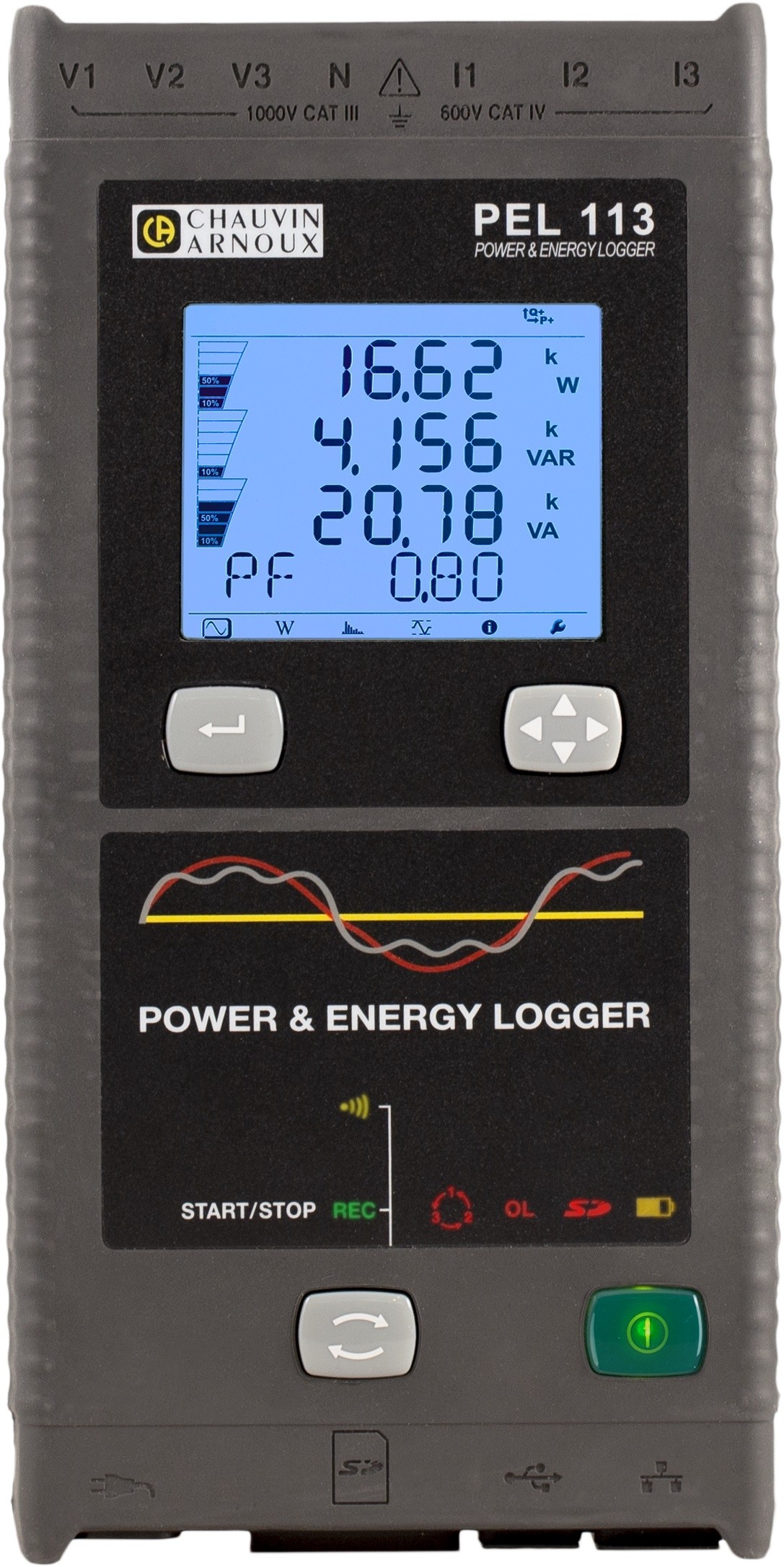
  • The PEL 113 measures and records all the power and energy values.
    It can be used wherever there is electricity:
    • electricity generator: renewable energies, thermal energy, etc.

  • correctly sized battery energy storage

  • inverter systems matched to real demand

  • protection designed for real-world conditions

  • margins for growth and misuse

Design precedes equipment selection — not the other way around.


10. The Right Question to Ask

When a solar power system fails, the most important question is not:

“Why did solar fail?”

The correct question is:

“Was this solar power system ever designed to succeed?”


Conclusion: Solar Technology Works. Poor Design Does Not.

Solar power is not experimental.
It is proven, reliable technology.

Failures occur when system design is treated as optional.

At Nocheski Solar, we design solar power systems for:

  • real usage

  • real environments

  • real consequences

Because solar panels generate electricity —
but only a properly designed solar power system delivers reliable power.


Solar Panels in Ghana: From Polycrystalline to TOPCon and HJT Explained Simply

Solar energy adoption in Ghana has grown rapidly over the last decade. Rising electricity tariffs, unstable grid supply, frequent outages, and the need for energy independence have made solar power a smart investment for homes, businesses, schools, and industries.

Yet one major challenge remains: solar panel technology is evolving faster than public understanding.

At Nocheski Solar, we meet many clients who ask:

  • Is monocrystalline still good?

  • What is TOPCon?

  • Is bifacial better for Ghana’s climate?

  • Is HJT worth the extra cost?

This article explains the evolution of solar panel technology, step by step, in simple, practical language, with a clear focus on what works best in Ghana.


1. Where It All Started: Polycrystalline Solar Panels

Polycrystalline panels were once common across Ghana because they were affordable and widely available.

Key Characteristics:

  • Made from multiple silicon crystals

  • Blue, grainy appearance

  • Lower efficiency (15–17%)

  • Require more roof or land space

Why They Are Becoming Obsolete:

In Ghana, roof space is often limited, and high temperatures reduce panel performance. Polycrystalline panels simply cannot deliver enough power efficiently under these conditions. Today, they are rarely recommended for serious solar projects.


2. The Industry Standard: Monocrystalline Solar Panels

Monocrystalline panels quickly replaced polycrystalline panels due to better performance.

Why Mono Took Over:

  • Higher efficiency (18–20%)

  • Better performance in heat

  • Longer lifespan

  • Sleek black appearance

For many years, monocrystalline panels formed the backbone of solar installations in Ghana—and they still perform reliably today.

https://www.youtube.com/watch?v=8aB_GY6rxPA


3. Smarter Engineering: Half-Cut and PERC Technology

To further improve output and durability, manufacturers introduced PERC and half-cut cell designs.

What This Improved:

  • Reduced internal power losses

  • Better heat resistance (important for Ghana’s climate)

  • Improved long-term reliability

These panels marked a major step forward and are still widely installed across residential and commercial projects.


4. Understanding Bifacial Panels (Very Important)

This is where confusion often begins.

Key Point:

👉 Bifacial is not a solar cell technology. It is a panel design.

What Makes a Panel Bifacial?

  • Electricity is generated from both the front and the back

  • The rear side captures reflected sunlight from the ground

  • Uses glass on both sides, not a white backsheet

Does Bifacial Work in Ghana?

Yes—very well, especially when:

  • Installed on light-colored roofs

  • Mounted above concrete, sand, or reflective surfaces

  • Used in ground-mounted or elevated systems

Bifacial panels can deliver 10–30% more energy depending on site conditions.

Solar Panels in Ghana: From Polycrystalline to TOPCon and HJT Explained

Solar Panels in Ghana: From Polycrystalline to TOPCon and HJT Explained in ghana


5. TOPCon Solar Technology: Built for Heat, Built for Ghana

TOPCon (Tunnel Oxide Passivated Contact) is one of the most important modern solar cell technologies.

What Is TOPCon?

TOPCon refers to how the solar cells inside the panel are engineered, not the external appearance of the panel.

Why TOPCon Is Ideal for Ghana:

  • Higher efficiency (23–24%)

  • Excellent performance in high temperatures

  • Lower degradation over time

  • Longer useful lifespan (25–30+ years)

Bigger Power, Fewer Panels:

TOPCon panels are now available in 600–700W ratings, which means:

  • Fewer panels on the roof

  • Reduced mounting and wiring costs

  • More power from limited space

For homes and businesses in Ghana, this translates directly into better return on investment.


6. TOPCon + Bifacial: Maximum Energy Output

Here is the most important clarification:

You can combine TOPCon cell technology with a bifacial panel design

  • TOPCon = how the cell is made

  • Bifacial = how the panel captures sunlight

Why This Combination Is Powerful:

  • Higher base efficiency

  • Additional rear-side power generation

  • Superior performance in open, sunny environments

👉 For most solar installations in Ghana today, TOPCon bifacial panels offer the best balance of performance, durability, and value.


7. HJT Solar Panels: The Premium Technology

HJT (Heterojunction Technology) currently represents the highest level of solar panel efficiency.

Advantages of HJT:

  • Highest efficiency available

  • Extremely low degradation

  • Outstanding performance in hot climates like Ghana

Considerations:

  • Higher upfront cost

  • More suitable for premium or large-scale projects

  • Best where maximum output per square meter is critical

HJT is ideal for high-end commercial, industrial, and utility-scale projects, but may not always offer the best cost-benefit for every home.


8. Solar Panel Technology Ranking (Simplified)

From highest performance to lowest:

  1. HJT Solar Panels

  2. TOPCon Solar Panels

  3. Half-Cut Monocrystalline (PERC)

  4. Polycrystalline Panels


9. What Really Matters in Ghana

In Ghana, there are no solar panel subsidies, so the decision must be based on:

  • Long-term energy output

  • Heat performance

  • Durability

  • Space efficiency

  • Total lifetime value—not just upfront cost

Choosing outdated technology may look cheaper today, but it costs more over time through lower energy production and faster degradation.


10. Nocheski Solar’s Expert Recommendation

🔑 Technology first. Brand second.

A well-engineered modern panel will always outperform an old design—even from a popular brand.

Our General Guidance:

  • Homes & SMEs: TOPCon bifacial

  • Commercial & Industrial: TOPCon or HJT

  • Large Ground-Mounted Systems: Bifacial TOPCon or HJT


Powering Ghana’s Solar Future

At Nocheski Solar, we design solar systems specifically for Ghana’s climate, grid conditions, and energy needs.
We don’t just sell panels—we build reliable, high-performance energy solutions that deliver real value for decades.

📞 Talk to Nocheski Solar today and let’s design the right solar technology for your home or business.

Smart solar starts with clear understanding. 🌞


Solar Power as the Ultimate Work-From-Home Perk for High-Performance Employees in Ghana

As remote and hybrid work become the new normal, forward-thinking employers in Ghana are discovering a powerful truth: reliable electricity is now a productivity benefit.

With frequent power outages, rising electricity tariffs, and generator fatigue, solar power systems are fast becoming the most valuable work-from-home perk for high-performance employees in Ghana.

For companies that depend on results—not excuses—solar energy is no longer optional.


The Reality of Working From Home in Ghana Today

Remote work in Ghana faces unique challenges:

  • ECG power outages and load fluctuations

  • Rising fuel costs for generators

  • Internet downtime during blackouts

  • Missed Zoom meetings and delayed deliverables

  • Reduced productivity for remote staff

For top-performing employees, these disruptions directly affect output, deadlines, and morale.

This is why companies are now investing in home solar power systems in Ghana as a strategic productivity solution.


Why Solar Power Is a Game-Changer for High-Performance Employees in Ghana

1. Guaranteed Power for Remote Work in Ghana

A professionally installed solar system with battery storage ensures uninterrupted electricity for:

  • Laptops and desktop computers

  • Wi-Fi routers and modems

  • Home office lighting

  • Air conditioners and fans

  • Printers and monitors

With solar, work continues even when the national grid fails.

In Ghana’s work-from-home economy, uptime equals income.


2. Solar Power as a Premium Employee Benefit in Ghana

Unlike cash bonuses that disappear, solar energy systems deliver long-term daily value.

Employers offering solar as a perk enjoy:

  • Increased employee loyalty

  • Reduced remote work disruptions

  • Stronger employer branding

  • Higher staff satisfaction

For employees, solar means:

  • Lower electricity bills

  • Zero generator stress

  • Improved home comfort

  • Better work-life balance

This makes solar one of the most powerful non-cash employee incentives in Ghana.


3. Improved Mental Wellness & Focus

Unstable power creates anxiety, stress, and frustration—especially for professionals handling deadlines, virtual meetings, and global clients.

Solar power eliminates:

  • Power outage anxiety

  • Generator noise and fumes

  • Productivity interruptions

  • Fear of missing critical meetings

Stable electricity = clear focus and peak performance.


4. Talent Retention in a Competitive Ghanaian Job Market

Top professionals in IT, finance, marketing, engineering, and consulting are in high demand.

When an employer installs home solar systems for key staff, it sends a powerful message:

“We invest in your productivity and well-being.”

This significantly reduces staff turnover and strengthens long-term commitment.


Solar Power as a Strategic HR & ESG Policy in Ghana

Leading organizations in Accra, Tema, and across Ghana are now:

Solar power supports:

  • Corporate sustainability targets

  • Carbon footprint reduction

  • Energy independence

  • Business continuity planning


Why Nocheski Solar Is the Trusted Solar Company in Ghana for Remote Work Solutions

Nocheski Solar is not just another solar installer in Ghana.

We are specialists in performance-driven solar power systems, with:

  • Over 20 years of experience in Ghana’s solar industry

  • Expertise in residential and commercial solar installations

  • Premium equipment from Victron Energy, Fronius, BYD, and other global leaders

  • Deep understanding of Ghana’s power challenges and load profiles

We design systems specifically for:

  • Remote professionals

  • Executives working from home

  • High-power home offices

  • Business-critical energy needs


Customized Solar Power Systems for Work-From-Home Professionals in Ghana

Nocheski Solar designs tailored solar solutions for:

  • IT professionals and software developers

  • Accountants and finance professionals

  • Digital marketers and content creators

  • Engineers and consultants

  • Corporate executives and managers

Our systems are optimized for:

  • Clean, stable power for sensitive electronics

  • Long battery autonomy

  • Future expansion

  • Maximum return on investment


Solar Power in Ghana: A Productivity Investment That Pays for Itself

For employers:

  • Increased productivity

  • Fewer missed deadlines

  • Stronger talent retention

  • Reduced operational risk

For employees:

  • Energy independence

  • Lower monthly electricity costs

  • Better working conditions

  • Peace of mind

Solar power is no longer a luxury—it’s a business performance tool.


The Future of Remote Work in Ghana Is Solar-Powered

As Ghana’s workforce continues to embrace remote and hybrid work, solar energy will define the most successful organizations.

Companies that act now will:

  • Attract elite talent

  • Retain high performers

  • Build resilient, future-ready teams


Talk to Nocheski Solar Today

If you are an employer, HR manager, or high-performance professional looking for reliable solar power systems in Ghana, Nocheski Solar is your trusted partner.

📞 Contact Nocheski Solar – Ghana’s Performance-Focused Solar Experts
🌞 Power productivity. Reward excellence. Go solar.


Victron Energy SmartSolar MPPT Charge Controllers

With Built-in Bluetooth Smart Technology

Available at Nocheski Solar – Ghana’s Trusted Solar Power Experts


Victron Energy SmartSolar MPPT – Intelligent Solar Charging Made Simple

The Victron Energy SmartSolar MPPT charge controller with built-in Bluetooth Smart is the gold standard in modern solar energy management. Designed for maximum energy harvest, real-time monitoring, and long battery life, this advanced MPPT controller is ideal for homes, businesses, telecom sites, water pumping systems, and off-grid installations across Africa.

At Nocheski Solar, we supply, install, and support genuine Victron Energy SmartSolar MPPTs backed by over 20 years of hands-on solar engineering experience.


Why Choose Victron SmartSolar MPPT from Nocheski Solar?

Higher Solar Yield – Up to 30% more energy than conventional PWM controllers
Bluetooth Built-In – No extra dongles required
Proven European Engineering – Designed in the Netherlands
Ideal for Ghana & Africa – Handles heat, dust, and unstable grid conditions
Expert Local Support – Sizing, installation & after-sales by Nocheski Solar


Key Features of Victron SmartSolar MPPT Controllers

🔹 Maximum Power Point Tracking (MPPT)

Victron’s ultra-fast MPPT technology continuously tracks the optimal voltage and current, extracting every possible watt from your solar panels—especially critical during cloudy weather or early mornings.

🔹 Built-In Bluetooth Smart

Monitor and configure your solar system wirelessly using the VictronConnect App on your smartphone, tablet, or laptop.

  • Real-time solar yield

  • Battery voltage & charge status

  • Historical performance data

  • Easy parameter configuration

No internet. No cables. No guesswork.

🔹 Intelligent Battery Charging

Supports:

Advanced charging algorithms protect batteries from over-charging, deep discharge, and thermal stress, significantly extending battery lifespan.

🔹 High Voltage & High Current Models Available

victron energy SmartSolar MPPT 150-70-Tr VE Can -LEFT

victron energy SmartSolar MPPT 150-70-Tr VE Can avaialble in Ghana

SmartSolar MPPTs are available in multiple sizes, including:

Perfect for small home systems to large commercial solar plants.


Ideal Applications

The Victron SmartSolar MPPT is trusted worldwide for:

  • ☀ Residential solar systems

  • 🏢 Commercial & industrial solar installations

  • 🚰 Solar water pumping systems

  • 📡 Telecom & remote monitoring stations

  • 🏥 Health facilities & vaccine cold storage

  • 🌍 NGO & donor-funded off-grid projects

Nocheski Solar has deployed Victron systems in urban, rural, and conservation areas, including critical health and water infrastructure projects.


Why Buy Victron Energy Products from Nocheski Solar?

Nocheski Solar is not just a reseller. We are system designers, engineers, and long-term partners.

When you buy from us, you get:

  • ✔ Guaranteed original Victron Energy products

  • ✔ Correct sizing & system design advice

  • ✔ Professional installation & commissioning

  • ✔ Training for NGOs, engineers & technicians

  • ✔ Long-term technical support in Ghana

📍 Operating since 2007
🌍 Experience across Ghana, Europe & emerging markets
🔧 Trained by Victron Energy, Fronius & leading European manufacturers


Victron SmartSolar MPPT Price in Ghana

Prices vary depending on model, voltage, and current rating.

👉 Contact Nocheski Solar for current pricing, bulk discounts, and project quotations.


Frequently Asked Questions (SEO Boost)

❓ What is the difference between MPPT and PWM charge controllers?

MPPT controllers are up to 30% more efficient, especially in high-temperature environments like Ghana.

❓ Can I monitor my Victron SmartSolar remotely?

Yes. Built-in Bluetooth allows full monitoring via the VictronConnect App.

❓ Is Victron SmartSolar compatible with lithium batteries?

Absolutely. Victron is one of the best brands globally for lithium battery integration.


Order Victron Energy SmartSolar MPPT Today

Power your solar system with precision, intelligence, and reliability.

📞 Call / WhatsApp Nocheski Solar
📧 Email: [email protected]
🌐 Website: www.nocheski.com

Nocheski Solar – Powering Africa with Intelligent Solar Solutions


Lithium Iron Phosphate (LiFePO₄) vs Lithium-Ion Batteries.

As solar energy adoption accelerates across Africa and globally, battery storage has become the heart of reliable solar systems. Choosing the right battery chemistry can mean the difference between long-term system performance and costly replacements.

Two technologies dominate today’s conversation:

  • Lithium-Ion (Li-ion)

  • Lithium Iron Phosphate (LiFePO₄ or LFP)

Although often grouped together, they are not the same, especially when used in solar and backup power applications. This article breaks down the real differences and explains which battery makes the most sense for solar systems in 2025.


What Is a Lithium-Ion Battery?

Lithium-ion batteries are a broad family of batteries that use lithium ions to store and release energy. They are widely used in:

  • Smartphones

  • Laptops

  • Electric vehicles

  • Power tools

Common lithium-ion chemistries include:

  • NMC (Nickel Manganese Cobalt)

  • NCA (Nickel Cobalt Aluminium)

These batteries are popular because they offer:

  • High energy density

  • Compact size

  • Fast charging

However, not all lithium-ion batteries are suitable for solar energy storage.


What Is a Lithium Iron Phosphate (LiFePO₄) Battery?

LiFePO₄ batteries are a specific and safer subtype of lithium technology designed for high-duty, long-life applications.

They are increasingly used in:

  • Residential solar storage

  • Commercial and industrial solar systems

  • Telecom backup power

  • Off-grid and hybrid energy systems

LiFePO₄ storage use iron phosphate as the cathode material, which dramatically improves safety and lifespan.


Key Differences Between Li-Ion and LiFePO₄ Batteries

1. Safety and Thermal Stability

Winner: LiFePO₄

  • Standard lithium-ion  can overheat and, in rare cases, catch fire if damaged or poorly managed.

  • LiFePO₄ batteries are thermally stable, resistant to overheating, and far less prone to fire or explosion.

👉 This makes LiFePO₄ ideal for homes, offices, hospitals, and schools.


2. Battery Lifespan (Cycle Life)

Winner: LiFePO₄

Battery Type Typical Cycles
Lithium-Ion 500 – 1,500 cycles
LiFePO₄ 3,000 – 6,000+ cycles

LiFePO₄ batteries can last 10–15 years in solar systems when properly designed and managed.


3. Depth of Discharge (DoD)

Winner: LiFePO₄

  • Lithium-ion batterie degrade faster if deeply discharged.

  • LiFePO₄ batteries comfortably operate at 80–100% depth of discharge without significant degradation.

This means:

  • More usable energy

  • Better value over time


4. Energy Density and Size

Winner: Lithium-Ion

  • Lithium-ion batteries store more energy in a smaller, lighter package.

  • LiFePO₄ batteries are slightly heavier and larger.

👉 For solar installations, this difference is usually not critical, especially in fixed installations.


5. Performance in Hot Climates

Winner: LiFePO₄

In regions like Ghana, Nigeria, Kenya, and much of Africa, ambient temperatures matter.

  • Lithium-ion battery degrade faster at high temperatures.

  • LiFePO₄ battery perform exceptionally well in hot environments, making them ideal for tropical climates.


6. Cost Over the Battery’s Lifetime

Winner: LiFePO₄

While LiFePO₄ battery may have a higher upfront cost, their:

  • Longer lifespan

  • Higher usable capacity

  • Lower replacement frequency

…make them cheaper per kilowatt-hour over time.


Why LiFePO₄ Is the Best Choice for Solar Systems in 2026

For modern solar installations—especially hybrid and off-grid systems—LiFePO₄ batterie are now the industry standard.

They offer:

  • Long service life

  • Superior safety

  • Excellent performance in harsh climates

  • Compatibility with leading inverter brands (Victron Energy, Fronius, SMA, etc.)

This is why most premium solar battery manufacturers (BYD, Pylontech, Dyness, Freedom Won, etc.) now use LiFePO₄ chemistry.


When Might Standard Lithium-Ion Still Make Sense?

Lithium-ion batteries may still be suitable for:

  • Portable devices

  • Electric vehicles

  • Applications where weight and size are critical

However, for solar energy storage, LiFePO₄ is overwhelmingly the better long-term investment.


Final Verdict: LiFePO₄ vs Lithium-Ion for Solar

Feature Lithium-Ion LiFePO₄
Safety ⚠️ Moderate ✅ Excellent
Lifespan ❌ Shorter ✅ Very long
Hot climate performance ⚠️ Average ✅ Excellent
Solar suitability ⚠️ Limited ✅ Ideal
Lifetime cost ❌ Higher ✅ Lower

If you are investing in solar in 2025, LiFePO₄  are the smarter, safer, and more economical choice.


Solar power+ Fish Farming Business in Ghana

Fish farming is one of Ghana’s fastest-growing agri business sectors, especially in regions like the Volta Lake, Ashanti, Bono, and parts of Northern Ghana. However, while demand for tilapia and catfish continues to rise, energy remains one of the biggest limiting factors for scaling aquaculture operations.

With many cage farms operating far from the national grid—or in areas where electricity is unreliable—solar power has emerged as a game-changing solution. Beyond simply providing electricity, solar energy enhances operational efficiency, reduces losses, and improves overall productivity.

Below are the key ways solar power boosts productivity in Ghanaian fish farms.

https://www.youtube.com/shorts/4V39mCqf8q

1️⃣ Reliable Power Supply for Remote Operations

Most fish farms on the Volta Lake and remote inland ponds operate far from grid access. Even grid-connected farms suffer from outages that disrupt operations.

Solar energy solves this by providing:

  • Continuous electricity for feeding, monitoring, and security
  • Stable power for 24/7 operations
  • Reduced downtime caused by power failures

This reliability translates directly into higher survival rates, faster fish growth, and lower operational risk.

2️⃣ Powering Automated Feeding Systems for Faster Growth

Modern high-capacity farms rely on:

  • Automatic feeders
  • Feeding cameras
  • Feed blowers
  • Smart feeding algorithms

These systems require steady electricity to deliver feed accurately and consistently.

Solar ensures:

✔ Fish are fed on time
✔ Optimized feed conversion ratios (FCR)
✔ Reduced feed waste
✔ Improved growth cycles

With feed making up 60–70% of operational costs, solar-powered automation significantly boosts profitability.

3️⃣ Running Aeration & Water Quality Systems

Healthy fish require:

  • Adequate dissolved oxygen (DO)
  • Stable temperatures
  • Clean water circulation

Solar systems can power:

  • Paddlewheel aerators
  • Air pumps
  • Submersible circulation pumps
  • Water quality sensors

This reduces fish stress, prevents sudden mortalities, and leads to healthier, more resilient stock.

4️⃣ Enabling Security & Surveillance Systems

Fish farms lose millions annually to:

  • Nighttime theft
  • Poaching
  • Net vandalism
  • Sabotage

Solar systems can power:

  • Radar systems
  • CCTV cameras
  • Motion sensors
  • Security lighting
  • Alarms and communication devices

Like those used on Volta Lake floating platforms, radar systems help farmers track vessels approaching cages—preventing theft before it happens.

This increases farm safety and protects valuable fish stock.

5️⃣ Lowering Operational Costs by Eliminating Diesel Dependency

Diesel generators are:

  • Expensive to fuel
  • Expensive to maintain
  • Noisy and harmful to fish
  • Logistically difficult to supply in remote areas
  • Prone to failure

Solar power drastically reduces operating costs:

  • Fuel expenses drop 60–90%
  • Maintenance costs drop
  • System lifespan exceeds 20–25 years

Every cedi saved boosts productivity and profitability.

6️⃣ Improving Worker Efficiency & Safety

With reliable solar power:

  • Workers can operate at night
  • Feeding and harvesting can happen in early hours
  • Communication between boats and control centers is consistent
  • LED lighting improves visibility for night patrols
  • Safety equipment remains powered

This fosters a professional, well-organized aquaculture environment.

7️⃣ Supporting Digital Fish Farming Tools

Smart aquaculture is becoming the new standard.

Solar allows farms to use:

  • IoT sensors (DO, ammonia, temp, turbidity)
  • Real-time monitoring apps
  • GPS tracking systems
  • Cloud-based reporting
  • Biomass estimation tools (camera vision AI)

These tools help farmers make data-driven decisions, improving productivity and reducing waste.

8️⃣ Enhancing Sustainability & Attracting Investors

Ghana’s aquaculture sector is moving toward:

  • Climate-smart agriculture
  • Lower carbon emissions
  • Environmentally safe food production

Solar-powered fish farms are more attractive to:

  • Investors
  • Development agencies
  • Export partners
  • Certification bodies

By reducing emissions and preventing fuel pollution, solar improves the environmental footprint of aquaculture operations.

9️⃣ Powering Floating Control Platforms on Volta Lake

Large farms often use floating barges to house:

  • Radar systems
  • Feeding equipment
  • Staff quarters
  • Communication hubs
  • Monitoring centers

Installing solar on these platforms is essential because:

  • They operate far offshore
  • Generators are unstable on floating surfaces
  • Solar provides silent, uninterrupted power
  • Radar and surveillance require 24/7 electricity

This enables safer navigation, especially at night when the lake becomes hazardous.

🔟 Increasing Yield, Reducing Losses, and Scaling Profitably

When power becomes reliable, everything improves:

  • Feed conversion ratios (FCR) drop
  • Mortality rates fall
  • Growth cycles shorten
  • Harvest sizes increase
  • Operations run smoothly year-round

Solar transforms fish farming from unpredictable to professional and scalable.

Top Fish Species for Ghana Aquaculture

Let’s look a bit closer at why these fish are so popular and suitable for farming in Ghana.

tilapia fish farming business in ghana

tilapia solar fish farming business in ghana

  • Nile Tilapia (Oreochromis niloticus)21: This is probably the most widely farmed fish in Ghana. They are hardy, meaning they can tolerate a range of water conditions. They are also prolific breeders, which can be both a good thing (easy to get fingerlings) and a challenge (can lead to overpopulation and stunted growth if not managed). Tilapia are primarily herbivores/omnivores, and can be fed on a variety of diets, including some plant-based feeds, which can sometimes help manage feed costs. I’ve seen them do well in ponds, cages, and tank systems.
  • catfish farming business in ghana

    solar fish farming in ghana

    African Catfish (Clarias gariepinus)22: This is another very popular choice. Catfish are known for their fast growth rate and their ability to tolerate low oxygen levels in water because they can breathe atmospheric air. This makes them quite resilient. They are carnivorous and require high-protein feed, which can be a significant cost factor. However, their market price is generally good, and they are highly sought after for their taste. I’ve seen impressive yields from well-managed catfish farms.

🌞 Conclusion: Solar Power Is the Future of Fish Farming in Ghana

Solar energy is not just an alternative source of power—it is a strategic productivity enhancer that revolutionizes how aquaculture businesses operate in Ghana.

From powering essential systems to enabling smarter decision-making, solar gives fish farmers the tools they need to grow sustainably, cut costs, improve yields, and stay competitive.

For operations on the Volta Lake and beyond, solar power is the backbone of modern aquaculture.