What is Ghana’s solar power potential ? The country is blessed is with decent solar  irradiation year round.Ghana is in fact  notorious for its scorching sunlight.

Before I begin, permit me to ask this, if Oil and Gas for Thermal Power Plants and the other fossils are that “Cheap” as some want us to believe, why then are electricity rates still going up?Every hour, the sun radiates more energy onto our earth than the entire human population uses in one whole year. The technology required to harness the power of the sun is available now. Solar power alone could provide all of the energy Ghanaians consume and there is no shortage of solar energy like there has been with the Akosombo Dam in recent days. The truth is, we do not need advanced math skills to follow and perform the solar arithmetic to prove that Ghana’s energy independence could be achieved with solar energy.

Every square meter (1m²) of the earth’s surface, when exposed to direct sunlight, receives about 1000 watts (1 kilowatt) of energy from the sun’s light. In reality, this power per hour for every square meter (1m²) might be more or less, depending on the angle of sunlight, which changes with the time of day, and the geographical location. On average, the sub Saharan region of Africa receives about (3 – 4 kilowatt per hour) of solar energy.

Nonetheless, studies have revealed promising potential for this resource in Ghana. According to the SWERA Ghana Project report, Wa, the capital of the Upper West region, has the highest level of solar irradiation (5.524 KWh/m2-day) across the country. May is the month with the highest solar irradiation (5.897 KWh/m2-day), with August recording the lowest measurement (4.937kWh/m2-day) in Wa. Akim Oda on the contrary is the location that records the lowest radiation (4.567kWh/m2-day) measurements across the country. The highest measurement in Akim Oda was recorded in the month of April (5.176kWh/m2-day) and the lowest in August (3.802kWh/m2-day).


Table 1: Summary of Solar irradiation in kWh/m2-day – SWERA Report

Synoptic Station Ground

(kWh/m2-day)

Satellite

(kWh/m2-day)

% Error
Kumasi 4.633 5.155 -11.3
Accra 5.060 5.180 -2.3
Navrongo 5.505 5.765 -4.7
Abetifi 5.150 5.192 -0.8
Akuse 4.814 5.58 -15.9
Wa 5.520 5.729 -3.7
Akim Oda 4.567 5.177 -13.3
Wenchi 5.020 5.093 -1.5
Ho 5.122 5.223 -2.0
Kete Krachi 5.280 5.345 -1.3
Takoradi 5.011 5.200 -3.8
Yendi 5.370 5.632 -4.8
Bole 5.323 5.570 -4.6


This estimate tells that sunlight will provide useful solar energy for about 4 to 6 hours per day because during the early hours and late hours of the day the angle of the sun’s light is too low.Therefore, let us assume for every square meter (1m²) exposed to continuous direct sunlight [in an optimal geographical location] for an average of 4.5 hours a day, we will have received 4.5 hours x 1000 watts = 4500 watthours (4.5kwh/m²) of solar energy during the course of a day (Ghana’s solar power potential). It would be great if 100% of the sunshine became electricity, but solar energy and electricity are not the same. Technology accomplishes the conversion of solar energy to electricity.

What is Ghana's solar power potential?
Revelers enjoy sunlight and water at Ghana’s famous Labadi beach in Accra

Conversion of one form of energy to another always causes a loss of energy. In other words, the new form of energy will be less than the original. Efficiency is the word used to describe the difference in power resulting from the conversion of one form of energy to another. The efficiency of commercially available solar panels (PV) is now between 15% – 40.7%. This means that when a solar panel converts the sun’s light to electricity, only about 15 to 40.7 percent of the energy in the sunlight becomes electricity. The same thing is true of gasoline in your car and other thermal engines. Your car’s engine can only convert about 25 percent of the energy in gasoline to mechanical energy that turns the wheels.

With an average efficiency of 15 to 40.7 percent, every square meter (1m²) of solar photovoltaic cells (PV) would produce (4.5 kilowatthours of solar energy multiplied by 15% =) between 0.68 kilowatthours of electric energy per day.

Solar panels (PV) covering an area of 100m²(1 Plot of Land) would produce 100 x .68 = 68 kilowatthours of electricity per day. It is worth noting that 68kwh per day is a lot of electricity for a single family home.


Let’s juxtapose this arithmetic nationwide to the unused land surface:

– Size of Unreserved forest land in Ghana = 5 x 10³km² è 5 x 10⁹m².

– Assuming a Conversion Efficiency (Solar Panels) of 15%.

– Average Solar Irradiation 4.5kilowatthours (kwh) è 4500wh/day

– Annual average solar radiation = 4.5 x 365 è 1642.5kwh/m².y

– Assuming a Performance ratio, coefficient for losses of 0.75

So, 0.15 x 1642.5kwh/m².y x 5 x 10⁹m² x 0.75  è 923.9Gwh/y

What is Ghana's solar power potential ? The country is blessed is with decent solar  irradiation year round.Ghana is in fact  notorious for its scorching sunlight. power issues still prevailin May 2015 #DumorMustStop campaign was spearheaded by Ghanaian actress Yvonne Nelson and was patronized by many other celebrities
in May 2015 #DumorMustStop campaign was spearheaded by Ghanaian actress Yvonne Nelson and was patronized by many other celebrities

Like in Germany where Solar energy powered 50% of its midday electricity needs on May 26, 2012, this amount of energy can be used for same in Ghana.It is interesting to note that this amount of energy has been calculated from an area of 5,000km² which is only 2% of the total surface area of Ghana.In 2004, Ghanaians consumed 5,158 gigawatthours (GWh) of electricity. NEDCO alone contributed 340GWh out of this figure. This contribution from NEDCO is only one third of my estimate of the calculated solar potential. It is estimated that about half of this amount is consumed by domestic (or residential) consumers for household uses such as lighting, ironing, refrigeration, air conditioning, television, radio and the like.

In conclusion, let me say that the improved technology surrounding solar power is very significant. It has brought clean energy within practical use. Given the significant environmental benefits, there is a very strong case for government intervention to accelerate the switch to solar power. Considering Ghana’s solar power potential,  the reluctance to switch to solar power is delaying our national progress in living standards.

Source: Maxmillian Kwarteng | Gramax Energy Group – GEG | [email protected]


Bill Gates once again shunned solar power from his vision for energy access in Africa in his talk at the University of Pretoria in South Africa on Sunday, where he argued that whilst “cheap, clean energy” is what Africa needs, solar does not fit the bill.

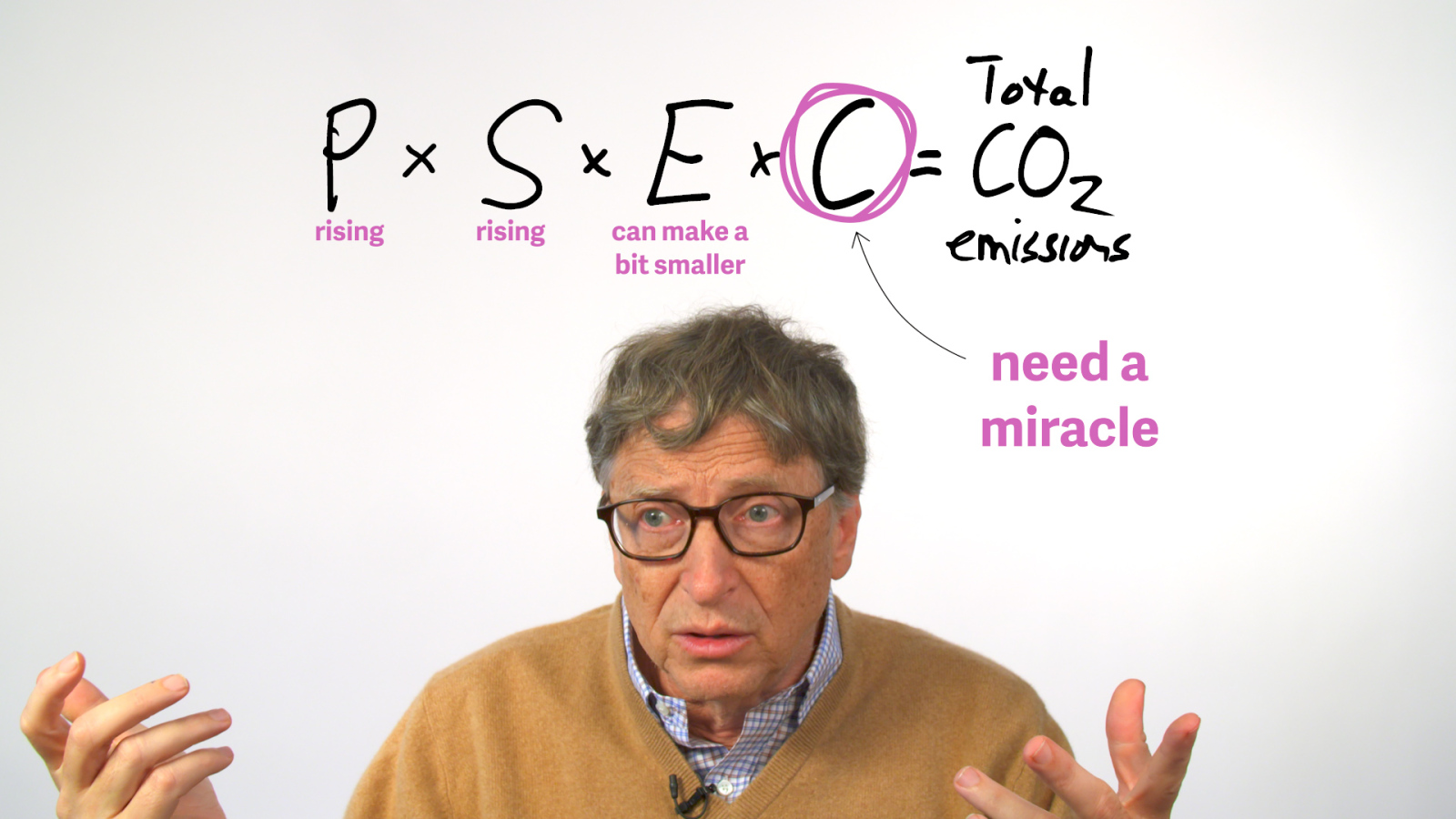
During the delivery of his Nelson Mandela Annual Lecture, the Microsoft founder and philanthropist identified that Africa, like the rest of the world, is in need of a “breakthrough energy miracle that provides cheap, clean energy for everyone.”

Africa is more dependent on such a phenomenon than other continents, because seven in ten Africans still lack power at present, while more than 500 million Africans still will not have electricity by 2040.

This is not the first time Gates has taken a less than welcoming stance to solar power. In February, during an interview with a news outlet, he echoed a similar thought. “When I say ‘an energy miracle’,” he said, “I mean that there will be some form of energy whose 24-hour cost really is competitive with hydrocarbons given, say, 20 years of learning curve.

“You invent it, then you look at how much its costs go down over the next 20 years, that it really beats hydrocarbons.

“You might say, well, aren’t people saying that about wind and solar today? Not really. Only in the super-narrow sense that the capital costs per output, when the wind is blowing, is slightly lower.”

In fact, Gates has been advocating anti-solar sentiment for a while. In 2014, he blogged about energy poverty, arguing for outdated fossil fuel solutions to tackle the electricity deficit in underdeveloped economies, characterising energy poverty as a climate issue.

Solar is ‘not enough’

In the speech on Sunday, the software entrepreneur recommended increased investment in renewables, namely hydropower and geothermal. He went on to argue that recently launched solar power initiatives have not been enough:

“There has been a lot of experimentation with small-scale renewable energy, including micro solar,” he said. “This approach can provide individuals with some electricity for basic purposes, but it’s not going to be the solution for the continent as a whole.”

PV Tech contacted the South African Photovoltaic Industry Association (SAPVIA), who vehemently disagreed with Gates’ sentiments.

“To downplay the role that solar photovoltaics (PV) can play as part of a unique African energy mix in the strive to alleviate Africa’s energy constraints would be irresponsible,” a spokesperson said, whilst citing data that should deem solar a ‘no brainer’ solution for Africa: “Africa has 7 of the 10 sunniest countries on earth and, according to IHS Technology, a US-based economic and energy market research company, Africa’s total solar power–generating capacity is projected to reach 3,380MW by 2017.”

bill-gates-quote

Solar deployment in Africa

In fact, solar power is undergoing rapid deployment and implementation as many countries across the continent are battling energy crises and look to alternatives to expensive fossil fuels such as diesel and coal. A series of feed-in tariffs and solar tenders have offered a foray into a solution that not only is clean and inexpensive, but is easily accessible.

In South Africa in particular, the Renewable Energy Independent Power Producer Procurement Programme (REIPPPP) has successfully awarded 965MW of new solar capacity, which SAPVIA points out “is being delivered on time and on budget”.

“The rapidly escalating uptake of the technology in the rest of Africa can be clearly seen,” argued SAPVIA. “Expedited solar PV roll-out is being seen as supportive policies and regulations, such as the Get FIT Programme are developed and implemented. These policies and programmes, combined with the drop in the cost of PV technology (currently fully off-grid solar-PV technologiesdeployed at site can be deployed for as little as US$ 0.15/kWh and they do not require additional expensive transmission networks to move the electricity around), [we] see solar PV will make a significant impact on Africa and its energy challenges.

“One can expect – as has happened in South Africa – as the necessary supportive policies and regulations are scaled up, the rest of Africa will experience an increased uptake of solar PVtechnology. New renewable energy markets in Africa are already showing greater appeal to international and local investors – further spurring the uptake of solar PV in African markets.”


Salima Visram is the 23-year-old entrepreneur behind the Soular, a backpack company equipped with solar panels, which allow children who don’t have access to electricity in rural parts of Africa to study at night without having to use an expensive and carcinogenic kerosene lamp. Soular will be launching a new one-for-one model today, through the sale of trendy backpacks on HSN in collaboration with Disney, alongside their new movie, Queen of Katwe, which is set in rural Uganda, where the kerosene lamp is central to the plot of the story.

“I was inspired to launch Soular after seeing how some children in Kenya, where I grew up, were not able to study every day and get into secondary school, which perpetuated the vicious cycle of poverty,” Visram said.

these school children seem very excited about their solular backpacks

Oscar winner Lupita Nyong’o, who stars in Disney’s Queen of Katwe, is a supporter of Soular Backpack. Nyong’o and Disney went with the Soular team to Katwe in Uganda to distribute backpacks there in July.  Soular will also be showcased at the premiere of the movie in Hollywood later this September.

“On every Soular Backpack, there’s a quote from Lupita that reads, ‘The Power Is In Your Step,’” Visram said. watch the video here

Visram launched Soular by starting a crowdfunding campaign, which exceeded its goal by 25% raising $50,000. Soular has since distributed hundreds of backpacks across Kenya, Uganda and Tanzania.

“So far, we’ve distributed backpacks to 500 children but we’ve realized that with one backpack in the family, on average 3 children are able to study with it,” Visram said.

Soular’s new one-for-one backpack

Visram has big plans for Soular.

“The next phase of Soular would be to scale the one-for-one model across North America in a big way and make sure that everyone who needs a backpack is aware that they could buy a backpack that gifts light to a child in need,” Visram said. “We’re excited to position ourselves as a leading backpack company that stands to create social impact.”

Soul’s new one-for-one backpack is for sale on HSN for $49.95 in two colors, navy and white

Visram stays committed to making Soular a company that finds sustainable solutions to poverty.

Salima Visram, founder of Soular, with the new backpack for sale on HSN

“My vision for Soular is to make a holistic system of interventions and services that give people the tool to alleviate themselves from poverty,” Visram said. “We want to partner with a bank, so that the money saved on kerosene every month goes into a secondary education fund for the child. We want to set up micro-franchises in rural villages to sell lamps and batteries, in order to generate employment. We’ve just moved production to Kenya, which is creating more employment and impact within the region. Realizing how electricity is at the center of education, health and economic development is also something that inspired me to start it.”


100 MW Ghana Solar Farm Gets Funding

Home Energy Africa, which specializes in the development and sales of renewable energy products for businesses, governments, and residential homes in Africa, has obtained a $705,000 grant from the US Trade and Development Agency (USTDA) for the development of a solar PV power generation project in Ghana.

Projected to begin construction in 2017, ESI Africa reports that this solar project will generate 100 MW of power, providing electricity to approximately 80,000 average homes in the country.

The agreement between the two countries was signed by Robert P. Jackson, the US Ambassador to Ghana, and Charles Sena Kwadzo Ayenu, CEO of Home Energy Africa.

“Lack of power is a challenge we see across sub-Saharan Africa. Two out of three people in this region lack access to electricity. That hinders business, and it hinders prosperity. We’ve made increasing access to power one of the top priorities for our bilateral relationship. Today’s grant is just one more way we’re bringing together government and the private sector to make Ghana’s future brighter,” said Jackson.

Boosting the Supply of Electricity

“One of Ghana’s paramount constraints to sustainable economic growth is the country’s inadequate electric power supply. This grant will support us in bringing our solar power PV project to financial close in order to fill the gap in power supply, meet Ghana’s goals for clean and sustainable energy, help create over 200 jobs to local communities and provide electricity to at least 80,000 average homes in Ghana,” said Mr. Ayenu.

Ayenu stated Ghana presently has 2,450 MW of installed capacity, adding: “The government of Ghana aspires to double that capacity to 5,000 MW this year, including 10% from renewable sources.”

The USTDA grant targets providing technical assistance to Home Energy Africa by using GreenMax Capital Advisors, an American firm, in finalizing the legal and financial details necessary to implement the project. Project assistance includes preparation for power purchase agreement negotiations with the Electricity Company of Ghana, services contracts, and financial arrangements.

Ayenu said the signing of the grant was the last barrier that the company has had to cross for work to begin on the project. He added that the firm has also acquired a 30% equity funding agreement for the $150 million project.

Originally published on Planetsave.


German automaker BMW has unveiled its new solar carports in South Africa, which it will begin rolling out in July.

The BMW i solar carport supplies an average of 3.6 kW of solar power straight to the BMW i Wallbox, which is used to charge electric and plug-in hybrid BMW models and which is equipped with a live readout of how much power is being generated by the sun.

Tim Abbott, CEO of BMW Group South Africa and Sub-Sahara, said the company was the first automaker to offer such a broad-based EV smart charging product to reduce costs for customers. The rollout is part of the company’s global efforts to expand home and publicly accessible charging infrastructure for electric vehicles, Abbott added.

In the coming months, BMW Group South Africa will expand the installation of the solar carport in major cities, including Johannesburg, Cape Town and Durban, for public charging.

Customers and fleet companies will also be able to order the solar carport for home and office charging.

“We have always emphasized that in order for electric vehicles and plug-in hybrid electric vehicles to be successful, we need to firstly increase consumer confidence in the viability of electric vehicles and secondly make public charging easily accessible for customers who purchase these cars,” Abbott said. “The roll-out of the solar carport is also an emphasis on this philosophy.”

The solar carport is produced by PV solar system designer and installer Sunworks. It is made of high-end bamboo and stainless steel housing for the glass solar modules.

Bamboo is considered a particularly sustainable and high strength-to-weight ratio natural composite material useful for structures, BMW said.

watch video [youtube id=”QSXsyFsDVec”]

sources:PV magazine, BMW blog


Apple has a solar power problem. It has too much of it. Worldwide, Apple gets 93% of the electrical energy it needs from solar and other renewable sources. That electricity runs its stores, offices, and datacenters worldwide. But in California and Nevada, it gets more electricity than it can use from the solar power installations it has constructed.

Apple Inc. plans to sell excess electricity generated by solar panels on the roof of its new headquarters in Cupertino, California, joining Google parent Alphabet Inc. in efforts to trade on the energy market.

A subsidiary named Apple Energy LLC has applied to the U.S. Federal Energy Regulatory Commission to sell power from the site’s solar panels and hydrogen fuel cells, as well as from solar farms, hydroelectric plants and biogas facilities in Oregon, North Carolina, California, Nevada and Arizona, according to a June 6 application submitted by Apple to the agency. The filing was reported earlier by 9to5Mac.com.

Apple, which plans to move into Apple Campus 2 next year, and Google are among the biggest investors in energy projects outside the utility industry.

The iPhone maker spent $850 million last year on a 130-MW solar farm south of San Francisco. If Apple’s application is approved, it will be able to sell energy directly to customers, rather than through an energy utility, beginning Aug. 5. It says in its application it should be able to sell energy at market rates since it’s not a big energy company and can’t influence the price of electricity.

Even with the excess capacity it has at the moment, Apple plans to add another 521 megawatts of solar power capacity worldwide, according to its 2016 Environmental Responsibility Report. Is there a connection between the desire to add renewable energy capacity and Apple’s not-so-secret plan to build an electric car? Apple is known to have an interest in electric car charging technology. Perhaps it plans to create a network of electric car recharging stations to compete with the Tesla Supercharger network?

It would be an excellent marketing strategy if it could claim all the electricity needed to recharge electric cars comes from renewable sources. Tesla already gets the power for its Supercharger stations from some renewable energy sources, but it cannot say all the electricity it needs for the network comes from solar power. At least not yet. Google secured similar rights back in December 2010 under the trade name Google Energy.

sources:Bloomberg,MSN, The Verge,Apple inc


Have  heard about inverter technology ? Air Conditioners are a pain point for most people in our country who are concerned about their electricity bills. The moment an air conditioner is added to the list of appliances used in a household, the electricity bills increase significantly. Although it is difficult to significantly reduce the “big” impact of an air conditioner on your electricity bills, but still some of it can be managed by choosing the right technology, doing the right installation/maintenance/operation and by doing the right insulation of the room where the air conditioner is used.

WATCH VIDEO

When it comes to technology, there were not many available in the past. When BEE actively started analyzing and labeling the air conditioners, we got some good one in form of 5 star air conditioners. The latest and the most efficient technology that is available in market today is the Inverter Technology for air conditioners. Inverter technology is designed in such a way that it can save 30-50% of electricity (units consumed) over a regular air conditioner.

How does an air conditioner function?

For most people, an air conditioner just throws cool air at the temperature one sets it at. But does it really work that way? In principle, an air-conditioner during the cooling process, takes the indoor air, cools it by passing it through evaporator and throws it back in the room. It is quite opposite to how our good old air coolers used to work. Air coolers used to take outside air, cool it with water and throw it in. But air conditioners just work on internal air. Along with evaporator air conditioner also has a compressor that compresses the gas (refrigerant) in the AC to cool it that in turn cools the incoming internal air from the room.

In a regular air conditioner:
The compressor is either off or on. When it is on, it works at full capacity and consumes full electricity it is designed to consume. When the thermostat reaches the temperature level set in the AC, the compressor stops and the fan (in AC) continues to operate. When the thermostat senses that the temperature has increased, the compressor starts again.

Air Conditioners with Inverter Technology

The inverter technology works like an accelerator in a car. When compressor needs more power, it gives it more power. When it needs less power, it gives less power. With this technology, the compressor is always on, but draws less power or more power depending on the temperature of the incoming air and the level set in the thermostat. The speed and power of the compressor is adjusted appropriately. This technology was developed in Japan and is being used there successfully for air conditioners and refrigerators. This technology is currently available only in split air conditioners.

What is benefit of Inverter Technology?

Every air conditioner is designed for a maximum peak load. So a 1.5hp AC is designed for a certain size of room and 1 hp for a different size. But not all rooms are of same size. A regular air conditioner of 1.5hp capacity will always run at peak power requirement when the compressor is running. An air conditioner with inverter technology will run continuously but will draw only that much power that is required to keep the temperature stable at the level desired. So it kind of automatically adjusts its capacity based on the requirement of the room it is cooling. Thus drawing much less power and consuming lesser units of electricity.

Although air conditioner with Inverter Technology adjusts its capacity based on the room requirement, it is very important to install a right sized air conditioner in a room. Please make sure that you evaluate the room and air conditioner capacity before you make a purchase. Keep watching for this space as we are in process of creating a comparison for electricity savings in various air conditioners brands.


Victron Energy Multiplus inverter -Now improved with faster switching to grid.It can now switch much faster from inverter mode to mains mode. Combined with our high peak power ratings, this makes it possible to switch to mains mode before shutting down in an inverter overload alarm. This is especially useful in Self-consumption Hub-1 and 2 installations: it allows using an inverter/charger with a nameplate power below the system power. Victron Energy Multiplus  inverter improved: faster switching to grid

The old hardware will take approximately 8.5 seconds to switch from inverter- to charger-mode, the new hardware can do it within half a second. Some notes:

  • single phase installations will be even faster than the half a second mentioned;
  • fast switching is only possible in the 3xx firmware versions. The difference between 3xx on one hand, and 1xx and 2xx on the other hand is approximately another 0.5 second in the worst case scenario: slightly differing frequency, and inverter being 180 degrees out of sync with the grid;
  • all larger models, 3kVA and upwards, already have fast-switching since a long time;
  • do not forget the other limit to using an ‘undersized’ Victron Energy  multiplus Compact in an installation: the AC transfer capacity. Max system load may never exceed the transfer switch capacity;
  • the load-shedding functions in the self-consumption hub-1 and 2 Assistants give options to further undersize a Victron Energy  Multiplus Compact: use an external relay which is controlled via the Auxiliary output;
  • mentioned switching delays have not been measured exactly;
  • for parallel and three-phase operation, please check the Disqus comments below.

Lots of little details, but all together the conclusion is that this significantly reduces the chance of a Victron switching off in overload condition. Victron Energy  inverter improved: faster switching to grid

Availability

Despite stock and production logistics, all different models are shipping with the new hardware. Below table gives an overview of the current situation, from our main warehouse DSV in the Netherlands.