As Ghana strives towards energy independence and sustainability, solar energy is emerging as a key solution. With abundant sunlight year-round, Ghana is ideally positioned to harness solar power and transform its energy landscape. This article explores the latest trends and innovations shaping the future of solar energy in Ghana, highlighting advancements in technology, government policies, market dynamics, and the integration of electric vehicles that are set to drive the country’s renewable energy revolution.
Advancements in Photovoltaic Technology
One of the most significant trends in the solar energy sector is the continuous improvement in photovoltaic (PV) technology. Newer, more efficient solar panels are being developed, capable of converting a higher percentage of sunlight into electricity. Innovations such as bifacial solar panels, which capture sunlight on both sides, and thin-film solar cells, which are lighter and more flexible, are making solar installations more versatile and efficient. These advancements are particularly beneficial for Ghana, where maximizing energy output is crucial due to the country’s high solar irradiance levels.
Energy Storage Solutions
Effective energy storage is essential for the widespread adoption of solar power. In Ghana, where power outages and grid instability are common, reliable energy storage systems can ensure a steady supply of electricity. Innovations in battery technology, such as lithium-ion and flow batteries, are improving the capacity and lifespan of solar energy storage solutions. Additionally, research into supercapacitors and other emerging storage technologies promises even greater efficiency and reliability. These advancements will enable Ghanaian households and businesses to store excess solar energy for use during nighttime or cloudy periods, enhancing the overall reliability of solar power systems.
Smart Grid Integration
The integration of solar energy with smart grid technology is another trend poised to transform Ghana’s energy sector. Smart grids use digital communication technology to monitor and manage electricity flows, allowing for more efficient and responsive energy distribution. By incorporating solar power into a smart grid, Ghana can optimize energy use, reduce waste, and improve grid stability. Smart meters, demand response systems, and real-time data analytics are some of the tools that can help integrate solar energy more effectively, providing consumers with greater control over their energy consumption and costs.
Government Policies and Incentives
Supportive government policies and incentives are crucial for the growth of the solar energy sector. In recent years, the Ghanaian government has introduced various measures to promote renewable energy adoption. The Renewable Energy Act, for example, provides a framework for the development and utilization of renewable energy sources, including solar power. Additionally, initiatives such as the Solar Rooftop Programme offer financial incentives and subsidies for residential and commercial solar installations. These policies not only make solar energy more accessible and affordable but also encourage investment in the sector, driving further innovation and development.
Solar Financing and Investment
Access to financing is a significant barrier to solar energy adoption in Ghana. However, innovative financing models are emerging to address this challenge. Pay-as-you-go (PAYG) systems, for instance, allow consumers to pay for solar energy in affordable installments, reducing the upfront cost of solar installations. Microfinance institutions and crowd-funding platforms are also playing a role in providing the necessary capital for solar projects. By making solar energy more financially accessible, these models are helping to accelerate the adoption of solar power across the country.Banks such as Ecobank,Fidelity,Stanbic and ABSA have already rolled out products with special lending rates .
Local Manufacturing and Job Creation
The growth of the solar energy sector presents significant opportunities for local manufacturing and job creation in Ghana. Establishing local production facilities for solar panels and components can reduce costs, create jobs, and stimulate economic growth. Training programs and vocational courses in solar technology can equip the workforce with the necessary skills, ensuring a steady supply of qualified technicians and engineers to support the industry. By fostering a robust local solar industry, Ghana can enhance its energy security and reduce its dependence on imported energy sources.
Rural Electrification
Solar energy is playing a crucial role in rural electrification efforts in Ghana. Off-grid solar systems provide a viable solution for remote areas that are not connected to the national grid. Solar home systems, mini-grids, and solar lanterns are being deployed to bring electricity to underserved communities, improving living standards and economic opportunities. These initiatives not only provide clean and reliable energy but also contribute to social and economic development in rural areas.
Public Awareness and Education
Raising public awareness and education about the benefits of solar energy is essential for its widespread adoption. Campaigns and programs that highlight the environmental, economic, and social advantages of solar power can encourage more Ghanaians to consider renewable energy. Schools, community centers, and media outlets can play a vital role in disseminating information and promoting sustainable energy practices. By fostering a culture of sustainability and environmental stewardship, Ghana can ensure long-term support for its renewable energy goals.
Solar-Powered Electric Vehicles
The integration of solar energy with electric vehicles (EVs) is an exciting trend that holds great promise for Ghana. Solar-powered EV charging stations can provide a sustainable and cost-effective way to power electric vehicles, reducing dependence on fossil fuels and lowering greenhouse gas emissions. This synergy between solar energy and EVs can help address the country’s transportation energy needs while promoting cleaner air and a healthier environment. Additionally, advancements in EV battery technology and the expansion of charging infrastructure will support the growth of EV adoption in Ghana, further enhancing the role of solar energy in the country’s energy landscape.Brand such XPeng G6 , BYD Dolphin ,Geely Radar RD6 · BYD Seagull , Fang Sheng Bao can be seen on the streets of Accra on the daily basis.
Conclusion
The future of solar energy in Ghana is bright, with numerous trends and innovations driving the sector forward. Advancements in photovoltaic technology, energy storage solutions, smart grid integration, supportive government policies, innovative financing models, local manufacturing, rural electrification, public awareness, and the integration of solar energy with electric vehicles are all contributing to the growth of solar energy in the country. As Ghana continues to harness its abundant solar resources, it is poised to become a leader in renewable energy in West Africa, achieving greater energy independence, economic development, and environmental sustainability. By staying at the forefront of these trends and innovations, Ghana can secure a sustainable energy future for generations to come.
Energy is expensive and is becoming more expensive by the day.
It’s very likely that energy costs are a significant proportion of your businesses’ outgoings, so keeping those costs under control – and reducing them if possible – is important for maintaining profitability and achieving future success.
There is no shortage of organisations that are only too pleased to offer their services to help you do this – for a fee, naturally! The usual promise is that they will find you a cheaper energy supplier and there is, of course, nothing wrong with that. The Department of Energy and Climate Change has repeatedly said that almost every business can benefit by shopping around for energy and being prepared to change supplier to get a better deal.
But we urge you take a wider view. Don’t think only about how much you pay per kWh for your energy, think also about how effectively you use the energy on which you’re spending your hard-earned cash. To introduce you to the way we think, here’s a simple but rather illuminating analogy.
If you discovered that your car was using more fuel than it should, and you found out that the fuel tank was leaking, what would you do? Would you try to keep your fuel costs under control by finding a garage that sold cheaper fuel, or would you have the leak fixed? The right answer, of course, would be to do both, but repairing the leak would surely have to be the priority!
Now let’s look at this in terms of business energy usage. Almost all businesses in this country are leaking energy – studies by the Carbon Trust show that, typically, savings of around 20% are possible – so it’s essential to fix this leak rather than simply rely on finding a cheaper energy supplier. And, of course, there’s another very good reason for fixing the leak: the effect on the environment. A cheaper energy supplier may reduce your energy bills, but it will do nothing to improve your carbon footprint!
So how do you go about finding and fixing the energy leaks in your business?
Simple! The series of articles below provide the answers in the form of useful suggestions that are practical, cost-effective and easy to implement, so feel free to go ahead and check them out. You can also read the full version of our more comprehensive white paper, which will give you a good overview of what you need to look out for in order to get the most out of the energy you pay for.
No business deliberately wastes energy but, on the other hand, there is almost certainly no business where energy savings can’t be made. The key is to identify the opportunities for savings. Fortunately, many of these tend to be the same, or at least very similar, in every business and experience shows that they can be divided into two categories: those that relate to the general workplace environment, and those that relate to technical aspects of the electricity supply. Let’s take a look at some of the most important of these energy-saving opportunities, starting with lighting.
When changing to new light sources or considering automatic controls for lighting, it is of course essential to ensure that light levels remain adequate and meet the requirements of the CIBSE SLL Code for Lighting. This can be achieved by using a light meter, but it’s important to note that not all of these are suitable for assessing light levels in workplaces. Features that should be considered essential are built-in spectral and incidence correction, as well as the ability to display results in Lux. Mapping functionality is also extremely useful as it makes it much easier to ensure that lighting coverage is satisfactory throughout the premises
It’s easy to dismiss lighting as a relatively small consumer of energy compared with, say, heating so it is perhaps surprising to learn that lighting typically accounts for up to 40% of a building’s electricity consumption. There are, however, relatively straightforward ways of reducing this figure and one of the most e ective of these is to change to LED light sources. Admittedly this is likely to involve some investment and some e ort, but when you realise that LEDs use around 80% less energy than an incandescent lamp with the same light output, it’s easy to see that the changeover costs will be recovered very quickly.
And there’s another factor to bear in mind. With a typical operating life of around 50,000 hours, LED light sources last about 25 times longer than regular halogen lamps.Therefore, as well as cutting energy usage, switching to LED light sources will also deliver big savings in maintenance costs.
Switching to LEDs is not the only way to reduce lighting energy bills – switching the lights o can also yield big savings. The key, of course, is to turn lights o when they’re not needed. On winter mornings and in dull weather, when natural light levels are low, it’s quite usual and fully justified for sta to turn on the lights when they get to work. Later in the day, however, when the natural light levels are higher, how often do they remember to turn the lights o ? Systems that automatically turn o the electric lights when natural light levels are adequate are readily available and are well worth considering.
– C.A 1110 Lightmeter
Another big issue that affects not only lighting but also heating is unnecessary out-of-hours usage. Shockingly, a recent British Gas survey of 6,000 SMEs with smart meters found that no less than 46% of their energy consumption occurred outside their normal business hours. This is not necessarily all wasted energy; most businesses need some out-of-hours lighting and heating especially in the winter months. But when almost half of their energy is used out of hours, there is clearly an opportunity to make savings.
Effective time-controlled switching, which ideally adjusts on and off times according to the seasons and takes into account shutdown and holiday periods as well as weekends, is part of the answer. Also the use of occupancy-controlled switches that will turn o lights and reduce heating levels in intermittently occupied areas, like meeting rooms, when they are not in use.
It’s worth noting, however, that before such systems are installed, it is essential to carry out an energy monitoring survey – as will be discussed later – to determine exactly where the out-of-hours energy is being used. Maybe it’s not just the heating and lighting. Maybe computers and o ice equipment, items often left on out of hours, are equally culpable; an energy survey will provide the answers and make it much easier to take the appropriate remedial action.
Better control over heating and lighting is a reasonably obvious route to saving energy, even though many businesses still fail to make the most of this opportunity. Slightly less obvious is better overall environmental control. Consider draughts and ventilation, for example. Good ventilation, or at least good circulation of air, is essential in every working environment to prevent the build-up of carbon dioxide (CO2) which makes workers drowsy and ine icient. But poorly designed ventilation systems can create draughts that not only reduce comfort levels but also unnecessarily remove heat from the building
– C.A 1227 Thermo-anemometer
These aspects of the environment are, however, easy to measure and monitor. Inexpensive, easy-to-use equipment is now available that will accurately measure airflow, CO2 levels, temperature and humidity in the working environment and, with some types, log the results over time so that variations throughout the day and even throughout the year can be seen. These results provide useful insights that not only help with achieving energy savings, but also make it easier to demonstrate that working environments meet the requirements of standards and guidance such as the Workplace (Health, Safety and Welfare) Regulations 1992, HSE Thermal Comfort guidance and EH40/2005 Workplace Exposure Limits.
Though not as obviously related to the workplace environment as, for instance, lighting, electric motors play an important role in almost every business and are big consumers of energy. In fact, according to the Carbon Trust, motors consume about two-thirds of the energy used by UK industry, and the running cost of a motor for a year can be as much as ten times what it cost to buy it in the first place. Clearly, energy e iciency in relation to motors is an important topic. And, should you be thinking that motors don’t play a significant role in your particular business, remember all those motor driven fans and pumps in your building’s climate-control systems.
Because of the importance of motor e iciency, this is now covered by an international standard, the latest version of which is IEC 60034-30-1. This divides motors into five e iciency classes, IE1 to IE5, with IE5 motors being the most efficient. If you’re in a position to specify new motors, it is always worth choosing the higher efficiency types. These now cost little if any more than ‘ordinary’ motors, yet they can typically reduce running costs by between 3 and 5%.
Another thing to consider in relation to motors is whether they should be fitted with variable speed drives (VSDs). In many older climate control systems fan motors have simple on-o control, so they are either running at full speed or they are stopped. When they’re running at full speed, unless the weather is particularly hot, the fans produce too much air flow, so this has to be controlled by throttling and the use of dampers. Unfortunately, these devices do nothing to reduce the amount of energy consumed by the motor.
A much better approach is to fit a VSD so that the speed of the motor can be adjusted to provide the exact level of airflow needed at a particular time. The situation with pumps is very similar and, in both cases, it is quite usual to find that the motor operates at 80% of full speed or less almost all of the time. Since a fan or pump motor running at 80% speed consumes only half the energy it would when running at full speed, it’s easy to see that very big energy savings are possible, and that the cost of buying and fitting the VSD will be recovered very quickly
Having briefly dealt with energy-saving opportunities that relate to the workplace environment, let us now move on to the second group of opportunities that was mentioned in the beginning of this section: that is, opportunities that relate to technical aspects of the electricity supply. The most important of these, by a very wide margin, is power factor, which is dealt with much more fully in a later section.
A short explanation, however, is that the energy consumed by electric motors (and many other types of electrical device) is made up of two components: the useful component that turns the motor and the useless component (or to use a rather more formal term, the wattless component) that does absolutely nothing worthwhile. The catch is that you, as a non-domestic consumer, pay just as much for the useless power as you do for the useful power.
Fortunately, it’s easy to measure the amount of wattless power that an electrical system is consuming, and to install equipment that will greatly reduce this without a ecting the performance of the system in any way. This is known as power factor correction. It’s inexpensive, reliable and, in very many cases, it will deliver big savings and when it’s in place, you will no longer be throwing money away in return for “useless power”.
A second technical aspect of the power supply that’s worthy of attention is phase voltage imbalance. The voltage on all three phases should ideally be the same. In the real world, small deviations are inevitable but they should be very small because, for given percentage voltage imbalance, the resulting increase in current can be ten times greater. In other words, a 2% voltage imbalance can produce a 20% increase in the current in the phase a ected. This is bad news not only in terms of energy consumption, but also because the higher current will generate more heat in the motor, leading to an increased risk of failure.
Finally, it’s important to look at harmonics in the power supply. These are currents at frequencies that are integer multiples of the power supply frequency so, for a 50 Hz system, the harmonic currents will be at 100 Hz, 150 Hz, 200Hz, 250 Hz and so on. The e ect of harmonics is, once again, to produce additional heating in the load, and they also figure in the amount of energy for which you are billed
As with power factor, phase imbalance and harmonics can readily be measured and recorded. Remedial action is not quite as straightforward as it is with power factor. It will be necessary to trace the source of the problem and, in most cases, corrective measures will have to be put in place at the source. The e ort will, however, be well worthwhile.
This section has looked at areas where most, if not all businesses, can make worthwhile energy savings. Most of these are summarised in the table below, which is based on data from a number of reliable sources including the CarbonTrust and British Gas.
Potential
Saving
E ective energy e iciency measures
20%
Average SME out-of-hours usage
46%
Occupancy sensor controlled lighting
30%
Automatic daylight adjustment for lighting
40%
LED lighting in place of incandescent
80%
Power factor correction
30%
To control, you must measure
A clear message from the previous section is that energy control is the key to energy e iciency. But it’s an almost universally accepted fact that, if you want to control something, you first must be able to measure it. That’s certainly true when it comes to energy. To make savings, you first need to understand your energy usage and that’s not something you can do by relying on intuition or guesswork. How many businesses, for example, would estimate that lighting accounts for 40% of their energy costs? Yet that is, as already mentioned, the typical figure.
And there’s also another aspect to energy measurement. Suppose you decide on some energy saving measures and implement them. How do you know how well they’ve worked? Sure, your energy bills may have gone down, but have you reduced energy usage by as much as you expected? Or by as much as you could have? If the bills start to climb again, what’s gone wrong? Measurement is the only way to provide dependable answers to these questions. Ideally, the procedure should be to measure and analyse energy consumption, implement energy saving measures, then measure and analyse the consumption again. The before-and-after figures will reveal the success of the measures, and subsequent ongoing measurements will confirm the continuing e ectiveness of the measures.
These ideas are, in fact, reflected in national and international standards and protocols. The ISO 50001 standard, for example, requires organisations to “establish, implement, maintain and improve an energy management system, whose purpose is to enable [the] organisation to follow a systematic approach in achieving continual improvement of energy performance, including energy e iciency, energy security, energy use and consumption.” Similarly, the
International Performance Measurement and Verification Protocol (IPMVP) is “a framework document describing shared best practices for measuring, calculating and monitoring the savings achieved in the context of energy e iciency projects.”
The requirements of ISO 50001 clearly imply a need for measurement, for how else can “continual improvement” be assessed, and the IPMVP explicitly mentions “best practices for measuring … and monitoring”. But what is the best way to monitor, in detail and over time, the energy consumption of electrical installations? Many modern distribution and energy management systems actually
incorporate energy monitoring and logging facilities, but it’s important to check on their capabilities before relying on these. Often, they have only a limited amount of memory, which means they’re unable to store results over extended periods of time, and many integrated monitors store only summary data that doesn’t provide the level of detail needed for truly e ective energy optimisation.
Fortunately, the latest generation of portable power and energy loggers (PELs) provides a convenient, cost-effective and altogether more capable alternative. Modern PELs are compact, lightweight electronic monitoring instruments that have been developed specifically to make it easy to collect electrical data. They can be temporarily placed in distribution panels, or even around the premises, without difficulty and without the need to interrupt the mains supply or turn equipment off . The flexible current coils are simply looped around the phase conductors,while the magnetic voltage probes stick to the screw
heads on the MCBs – although they can, of course, also be wired in if additional security of connection is needed.
– Chauvin Arnoux PEL 103
The PEL 113 measures and records all the power and energy values. It can be used wherever there is electricity: • electricity generator: renewable energies, thermal energy, etc.
PELs gather data and calculate key electrical parameters such as three-phase current power and energy, along with phase angle, power factor, and harmonic levels
The best instruments of this type can store millions of readings, collected automatically over time, and this data can be retrieved locally or remotely via a USB or Ethernet connection, or a wireless Bluetooth link. In large premises or where a business operates from multiple premises, it’s often convenient to install PELs in several di erent places. Data from all of them can be retrieved to a single location, without the need to visit each PEL to interrogate it. PELs can also be moved round an installation to provide convenient local monitoring of departments or even individual items of equipment.
PELs are often used for short-term measuring and monitoring, but they can also be installed permanently. Better models feature slim designs and a magnetic back, so they are easily accommodated even where space is limited, and they need no installation other than simply sticking them to the steel door or wall of a distribution cabinet. Unlike older instruments, they don’t need equipment to be turned o and isolated so that doors can be drilled and cut-outs made. These are very important benefits as the di iculty and cost of fitting traditional instruments has often deterred businesses from installing the monitoring equipment that will unlock large energy savings.
– Chauvin Arnoux PEL 103
Once your business has invested in a PEL, or indeed several PELs, the next step is to carry out an energy audit, to establish a baseline against which improvements can be judged. With a PEL, this is a simple process. The PEL is set up to monitor key circuits – some PELs can simultaneously monitor multiple circuits – and is left in place to collect data over a representative time period.
The actual period will depend on the application. For a continually running process line, one day might be enough, but more typically a week or even a month will be more appropriate.
The data is then downloaded from the PEL and can be readily visualised and analysed using software supplied by the PEL manufacturer. Audit reports can also be produced for future reference so that the e ects of energy economy measures can be readily evaluated. The data from the PEL will show immediately where the most energy is being used and, therefore, where there is likely to be the most potential for making improvements. Based on this information from the audit, an informed decision can be made about the type of improvements to implement and where to implement them.
– Current over time graph on DataView®
The audit will also provide the information needed to formulate a metering plan, which is simply a plan to measure energy usage over extended time periods. This is essential not only to gauge whether energy e iciency measures are e ective in the short term, but also whether they remain e ective in the long term – they might be nullified, for example, by faulty equipment – and whether there is room for further improvement, in line with the aspirations identified in both ISO 50001 and IPMVP for “continual improvement”.
Rules, guidelines and requirements
Cost may be the driving force for reducing energy usage in many businesses but there’s another reason that’s arguably even more important: climate change. It’s almost universally accepted that, if we don’t take drastic steps to cut our carbon emissions – starting now – the consequences for the future of our planet are likely to be dire and the damage we are doing irreparable.
6
Climate change in itself should be a su iciently compelling reason to reduce energy usage, but there’s also another factor: if we don’t reduce energy consumption, it’s perfectly possible that, in the not-so-distant future, there will not be enough generating capacity to meet our needs. NationalGrid has recently warned that by 2030, electric cars could require between 3.5 and 8 GW of additional generating capacity on top of the current peak demand of 60 GW. And to put that in perspective, the new Hinkley Point C nuclear power station currently under construction will add just 3.2 GW of capacity.
Every business today must, therefore, be conscious of its energy usage and its carbon footprint and work continually toward reducing them. As we shall see shortly, this is backed up by legislative requirements, but it’s worth bearing in mind that there’s another factor: tenders for many lucrative contracts now require those tendering to explain their environmental policies and demonstrate their e ectiveness. Failure to do so means disqualification from the tender process and inevitably loss of business.
In other words, if you’re a business owner or manager, you simply cannot a ord to neglect the environmental impact of your operations – and there’s plenty of legislation to make sure that you don’t.
Most of this has its roots in the Kyoto Protocol, which was adopted by 192 countries of the world, including the UK, in December 1997 and came into force in February 2005. The objective of the Protocol, in simple terms, is to reduce greenhouse gas emissions to a level where they will no longer alter weather patterns
Based on its commitment to the Kyoto Protocol, the UK government introduced the Climate Change Act 2008, which committed the UK to reducing greenhouse gas emissions by 80%, compared with the 1990 baseline, by 2050. An interim target of a 34% cut by 2020 was subsequently made legally binding in April 2009 budget statement and, in 2019, a new target of ending the UK’s contribution to global warming completely by 2050 became law.
To ensure that businesses play their part in achieving
these challenging targets, the government included
the CRC Energy E iciency Scheme as part of the Climate
Change Act. On 1st April 2019, however, this was superseded
by the Streamlined Energy and Carbon Reporting (SECR)
policy, as implemented by the Companies (Directors’
Report) and Limited Liability Partnerships (Energy
and Carbon Report) Regulations 2018. According to the
Carbon Trust website, “the new regulations will require
an estimated 11,900 companies incorporated in the UK
to disclose their energy and carbon emissions – a far greater number than were required to act under the CRC.”
The regulations apply to companies with at least 250 employees or an annual turnover greater than £36m, as well as an annual balance sheet greater than £18m. Companies reporting into the SECR will also include those in the Energy Saving Opportunities Scheme (ESOS). If a business meets the criteria it will be automatically entered into the scheme and details of its energy use and carbon emissions, as well as its actions to improve energy e iciency, will be made publicly available, alongside reference metrics.
For businesses that haven’t already thought about increasing energy e iciency, compliance with SECR will involve additional costs for administration and possibly for equipment purchase. However, if e ective energy e iciency measures are implemented, this outlay will be rapidly recovered. To achieve this, companies should embrace an energy management system that includes people, processes, and technology, and go back to the basics of energy management by analysing their operations to understand the meaningful and sustainable changes that can be made.
Supporting businesses in their endeavours to improve energy e iciency, whether or not they are covered by the SECR, is the international ISO 50001 standard which, as mentioned in an earlier section of this white paper, aims to help organisations continually reduce their energy use, and the International Performance Measurement and Verifica-tion Protocol (IPMVP), which was also mentioned earlier.It is worth looking at the IPMVP in some detail, because it is part of a very practical approach for controlling, optimising and reducing energy costs by measuring technical and economic performance. It explains how to define a standardised procedure for auditing, measurement and verification of energy performance, and is now the most widely used framework for this purpose.
At the heart of the IPMVP framework there is a written ‘Measurement and Verification Plan’ which is formulated to ensure repeatable measurement campaigns so that the results of subsequent analyses are comparable and reliable. This preparation of the plan is an essential foundation for any energy e iciency project and involves drafting a complete procedure and documenting all the points where measurements will be made.
In energy e iciency projects, an exhaustive approach is essential. All the parameters that may have a significant influence on energy savings have to be measured, and the measurements must be considered in the context of the site as a whole. This will allow energy budgets to be managed precisely and will underpin the validity of the actions specified in the measurement and verification plan.
The definition of the content of the reports and the precision of the performance measurement methodology are crucial features for establishing the credibility of the Measurement and Verification Plan and for ensuring that it is accepted by all stakeholders. The accuracy of the measurements, the equipment used for monitoring and the test procedures all contribute to assessing the improvements made and, ultimately, the return on investment. A detailed and well-structured Measurement and Verification Plan will therefore encourage investors to finance energy saving projects.
The IPMVP methodology divides implementation into four phases:
Phase 1: Define requirements and make measurements
It is essential to start by producing a historical, comparative analysis of consumption. The first step is to analyse the bills from electricity suppliers, but these will only provide information about the total consumption of the site. It is therefore necessary to subdivide the consumption and allocate it across the various users of electricity on the site – for example, factory, workshop, production line, o ice areas, etc. Doing this involves real-time monitoring and logging of consumption for each user, followed by the creation of reports, charts and summaries.
Phase 2: Plan and implement solutions
On the basis of the measurements and analyses performed in Phase 1, an investment plan is developed which gives details of the energy-saving measures to be adopted and their expected outcomes. Once the investment is approved, the plan is implemented. Examples of the measures that frequently form part of such plans are switching to LED lighting, changing electric motor control systems to allow variable speed opera-tion, replacing old motors with modern high-e iciency types and taking steps to ensure that lighting and equipment is always turned o when it is not needed. Note that energy saving measures may also be needed for non-electrical systems, such as those that consume gas and compressed air. It is also worth remembering that eliminating waste is an important way to achieve energy savings, but it should always be accompanied by best possible energy e iciency in every situation.
8
Phase 3: Measure and verify improvements
A measurement campaign is carried out to ensure that the expected savings are actually being achieved. Measurements should be made that allow the results of each energy saving measure to be compared directly with the initial objectives. Any measure that falls short of these objectives should be reassessed and, if necessary, modified.
Phase 4: Ongoing periodic testing
Improving energy e iciency isn’t a once-and-for-all-time action! Equipment can fail or degrade, and over time, operating conditions can change. To allow for this, a procedure must be set up for testing periodically – typically every six or twelve months. The tests must be exhaustive and should look at all of the elements of the on-site installations. In the case of the electrical systems, these will often include the lighting network, the general single-phase distribution network and the three-phase distribution network as well as, in many cases, standby generators and uninterruptible power supplies (UPSs).
In summary, all of the standards and regulations mentioned in this section recognise, either implicitly or explicitly, that accurate and detailed measurements are an essential requirement for optimising energy e iciency, supervising electrical networks and allocating costs fairly. Regular measurement of performance is the only way to guarantee long-term energy e iciency.
Power factor: paying for electricity you don’t use
Power factor was briefly mentioned earlier in the context of reducing energy costs and now it’s time to consider this important topic in more detail. The headline news, however, is simple and shocking: if your electrical systems have a poor power factor, you are regularly paying out large sums of money for electricity you don’t – and can’t – use!
This is not a new issue; for decades, experienced engineers looking after industrial and commercial sites have put measures in place to ensure that their sites had a good power factor. But today, fewer and fewer sites have such engineers to take care of them and, as a result, power factor gets forgotten and the inevitable result is needlessly inflated energy bills. But what actually is power factor, and why is it so important?
The key to the explanation is that some types of electrical equipment used in industrial and commercial applications consume a certain amount of reactive power in addition to the real (or active) power they need to do the job for which they are intended. These are often inductive devices – that is, devices that incorporate coils of wire as part of their construction. Examples are motors, induction heaters, arc welders, compressors and most types of fluorescent lighting. It’s important to understand that the reactive power doesn’t, as far as the user of the equipment is concerned, do anything useful.
Technically speaking, reactive power is the vector di erence between the real or active power used by a device, and the total power it consumes, which is known as the apparent power. And power factor is the ratio of the real power to the apparent power. A device with a low power factor – which is more often called a poor power factor – draws more current than a device that’s doing an equal amount of useful work but has a high (or good) power factor. Higher currents increase energy losses in the electricity distribution system, so energy suppliers penalise customers that have a poor power factor by charging them more for their electricity.
Reactive power is measured in kVAr (kilovolt-amperes reactive), active or real power is measured in kW (kilowatts) and apparent power is measured in kVA (kilovolt-amperes).
Speaking less technically, this scenario can be made rather easier to understand by thinking about beer! If you order a pint of draught beer, the whole glass you pay for is equivalent to the apparent power. But take a closer look – that beer has got a frothy head on it! The beer is the part you really want, and that’s equivalent to the active power, while the head, which makes no
contribution to your refreshment, is equivalent to reactive power. A pint glass full of beer, with no head, would represent a power factor of 1 with no reactive power at all. In reality, that’s usually impossible to achieve and a power factor of 0.95 (corresponding to less than 5% froth!) or better is usually considered acceptable.
So far, so good, but if electrical equipment inherently consumes active power, what can be done about it? Fortunately, it is possible to correct for power factor by adding, logically enough, a power factor correction (PFC) system. This usually takes the form of capacitors connected at the main distribution board, or sometimes at other locations.
Many sites will already have some form of PFC but, as implied earlier, it is not quite a fit-and-forget solution. If more equipment is installed on a site, or the type of equipment used on the site is significantly changed, the PFC system may no longer be adequate. It’s also worth noting that capacitors used for PFC can degrade over many years of service and may eventually need to be replaced.
In fact, according to The Carbon Trust it is not uncommon for industrial installations to be operating with high levels of reactive power giving power factors of between 0.7 and 0.8. This is surprising and totally unnecessary since measuring power factor is not at all di icult. It can be readily measured using portable test instruments, or alternatively, can be permanently monitored in real-time with constantly displayed values, along with a multitude of other useful parameters including voltage, current and energy consumption.
While specification of a PFC system to reduce reactive power requires knowledge of several factors including the voltage level and typical usage of the reactive loads on-site, the usage profile across the site, and the power quality required by the on-site loads, all of these are easily measured and/or calculated. And a properly designed PFC system will be a fraction of the cost of the savings it delivers.
The simplest form of PFC involves fitting capacitors, but it is worth shopping around and taking expert advice to find a system that will accurately suit your particular requirements. If a single machine has a poor power factor, capacitors can be connected in parallel with it, so that they compensate for the poor power factor whenever the machine is switched on. Alternatively, if the power factor of a site is permanently poor and no single item of equipment is solely responsible, fixed PFC can be connected across the main power supply to the premises.
In more complex applications, where many machines are switched on and o at various times, the power factor may be subject to frequent change. In this case the amount of PFC needs to be controlled automatically by switching banks of capacitors into and out of circuit, as required. And in facilities with large non-linear loads, with their associated harmonic currents, it may be necessary to use a de-tuned PFC system. Numerous solutions are available on the market to provide such functionality, but expert advice should always be sought if you are in any doubt.
A Power Factor Correction Case Study
In June 2016, a request was received from a metal fabrication business to monitor its electricity usage. Monitoring was carried out over a period of four days, and the results are shown in the blue column of the table below. It can be seen that the average power factor, measured over those four days, was 0.73. To put that into perspective, a power factor of 0.7 requires approximately 43% more current to do the same thing as an installation with unity power factor.
After the installation of appropriate automatic power factor correction equipment in January 2017, the average power factor the monitoring exercise was repeated, this time for a whole week. The results are shown in the green column of the table, and this time the power factor averaged 0.98. The apparent power was reduced by just over 13%. Current dropped by between 10% and 17% per phase, and reactive power was reduced from 119 kVAr to less than 8 kVAr. These reductions were achieved even though there was a slight increase in demand during the 6 months between the two sets of measurements.
Monitoring 29/6/2016 – 1/7/2016
Measured
Monitoring 3/1/2017 – 10/1/2017
Measured
Voltage (V)
414.00
Voltage (V)
417.90
Power Factor
0.73
Power Factor
0.98
L1 (A)
313.10
L1 (A)
284.60
L2 (A)
312.90
L2 (A)
260.80
L3 (A)
287.50
L3 (A)
248.70
Power (Kw)
171.50
Power (Kw)
182.48
Apparent Power (KVA)
210.20
Apparent Power (KVA)
184.41
Reactive Power (KVAr)
119.30
Reactive Power (KVAr)
7.54
Based on a real-to-apparent power di erence prior to the power factor correction of 38.7 and a real-to-apparent power di erence after the power factor correction of 2, and assuming an electricity cost of £0.15 per kWh, this equates to a saving of over £8800 per year in electricity costs.
Credit for this case study goes to Power Quality Improvement Services (PQIS
Action this day!
If this white paper has made it clear that finding a cheaper energy supplier is not the only – nor necessarily the best – way of cutting your energy bill (and, by the way, protecting our precious planet), then it has achieved its purpose. Or at least it will have if you act on the ideas and suggestions above. It’s all too easy to put a document like this to one side with the full and genuine intention of acting on its recommendations at some future date. The danger is that the future date may never arrive! So why not start to plan your new energy strategy right now? Here are some of the actions you may want to consider including:
Buy some kit for measuring and monitoring
To identify the best opportunities for saving energy, you’re going to need measuring equipment, most likely in the form of portable energy loggers (PELs). You can hire these, but you’re likely to find that buying them outright is a better option because you’ll want to monitor your installations for extended periods as an aid to planning your actions and, of course, when you’ve put your energy saving measures in place, you’ll want to carry on measuring and monitoring to confirm their e ectiveness.
Start measuring and monitoring to establish a baseline
Decide on a date to start your measuring campaign and stick to it! Make sure that you choose the start date and the period your campaign covers so that you record typical data for your installations. Measuring energy consumption over the Christmas break, for example, probably won’t give you the information you need. And don’t be in too much of a hurry – within reason, the longer the period over which you collect data, the more useful will be the results.
Analyse your data and decide on the next steps
The data from your measurement campaign will almost certainly reveal areas of your business that are ripe for energy savings. Simple but very common examples include changing to LED lighting and ensuring that lighting and heating is turned o , or at least turned down, when it’s not needed. Use your measurement data to plan your changes, and don’t forget to quantify the results you expect each change to deliver.
Make the changes!
Remember to ensure that you’ve got all the materials and labour resources you need lined up for the date you plan to make the changes. Then go ahead and make them.
Keep on measuring and monitoring
Measuring and monitoring after you’ve made your changes is just as important as it was before you made the changes, because you need to know how e ective your actions have been. As always, measuring and monitoring should cover typical operating periods for your business.
Evaluate your results
Carefully compare your before and after measurements. Did each of your energy saving actions deliver the results expected of it? Should some of your actions be fine-tuned, extensively modified or even abandoned? Do the new results suggest further energy saving actions that might be useful? Could actions similar to those that have been successfully applied in one part of your business be equally successful in other parts?
Keep on measuring and monitoring
Optimising energy e iciency is not something you do once and then forget! It’s a way of life, an ongoing process that has continuing measurement at its core. After all, even if your initial energy saving e orts are every bit as e ective as you hoped, there’s no guarantee that they’ll remain e ective indefinitely; even the best equipment can break down and it its performance will almost certainly deteriorate as it ages. On-going monitoring will help you to spot these issues and deal with them promptly. And, who knows, it may also help to identify even more ways of saving energy and money.
A final note
We at Chauvin Arnoux hope you have found this white paper to be informative and useful. We also hope that it will help you to save money and to reduce the environmental impact of your business operations. We’ve tried to present the information as clearly as possible but there’s no doubt that energy e iciency is a complex subject.
So, if you’d like further information about the ideas we’ve put forward, or if you’d like help with starting your own energy-e iciency campaign, please get in touch with us. Talking to Chauvin Arnoux won’t cost you a penny, but it could save you a fortune – and help to save our planet.
Solar energy in Ghana is no longer just an option. It’s a necessity. As electricity rates rise and power instability continues, more homes and businesses are choosing solar power for sustainable, reliable, and cost-effective energy. Nocheski Solar is at the center of this change. This leading solar power company in Ghana is known for precise engineering, quality European components, and expert solar panel installations that deliver solid results.
Why Solar Energy in Ghana is Booming
Ghana receives plenty of sunshine, averaging 5.5 hours of peak sunlight daily. This makes it ideal for solar energy solutions. From residential rooftops to large commercial projects, solar power installations are quickly altering how the country consumes energy.With growing government interest in renewable energy and falling solar equipment prices, Ghana is entering a new energy era. Innovative companies like Nocheski Solar are leading this movement with high-quality technology and unmatched technical skills.
Nocheski Solar: Powering Ghana’s Clean Energy Transition
Founded in 2007, Nocheski Solar has become one of the most trusted solar installation companies in Ghana. Our team of engineers and technicians has years of experience designing and implementing systems tailored to local needs and climate conditions.
We specialize in:
– Solar panel installation for homes, offices, and industries
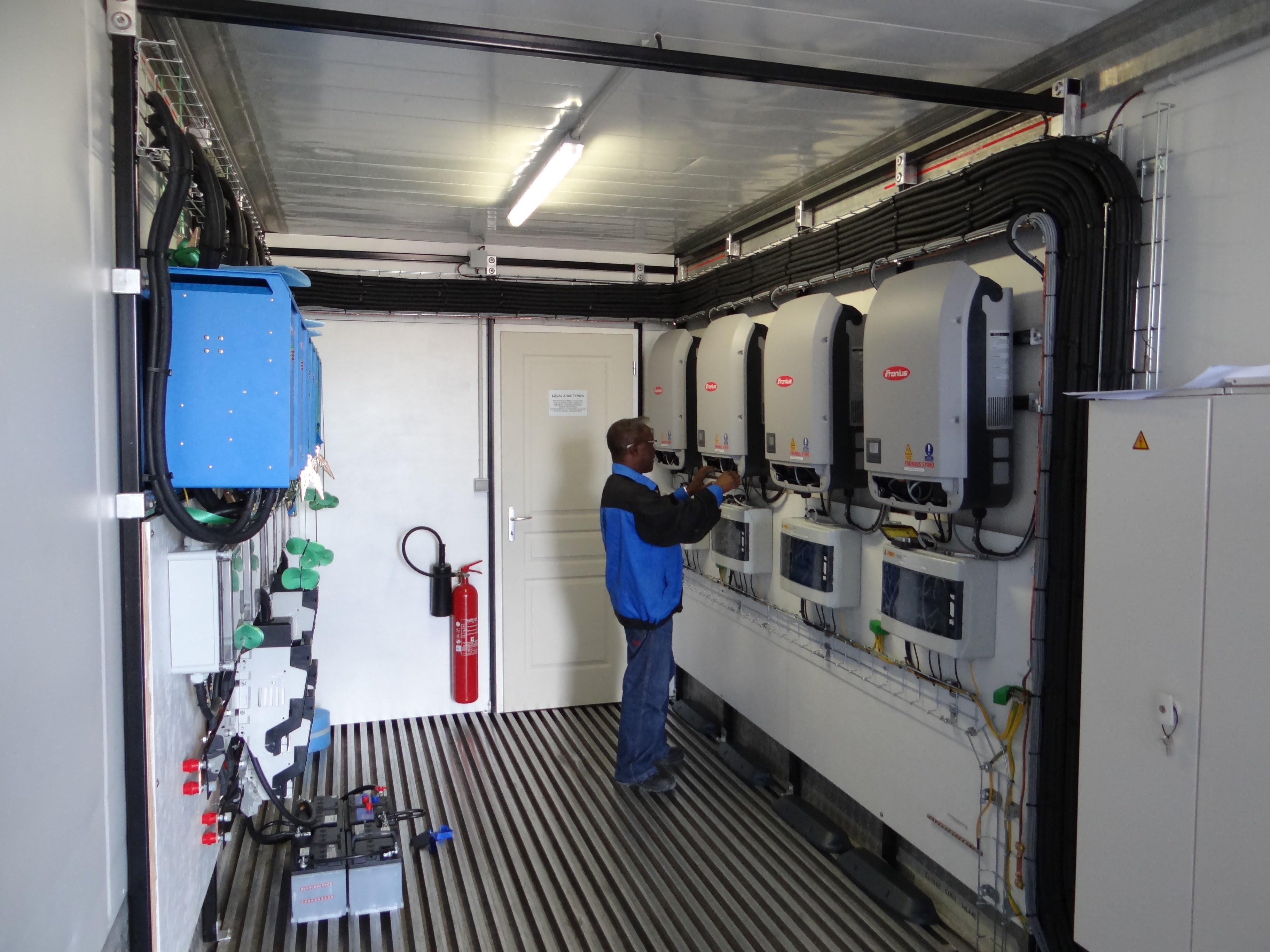
– Battery storage systems using BYD and Victron Energy technologies
– Hybrid and off-grid solar power systems
– Energy audits with Chauvin Arnoux diagnostic tools for optimal performance
Our projects are designed to provide reliable power, reduce carbon footprints, and lower long-term costs.
What Makes Nocheski Solar Different
Nocheski Solar stands out among solar power companies in Ghana because we blend European engineering standards with local knowledge. We don’t just install panels; we design smart energy systems.
Our Advantages:
– Certified partnerships with Victron Energy, Fronius, and BYD
– More than 20 years of technical experience in solar power installation
– Proven results from projects across all 16 regions of Ghana
– Clear pricing, professional maintenance, and support after installation
The Process: From Solar Consultation to Installation
Energy Assessment:
Our team conducts a detailed site audit to analyze consumption patterns and recommend the best solar capacity.
System Design:
Using advanced software tools, we model your solar power installation for maximum efficiency.
Professional Installation:
Our technicians manage every detail—mounting, wiring, and commissioning—to ensure your system performs at its peak.
Monitoring & Maintenance:
Every Nocheski Solar installation includes performance monitoring and routine checkups for long-term reliability.
The Future of Solar Energy in Ghana
In the next decade, Ghana’s solar market is set to grow significantly. With government incentives and a greater emphasis on energy independence, solar panel installations in Ghana will soon be as common as traditional power connections.
Nocheski Solar continues to lead this effort by offering world-class solutions for homes, institutions, and industrial clients looking to adopt clean energy and secure their operations for the future.
Conclusion
If you need a trusted solar installation company in Ghana, a partner for your commercial energy project, or an expert for residential solar panel installation, Nocheski Solar has the technology, experience, and dedication to meet your needs.
Join thousands of satisfied customers who have chosen Nocheski Solar and take your first step toward a brighter, greener Ghana.
Call to Action
Ready to go solar?
Visit www.nocheski.com or call us today on 0244270092 to schedule a free consultation.
Let’s power Ghana sustainably, one rooftop at a time.
Ever heard of Solar Power as a Working-From-Home Perk? Installing solar power systems is already a tedious process for homeowners, and with many of us working and learning remotely, we’re too distracted to get started. Those renting or living in states where policies have made solar power a no-go can forget about it — lower bills due to solar are a pipe dream. But as many companies scramble to keep their employees motivated and rethink perks while their employees work from home, a Washington, D.C.-based startup says it has a solution.
Arcadia describes itself as the first nationwide “digital utility” in the U.S. Since its founding in 2014, the company’s platform is now available in all 50 states and with more than 100 power utilities. Users can acquire a solar power subscription from Arcadia, buy as little as one solar panel or more, and see the results as a credit on their monthly utility bills.
Therein lies an opportunity for a company’s virtual human resources desk to offer a new benefit to employees.
It’s true that we’ve seen a decrease in emissions worldwide due to the novel corona virus pandemic; how much of a reduction varies by the sources consulted. But here’s the problem for companies: For those that are tabulating their emissions as part of their sustainability or environmental responsibility strategies, many of those emissions have simply shifted from the properties they own or lease to their employees’ individual homes. Solar power can help solve that problem.
After all, many individuals’ utility bills have bumped upward, as we’re leaving our devices charged and air conditioning units running with greater frequency — not to mention the fact we’re using our household appliances more (yes, opening that fridge door constantly as a procrastination tactic adds more to your utility bill in the long term). But with working from home becoming the reality for many through 2021, companies now have the chance to offer employees financial relief while swatting away some of their own emissions.
In a recent interview with Fast Company, Arcadia CEO Kiran Bhatraju said the company’s corporate clients so far include McDonald’s, SkySpecs and CustomerFirst Renewables. But with more companies saying that working from home for the most part ended up becoming a net positive after the initial shell shock, watch for Arcadia to win more clients as remote work is redefining the very notion of “perks.”
In Ghana, where the Corona virus has increased working from home options for many employees especially in the banking sector. Nocheski has therefore developed special packages solar packages at very competitive prices. Call 0244270092 for more information
The coronavirus (Covid-19) outbreak has caused a slowdown of China economic growth. The International Monetary Fund (IMF) has cut China’s gross domestic product (GDP) growth outlook by 0.4% to 5.6% but also alerted of further alterations, taking into account the extent and magnitude of the impact of the coronavirus outbreak.
The current scenario in the country is going to have an effect on its power demand and generation. China is a world leader in renewable energy investment. The country has proved itself as a leader in wind power installation, wind turbine manufacturing and solar photovoltaic (PV) manufacturing.
China is a leader in terms of solar PV installations and the production of solar PV panels. The country has the largest installed solar power capacity of more than 205GW, contributing more than 35% of the global installations. China’s annual installation was expected to be approximately 30GW in 2020 and the outbreak is likely to impact solar installations at the end of the year in 2020.
Globally, China is the biggest manufacturing economy, including solar PV equipment manufacturing. The solar sector is expected to face the heat, given the tight capacity in solar equipment manufacturing. Of the top ten solar PV manufacturers in terms of module shipments, the majority of them are China-based. These include Jinko Solar, JA Solar, Trina Solar, LONGi Solar, Risen Energy, GCL System and Suntech. Coronavirus-hit province Zhejiang is home to a few of Jinko Solar’s manufacturing works, the largest Solar Module Super League (SMSL), while JA Solar is also involved in manufacturing operations in the province.
KEY FEATURES Innovative solar cells Four bus-bar cell technology provides a more robust and powerful module ideal for utility scale applications Low-light performance Improved low light performance through advancements in glass technology and surface texturing Weather resistance Certified by TUV for high salt mist and ammonia resistance Strong and durable Tested and tried to endure up to 5400Pa positive and 2400Pa negative loads
Post Covid-19 outbreak, the Jiangsu province in China took the hardest hit in terms of solar PV production capacity as more than 60% of the country’s solar PV panels are made here as per the Gofa institute, a part of the Chinese government’s National Energy Administration (NEA).
The key manufacturing hubs in the Jiangsu province include Canadian Solar, LONGi Group, Trina Solar, Q-CELLS and JA Solar. Due to the outbreak, the solar power market has concerns with regards to material supply shortage and logistical restrictions due to closed borders, which could increase the price of solar modules that otherwise was rapidly plunging. The shortage will delay equipment deliveries and affect the solar sector’s global supply chain.
While the country is beginning to get back to work at a slow pace after the coronavirus outbreak, many factories have not yet started operating at a full capacity due to shortage of staff and raw materials. Solar PV manufacturers such as Trina Solar has alerted about production delays and LONGi Green has commented that there is no significant outcome on its solar PV panel sales and production and its shipment targets will also not experience any changes this year.
The NEA and the State Grid Corporation of China (SGCC) have notified about the threats coronavirus (Covid-19) outbreak poses to the power industry and the Chinese Photovoltaic Industry Association (CPIA) has recommended the Chinese government to delay connection deadlines of large-scale solar power projects on March 31 and June 30. In the current situation, late project completion will impact the amount of subsidies received.
The coronavirus (Covid-19) outbreak will affect the overall supply chain and solar installations not only in China but globally, mostly the in the US and other countries such as India and Australia, heavily dependent on Chinese raw materials and components. Many solar manufacturing plants located outside of China are dependent on Chinese imports for raw materials such as aluminium framing and solar PV glass.
With more than 75GW installed as of 2019, the US is majorly dependent on solar PV panel production from China. The country is already facing supply bottleneck since the extension in PTC and ITC granted in December 2019. The Q1 production delays due to extended Chinese New Year Holidays as a result of the coronavirus outbreak will worsen the situation for the US developers who will be forced to look out for alternative sourcing avenues.
This has led industry analysts to forecast significant fall-out for the until-now swiftly expanding clean-energy sectors, with the debate now revolving round only how damaging it will be.
n Europe, renewable energy developers and their supply chains have a put a brave — but realistic — face on the immediate impact of Covid-19.
Danish utility Orsted’s chief executive, Samuel Poulsen, assessed the utility’s development plans to be “on track so far” and Germany’s EnBW announced surging profits from renewables had carried it to meet earnings targets early, making it “rock solid” to weather the coronavirus storm.
Both, in the same breath, recognised there were “clear risks” down the road as the pandemic sweeps the globe.
Wind turbine makers have been showing themselves to be resilient, temporarily shutting down nacelle and blade plants for safety reviews, but with the sector overall seeing manufacturing levels running at 96% , according to advocacy body WindEurope.
And, based on early soundings of its membership, SolarPower Europe is sticking to its expectation that the PV build-out in the EU will not be derailed from reaching35GW by 2023.
The likelihood that this broad regional market stability would be maintained was given a shot in the arm following a statement by 27 EU heads of government in which they jointly argued that Europe’s Green Deal and longer-term energy transition strategy should be dovetailed via a “co-ordinated” approach to Covid-19 emergency measures built around the “green transition and digital transformation”.
US looks gloomier
Things look much less rosy in the US, where the pandemic has placed more than half of the wind power sector’s 44GW short-term project pipeline – and some 35,000 jobs – at risk, according to the American Wind Energy Association, while, by mid-March, the pandemic was already “taking a toll” on US solar, according to Abigail Ross Hopper, chief executive of the Solar Energy Industries Association
Bringing home the “solar power” of education Mary Andom, a graduate student in the M.A. in Applied International Studies program, writes about Jackson School doctoral student Francis Abugbilla’s journey from a village in Ghana to the UW in Seattle and back to shed light in his community and beyond.
In the dark of night, students in a rural village in Ghana huddle around a kerosene lamp to complete their homework. Others shine flashlights to illuminate textbooks. The lack of electricity, nonetheless computers, dimmed the prospects of a bright future for students in the village of Kpantarigo. This was until Francis Abugbilla, a second-year doctoral student at the Henry M. Jackson School of International Studies at the University of Washington in Seattle, brought electricity to them in the form of solar power.
“The world is technologically-driven. I want to empower the children in my community by giving them a quality education,” he said. “I don’t want the children in my village [of Kpantarigo] to lag behind the world.”
Even though his village of over 1,500 had no electricity, computers, schools or clinics, he knew from his own experience that education is the impetus for change.
Making education matter Born and raised in a small farming community, Abugbilla worked as a shepherd and began his formal education at 12. He was determined to excel. He walked nearly two hours a day to and from the elementary school in another village. The money his family scraped together paid for the kerosene to light the lamp for his studies.
“I was economically disadvantaged,” Abugbilla said. “Education was the key to change my family’s situation and my community.”
At 17, he participated in a French quiz competition in the regional capital of Bolgatanga. This day changed his life: It was the first time he saw a computer.
“At first, I thought it was a TV because of the desktop monitor,” Abugbilla laughed. “I needed to know how it worked and how I could use it.”
Later in high school, he looked over the shoulders of his classmates. He was mesmerized as they pounded keys and information magically appeared on the screen. He wasn’t confident enough to try. Until his instructor publicly shamed him.
“He said why can’t you do the basic things on a computer,” Abugbilla recalled. “My self-esteem was quite low.”
Determined to prove his instructor wrong, Abugbilla practiced typing with the help of a friend. Not long after, he bought his own Hewlett-Packard laptop as part of a scholarship he earned for his studies.
Becoming a global steward Abugbilla excelled in his undergraduate studies at the University of Cape Coast, Ghana, where he earned a bachelor’s of education in French honors degree with a minor in English. But he had his sights on coming to America. He applied to the University of Arizona, Tucson and received a full-ride scholarship.
Francis Abugbilla, a Jackson School doctoral candidate, shares solar power with students in Ghana. Pictured is Francis giving a solar lamp to one of three winners of a global affairs competition that he initiated, September 2018.
As one of five to graduate from college in his village and the only one to obtain a master’s degree, Abugbilla was determined to climb the highest rung of education.
He received six acceptances with four full-ride scholarships. But the UW’s Jackson School stood amongst the crowd.
“I chose the Jackson School because of the accelerated nature of the program. It is not like the traditional doctoral program. I wanted to experience academia and the practical side of the policy world,” he said.
Abugbilla also received the Henry M. Jackson Doctoral Fellowship, funded by the Henry M. Jackson Foundation, that annually supports a deserving doctoral student with promising potential.
Finding a meaningful solution Despite all his accomplishments, Abugbilla didn’t forget about the young people in his village.
“I had this idea of bringing electricity to my village through solar panels,” he said. “It was this daunting task. I didn’t know who to reach out to, where to turn, how would I fund this?”
Abugbilla shares a Ghanaian proverb: “The gods that look for yams for a child in the forest, will look for a hoe for digging the yams.” Where there is a vision, there is a provision, he explained.
In 2018, he found that chance thanks to the UW Marcy Migdal Fund for Educational Equality, a $1,000 fund supporting exceptional students engaged in finding meaningful solutions to global problems. With the support, Abugbilla installed a solar panel in the village school, allowing teachers to prepare lessons and students to have computer lessons and return to the school in the evening to do their homework. He also initiated an annual global studies competition in the school.The equipment installed include the Victron Energy Phoenix Inverter VE.Direct 500VA and Victron Energy BlueSolar MPPT 75/15
The Marcy Migdal fund is administered by the Center for Global Studies, which is housed at the Jackson School and is also a U.S. Department of Education National Resource Center. Students from all three campuses are encouraged to apply for the fellowship in February, with awardees announced in June.
Joel Migdal, professor of international studies who set up the Migdal fund in his late wife’s name said: “I couldn’t think of a project that my late wife, Marcy, who was an educator and social justice activist, would have found more meaningful than that of Francis’s. It brought tears to my eyes.”
Abugbilla continues to fundraise on GoFundMe to expand the solar panel project. He said he has been overwhelmed by the support he received from UW students, professors and others in the community.
“The Marcy Migdal fund was the tool to get me to dig the yam,” Abugbilla beamed. “It was the opportunity that opened more opportunities for me.” Tamara Leonard, Managing Director of the Center for Global Studies, added that the project exemplifies the kind of work that the Fund is intended to support.
Teaching others at UW and beyond Shortly after initiating his solar power project, Abugbilla was invited to and participated in the Clinton Global Initiative University Annual Conference at the University of Chicago, an event honoring student leaders dedicated to addressing pressing challenges in the world. He also recently served as the keynote speaker for the 2019 Africa Now Youth Leadership Conference, an organization based in Seattle dedicated to inspiring African youth. In June 2019, he will attend the Global Youth Advancement Summit at the Michigan State University to talk about his solar power project.
Thanks in part to support from Carnegie Corporation of New York, in winter 2020 Abugbilla will help teach a course in the Donald C. Hellmann Task Force Program, an experiential learning capstone for undergraduate international studies majors. The Task Force, on energy interventions in Sub-Saharan Africa, will be led by Danny Hoffman, a professor in anthropology at the UW.
While Abugbilla plans on continuing his research at the Jackson School with a focus on peace, violence and security, his heart is still in Ghana.
“The goal is to electrify the schools with solar power and then scale it up to the entire community,” he said. “It is important that people take their destiny into their own hands and effect the needed change in their lives. I want to spur them into thinking innovatively and outside the box.”
As just one of five in his village and in his family to graduate from college, and the only one to earn a master’s degree, Abugbilla is well on his way to propelling his community with solar power and the world forward.
Interested in learning more or supporting Francis’s “Empower Kids Through Technology” project? Click here.
About the author Mary Andom is a graduate student in the master’s in applied international studies program at the UW’s Henry M. Jackson School of International Studies and has a keen interest in immigration and national security issues. She spent eight years working in multinational environments in Germany, Hungary and Kyrgyzstan as a Non-Commissioned officer in the United States Air Force. Prior to enlisting in the military, Mary worked for various news organizations as a reporter and columnist for The Seattle Times, Seattle Post Intelligencer and The Chronicle of Higher Education.
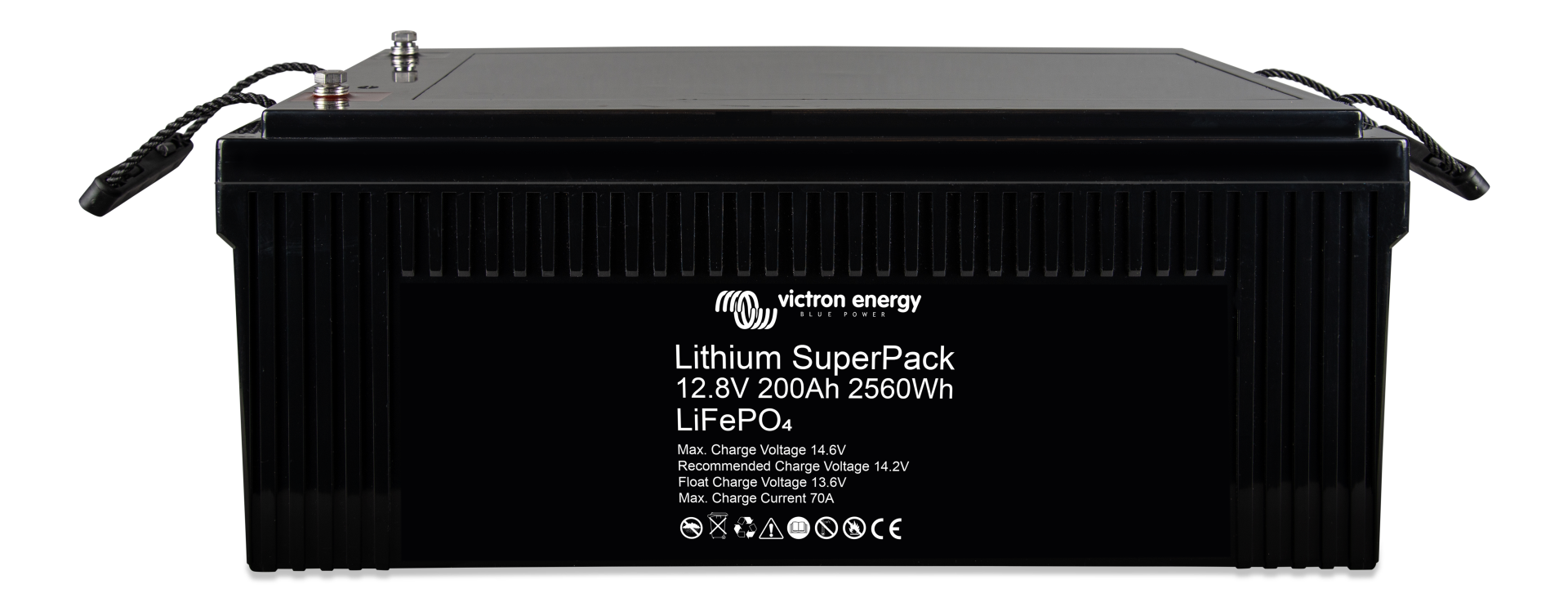
Lithium SuperPack batteries – an all in one solution .These new Lithium-Ion, LiFePO4 chemistry batteries are often an ideal replacement for many 12V and 24V marine, automotive, caravan, motorhome, work vans and similar battery applications. It might even be for an overland motorcycle if using the smallest 20Ah version; to recharge a camera, phone or laptop for instance.
Other examples – take a typical small boat or van which may have a 110Ah to 220Ah lead-acid leisure battery for light continuous loads such as lighting, laptops, phones, instruments, powering a diesel heater, a fridge etc. And for shorter term loads maybe add a small inverter to charge power tools, run a small microwave or travel kettle for example. Using one SuperPack battery it matches well with the Phoenix Inverter VE.Direct 250VA – 1200VA range. Maybe you’ll add in around 100 to 200Wp of solar panels too using a small MPPT.
Regardless of the use, whichever SuperPack you choose it’ll be lighter than lead, can be smaller if you wish or give you more Wh in the same space – plus give you around 5 times the cycle life.
The main difference to Victron’s other lithium (often more kWh) offerings are the SuperPacks keep everything in one package, by having an integrated BMS and safety switch built-in. No additional components are needed as the internal switch will disconnect the battery in case of over discharge, over charge or high temperature. Simple, compact and safe.
If you are considering a new battery don’t immediately discount Lithium as being too costly. Whilst it is true that the capital cost of Li-ion is greater than that of quality AGM or Gel batteries – it is also true that the cost of ownership can be less than lead acid types. Much depends on your application, but rest assured – life with Li-ion is far less hassle than lead.
Over the last 8 years on my sailing yacht I’ve run AGM lead leisure batteries and Lithium-Ion propulsion batteries. Initially it was AGM for propulsion before discovering the effectiveness of Lithium. That journey taught me a lot about loads, capacity, cost and battery life – it’s one of the reasons why I think we’ve reached a tipping point and why these new SuperPack batteries may just be the ticket for your next project or battery replacement.
If in the first instance you are unfamiliar with AGM vs Lithium, then here’s a blog that explains that.
When to use a SuperPack?
Every battery size and type has it’s own particular use. For instance you may use the Lithium battery 12,8V & 25,6V Smart and the Lithium battery 24V (LiFePO4 & NMC chemistries) ranges (all of which have an external BMS) in quite different applications to the new SuperPack range. So, where to use the SuperPacks?
When it comes to replacing lead acid type batteries such as AGM and Gel in many applications, the SuperPack range can be considered the next generation after lead – making it far easier to replace lead with lithium. The only caveats being replacement is down to certain parameters being met, namely – Capacity (Ah), Voltages (12.8V & 25.6V), Discharge and Charge currents (C rates). Do in that case be sure that your chosen replacement fits your criteria by checking the datasheet and be aware the SuperPacks can be connected in parallel, but not in series. Hence in that case you would consider the other Victron lithium products named above.
The Lithium SuperPack
Victron Energy’s recently introduced Lithium SuperPack range comes in the following capacities and voltages:
These SuperPacks will give you 2,500 cycles to 80% depth of discharge at 25°C, much more than lead.
Comparison: SuperPack 60Ah LiFePO4 vs 90Ah AGM
Let’s compare the 60Ah Li-ion to say a typical 90Ah AGM battery discharged to the commonly accepted economic cycle life of 50% discharge for lead. That would give us 600 cycles at that DOD for the AGM compared to 2,500 at the even deeper discharge of 80% for the LiFePO4. Already you can see you may need to replace your lead-acid type battery 2 to 4 times as often as the Lithium. Of course loads, operating conditions and calendar life have to be factored in too. Regardless you get the idea – Lithium does more and lasts longer.
The benefits of Lithium don’t stop there though. Whilst LiFePO4 chemistry is considered the safest of them all, it’s worth considering other factors too to decide whether the reduced weight and volume of say NMC is of more importance for your application than LiFePO4 for example. Victron Energy do both types. These star graphs do a good job of explaining the differences: https://batteryuniversity.com/learn/article/types_of_lithium_ion
60Ah SuperPack
90Ah AGM
Weight
9.5kg
27kg
Size (mm)
229 x 138 x 213
350 x 167 x 183
Useable energy @ 25°C
614Wh
540Wh
Cycle life
2,500 cycles
600 cycles
Cost
x 2.5 (approx)
x 1
Notes for the table above:
Useable energy and cycle life are based on 80% depth of discharge for Li-ion and 50% for AGM, these being considered the most economic use of those battery types.
Higher loads with lead will further reduce available Wh (Peukert’s Law) when compared to Li-ion.
Capacity is also reduced for both types by temperatures below their 25°C temperature rating (see their respective datasheets)
Make what you will of the above and whilst you are pondering the pros and cons don’t forget to take these additional factors into account for the comparison above.
Shipping: If you are replacing your lead from 2 to 4 times as often as Li-on and the fact that the lead weighs around 3 to 4 times as much (depends on Li-ion chemistry used) – then do consider the extra shipping costs.
Voltage stability: The voltage profile is far flatter for Li-ion compared to lead.
Voltage sag: Subject to the load, voltage sag with lead is significant compared to Li-ion.
Li-ion has much faster charge times and if charging from a generator it saves on generator runtime.
Other factors to consider
Is the above enough to convince you of why Lithium might be a better alternative than AGM or indeed Gel? Personally I’m sold on Lithium, but if you are not here’s a few things further to consider:
A lead-acid battery will fail prematurely due to sulfation if it operates in deficit mode for long periods of time (i.e. if the battery is rarely, or never at all, fully charged). It will also fail early if left partially charged or worse, fully discharged.
By comparison a Lithium-Ion battery does not need to be fully charged. This is a major advantage of Li-ion compared to lead-acid which needs to be fully charged often to prevent sulfation.
Efficiency. In several applications (especially off-grid solar), energy efficiency can be of crucial importance. The round-trip energy efficiency (discharge from 100% to 0% and back to 100% charged) of the average lead-acid battery is 80%.
The round-trip energy efficiency of a Li-ion battery is 92%.
The charge process of lead-acid batteries becomes particularly inefficient when the 80% state of charge has been reached, resulting in efficiencies of 50% or even less in solar systems where several days of reserve energy are required (battery operating in 70% to 100% charged state).
In contrast, a Li-ion battery will still achieve 90% efficiency even under shallow discharge conditions.
Make the switch?
Are you ready to make the switch from Lead to LiFe? If you’ve considered all the above I suspect you might be. And if you need more useable Ah why not run the sums on say a 100Ah Lithium SuperPack vs 220Ah AGM using the process I have above. Or indeed a 200Ah Li-ion SuperPack vs your choice of lead.Lithium SuperPack batteries – an all in one solution
Don’t forget too that Lithium has little or no Peukert effect when compared to Lead types. This is especially important when considering loads with lead-acid higher than 0.05C (Battery Ah divided by 20 or Ah multiplied by 0.05). In other words for a 100Ah AGM with a Peukert of say 1.15 or more and discharging at 0.25C (25 Amps in this case – which is 5 times the 20 hour rate) there will be significant reduction in capacity – as there will be at colder temperatures too. Li-ion has a Peukert of around 1.05 when compared to lead of around 1.15 to 1.25.
So – if you were discharging that 100Ah lead at 5 Amps (the 20 hour discharge rate at a temperature of 25 degrees centigrade) then the full capacity of 100Ah is still availaable and it’s not shrunk due to Peukert. But now if it were 0.25C, it’ll be around 80% of that original 100Ah capacity – or less, subject to load type and duration.Lithium SuperPack batteries – an all in one solution
The bottom line is you no longer have the Ah you purchased, whereas with Lithium there is little to no effect, helped by a lower Peukert and good voltage stability. That is especially important with constant inverter loads – a place where lithium shines. If you want to learn more about Peukert and run a spreadsheet to see such effects, then I have found this link most helpful.
Finally and one I’m always grateful of is vastly reduced charge times, no more waiting for hours of lead absorption charging to get from 80% to 100% SOC. Conversely Li-ion flies up to around 98% SOC in bulk with those last few percent in absorption to fully balance the cells – and unlike lead you don’t always have to fully charge to 100% as often. Note that your 12V charging system needs to accommodate 14.2V – 14.4V ‘absorption’ and ‘13.5V’ float. If charging from an alternator also note the maximum continuous charge currents for the 12.8V range, by checking the datasheet.
Downsides
Not wanting to sound too evangelical, we also need to consider the few downsides of Li-ion.
Higher upfront cost and to some extent higher capital risk.
Charging is restricted to the +5°C to +45° range, subject to an internal means of blocking the charge source when the temperature is below +5°C. Note this is currently automatically possible with Victron MPPTs when used in conjunction with the Smart Battery Sense for instance. Other products are being worked on to achieve this too and documentation to that effect will be updated in due course.
The SuperPack (unlike other Victron Lithiums) is not designed for series connections.
The peak and maximum continuous discharge current of the SuperPack range is not as much as some of our Lithium batteries as its related to the BMS and the disconnect being internal to the battery – so do check the datasheet to make sure the current peak and discharge ratings suit your needs – or choose from the Lithium battery 12.8V & 25.6V Smart or the Lithium battery 24V range or build a parallel SuperPack bank.Lithium SuperPack batteries – an all in one solution
Conclusion
Whatever your decision when purchasing new batteries, maybe it is time to give the Lithium SuperPack batteries a chance. There’s LiFe after Lead you know – but as I’ve shown that all depends on what you want to achieve. Is it less weight, less volume, maybe it’s capacity or voltage or any of the multitude of factors that go into choosing a battery system.Lithium SuperPack batteries – an all in one solution
Siemens partners WestPark for industrial park in Takoradi
Siemens has announced it has signed a Memorandum of Understanding (MOU) with WestPark Enterprises to develop an expandable microgrid solution for the fast-growing industrial and business park based in Takoradi, Western Ghana.
The Westpark aims to eliminate many of the challenges faced by companies doing business in Sub-Sahara Africa, such as access to reliable power, water, broadband internet and transport.
The new industrial park is poised to accelerate the transformation of Takoradi – Ghana’s third-largest city.To lay the foundations for reliable, competitive and efficient energy, WestPark has entered into a partnership with Siemens.
As part of the agreement, Siemens will develop a 250kW microgrid that controls the energy generation for the initial phase of buildings to be constructed at WestPark.
Siemens will design the microgrid so that the first phase of WestPark can be powered entirely by renewable energy and therefore provide a sustainable and cost-effective solution for tenants.
On-site photovoltaic panels will power the microgrid and a back-up battery storage solution will be sourced as well.
The grid can be expanded as more buildings are added with the aim of ensuring that the park remains powered by renewable energy.
According to Sabine Dall’Omo, CEO of Siemens Southern and Eastern Africa, “This project is perfectly in line with Siemens’ vision for future business in Ghana and other African countries. As a company, we are continuously looking for new responsible and efficient energy and infrastructure solutions, and our collaboration with WestPark is a good example of how we can support partners with similar goals.”
Siemens is specifically committed to economic growth across Africa, and in doing so in a forward-thinking manner by implementing environmentally sustainable solutions that will help its partners and customers succeed in today’s environmentally-conscious global market.
Siemens AG is a German conglomerate company headquartered in Berlin and Munich and the largest industrial manufacturing company in Europe with branch offices abroad. The principal divisions of the company are Industry, Energy, Healthcare, and Infrastructure & Cities, which represent the main activities of the company.
The fronius range of inverters are very suitable for grid-tie solar power systems and are currently being deployed all over the country by Nocheski solar
Ghana:Organizations to shift to solar net metering system
Mr Kwabena Otu Danquah, the Head of Renewable Energy Promotion of the Energy Commission, has advised organisations to shift to the solar net metering system to save them from getting into the higher consumption rate bracket.
He said net metering was a mechanism that fed the national grid with surplus solar energy from households while assisting them to save cost and urged consumers to take advantage of it.
He said the Energy Commission, in collaboration with the Electricity Company of Ghana, had installed 35 net metering systems in various homes in Accra on a pilot basis.
“We are waiting for the Public Utilities Regulatory Commission (PURC) for the gazette to ensure that the new solar metering system fully takes off in Ghana,” he said.
Mr Danquah said the Energy Commission had created the enabling environment to ensure the attainment of enough renewable energy targets by 2020.
grid-tie solar power system with battery bank using victron and fronius systems
He said by the provision of the Renewable Energy Act 2011, 832, the Energy Commission, in collaboration with the Ghana Standards Authority, would enforce the law on the importation of renewable energy products that would meet good standards and certification.
He said: “The solar technology we know are perfect but the installation is the problem, hence the need for the Energy Commission to license all electricians and develop a training curriculum to train technicians to ensure good certification of solar.”
Mr Emmanuel Aziebor from the Netherland Development Organisation, a resource person, urged stakeholders in the solar industry to come out with substantive business models to convince the microfinance companies to invest in solar energy.
He advised the technical experts to support and sustain the technology whilst training more technicians on it.
Mr Aziebor said: “We need to have people prepared, trained and exposed to solar energy while looking at the local production of the products in future.”
Mr Eric Omane Acheampong, the President of AGSI, advised the members to develop activities on networking to enable them to assess their progress while sharing knowledge.
Mr James Robinson, the SNV Leader for Energy Sector, Ghana, gave the assurance that the SNV would continue to facilitate the activities of AGSI to sustain and promote solar energy in the country.
Solar PV Power Paradigm Shift- The Ghana case.I am not that kind of a man, but I have been in the company of other men who in the midst of challenges rather saw them as opportunities to change the paradigm.
I strongly believe that very few energy planners and experts would disagree that Energy Independence for Ghana is an important, even urgent, goal.
But the question remains, is shifting the energy paradigm realistic; and if so, how?
And do our politicians and related institutions have the needed passion and spirit to embrace the new paradigm in our energy sector?
In recent years it has become so glaring that the conventional energy paradigm (fossil fuel tradition) has rapidly lost ground in comparison to the concept of Sustainable Development, as it is based on the intensive use of non-renewable fossil fuels — causing environmental degradation and posing Global Energy Security Risks.
Thus, a modification in our energy paradigm is necessary for our energy independence. A paradigm shift in the goals of energy policy should take place: toward independence, security of supply and climate change. Transition to a sustainable energy system is one of the critical challenges humankind faces in achieving energy independence in the new millennium.
Ghana is a country that has unbelievable solar energy potential; but, sadly, solar energy sources contribute only 0.1% (on-grid+ off-grid) of the total installed capacity for the total installed power capacity of 2104.5 MW in Ghana. (VRA: Facts & Figures).
Some people may say I am overly obsessed with the idea of solar energy for our small but incredibly energy-resource-rich nation.
It’s true – I am! But is it practical for Ghana to actually pursue this objective?
Talking of our potential, Wa — capital of the Upper West Region — has the highest level of solar irradiation (5.524 KWh/m2-day) across the country.
May is the month with the highest solar irradiation (5.897 KWh/m2-day), with August recording the lowest measurement (4.937kWh/m2-day) in Wa.
Akim Oda, conversely, is the location that records the lowest radiation (4.567kWh/m2-day) measurements across the country.
The highest measurement in Akim Oda was recorded in the month of April (5.176kWh/m2-day) and the lowest in August (3.802kWh/m2-day). See Table 1.
As a nation we are blessed with daily sunshine that averages 5 hours, which ranges between about 7 hours and 4 hours for the northern and southern regions of the nation respectively. Ghana also has annual average daily solar radiation of about 4.5 to 5 KWm2/day.
Table 1: Summary of Solar irradiation in kWh/m2-day – SWERA Report
Synoptic Station
Ground
(kWh/m2-day)
Satellite
(kWh/m2-day)
% Error
Kumasi
4.633
5.155
-11.3
Accra
5.060
5.180
-2.3
Navrongo
5.505
5.765
-4.7
Abetifi
5.150
5.192
-0.8
Akuse
4.814
5.58
-15.9
Wa
5.520
5.729
-3.7
Akim Oda
4.567
5.177
-13.3
Wenchi
5.020
5.093
-1.5
Ho
5.122
5.223
-2.0
Kete Krachi
5.280
5.345
-1.3
Takoradi
5.011
5.200
-3.8
Yendi
5.370
5.632
-4.8
Bole
5.323
5.570
-4.6
Anti-islanding made easy: the anti-islanding box The anti-islanding box is a complete pre-wired and easy to install requured by law in certain countries for net meteringinstallations
Assuming we are to use only 23,854km² which is 10% of the total land area (238,585 km²) of Ghana to harness the sun’s energy with PV panels of 15% conversion efficiency, then Ghana would harvest 4,114 TerraWattHours of energy per year.
This amount is equal to 2.42billion barrels of oil.
Consequently, if we juxtapose this amount with our current oil production in the Jubilee Field, then it is about 27 times the current crude oil production of Ghana per year.” See Chart A on Ghana PV Output.
In Ghana, Solar PV applications are gradually receiving acceptance in most places. However, despite improvements in local Research and Development (R&D) efforts, the body of knowledge on these technologies and their market potentials is considerably inadequate.
Launching major national initiatives on these technologies — such as the President’s 200,000 solar rooftops for households — requires a robust knowledge base and capacity.
In all, PV technologies are showing increasing promise in terms of efficiency improvements and cost. The estimated lifetime of PV modules are 25 years, and this makes them exceptionally attractive for investors.
The victron 500va phoenix offgrid inverter is excellent for small offgrid solar installations.its connectible to both Apple and Android smartphones, tablets, macbooks and other devices (VE.Direct Bluetooth Smart dongle needed)
Today, except for the Solar PV Panels produced in Kpone-Tema by Strategic Power Solutions (SPS) — a subsidiary of Strategic Security Systems International Limited, almost 80% the PV modules on the Ghanaian market are imported.
Solar PV systems can be extensively used for a wide range of electrical energy requirements: including solar home systems, water pumping, refrigeration and telecommunications that will reduce the load curve of electricity demand.
It has been estimated that solar rural electrification is about 30% cheaper than the cost of grid extension to rural communities that are about 18 to 20km from the nearest grid station.
However, there are still economic and institutional obstacles that limit this ability to self-generate power. For instance, while it is practical to install solar panels on a home, it is more difficult to scale-up these systems for commercial and industrial-sized projects. Scale is a critical issue in energy generation, as with scale comes lower project costs and greater efficiency.
For privately distributed generation projects, both small and large, to make greater contributions toward our national energy independence, there needs to be continued evolution of the bold policies that first introduced grid-connection rights and net metering in our renewable energy act.
The government must as a matter of urgency assist all consumers anywhere in the country to benefit from the net-metering incentive for solar power consumers. Again, due to the high upfront cost, government must establish a renewable energy revolving credit fund whereby solar consumers can borrow money to finance solar systems without making large up-front payments and without paying high interest rates to banks or private financiers.
Also, the PURC must establish a coherent pricing tariff for distributors to buy power from private solar-farm developers. This could unlock an untapped source of clean, reliable, economical power for Ghana.
While not easy to accomplish, these advances are achievable – and, importantly, they don’t need to cost the tax payers any money. However, they depend on the political will and leadership of our energy-sector authorities.
This an original story by Maxmillian Kwarteng and has been featured on BFT online

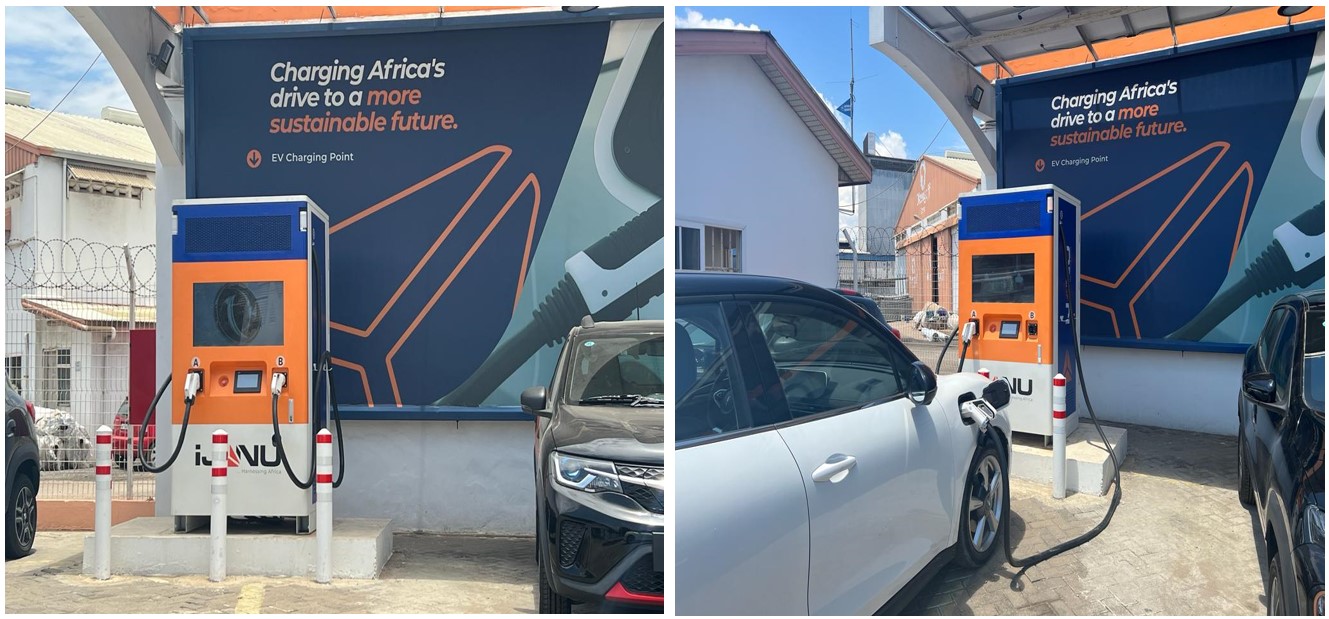


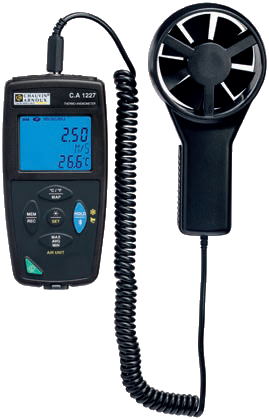
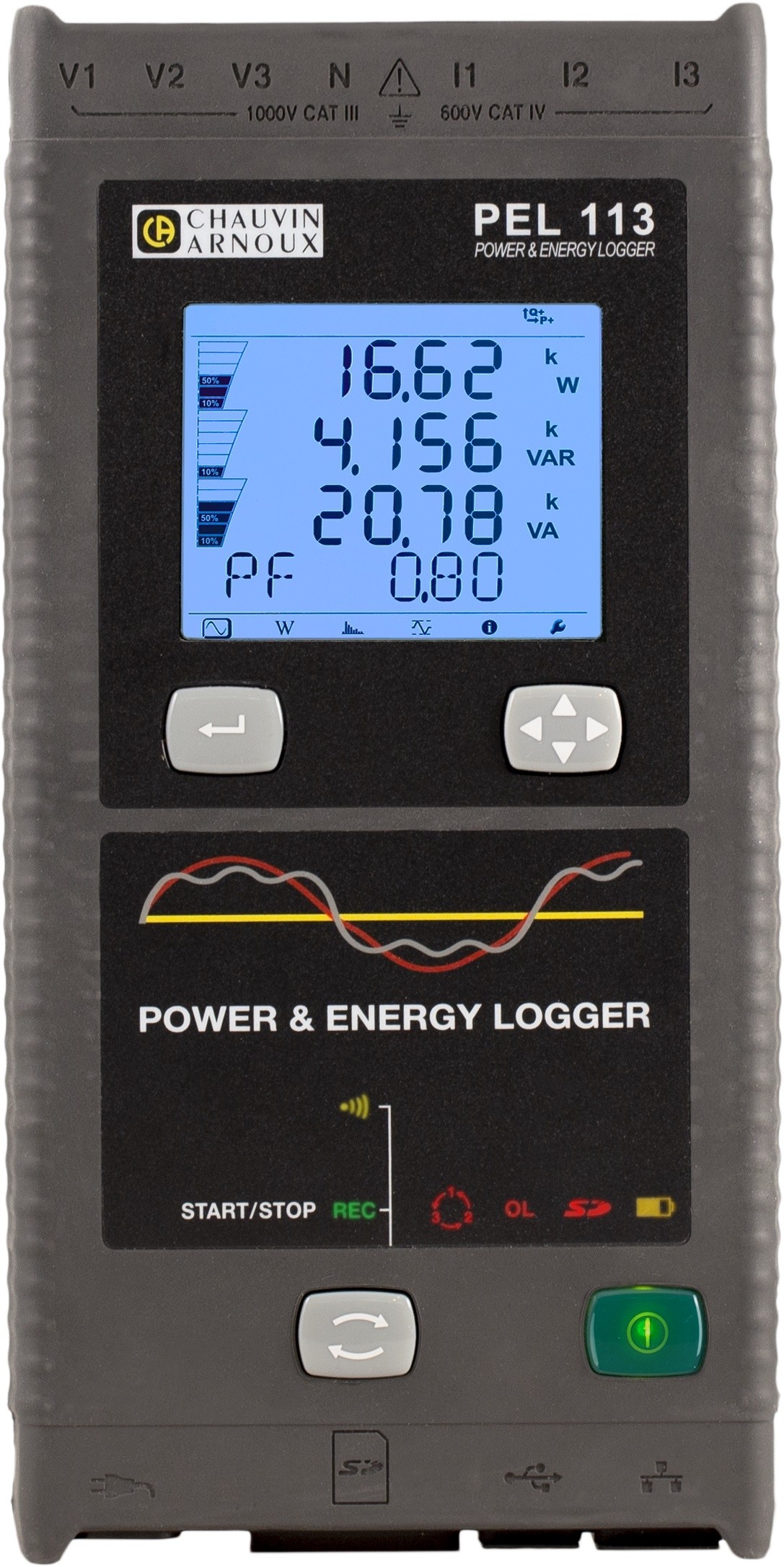
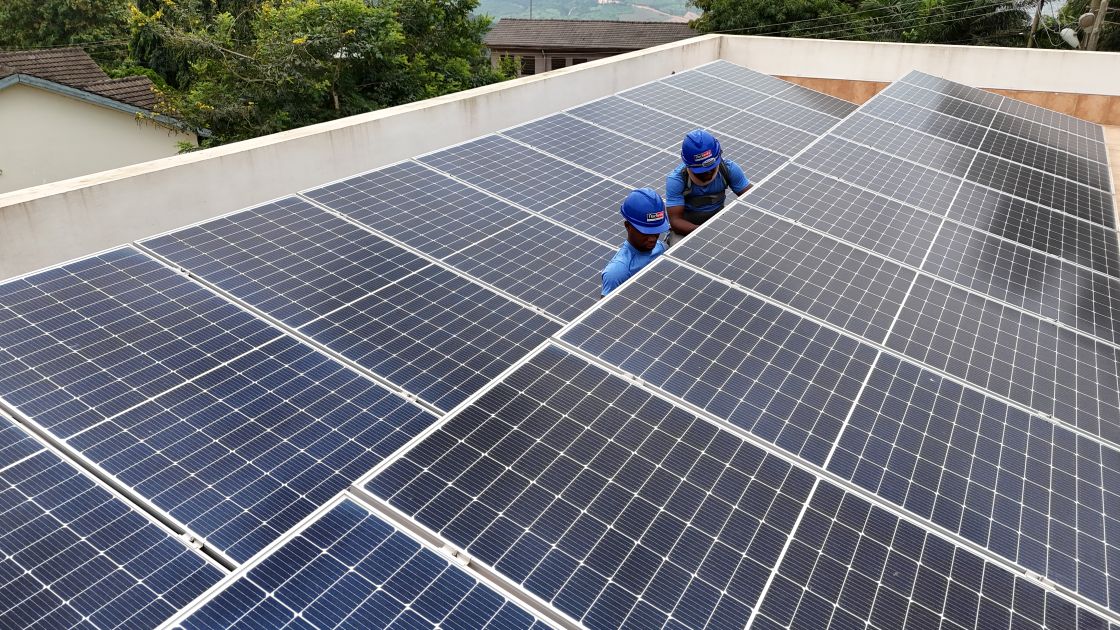


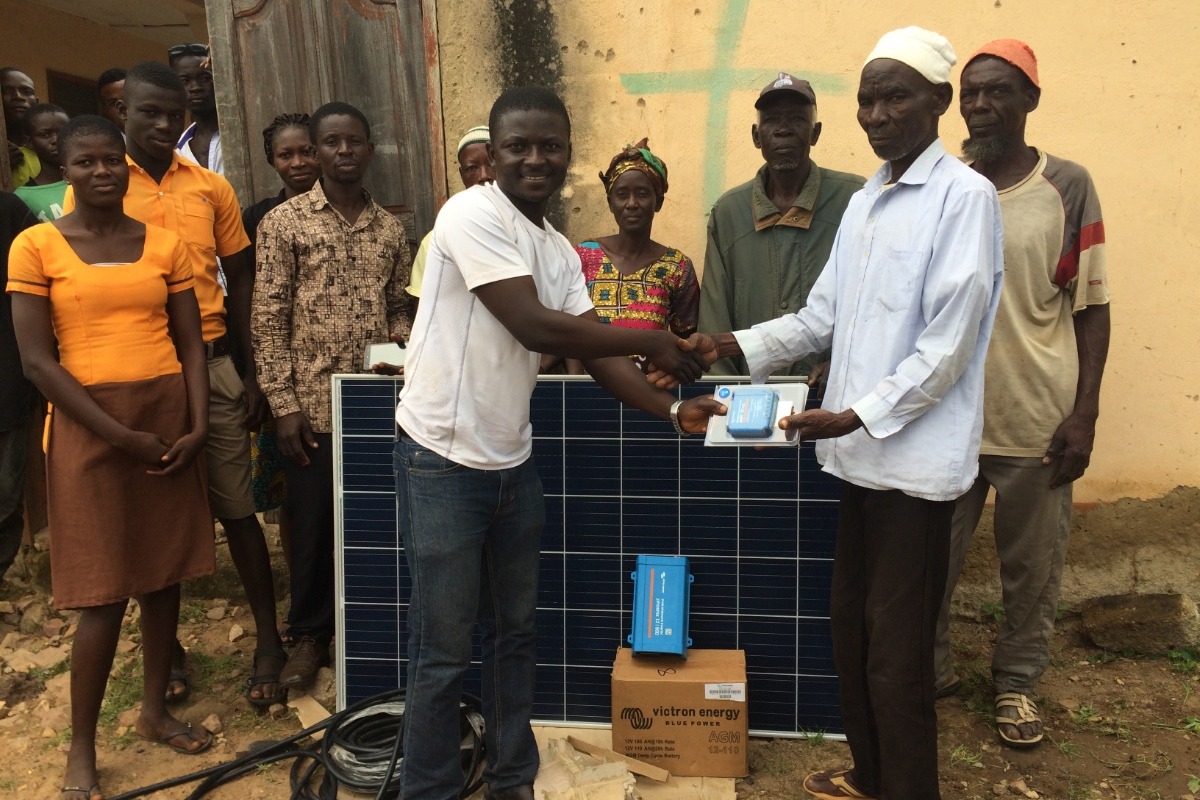

 Mary Andom is a graduate student in the master’s in applied international studies program at the UW’s Henry M. Jackson School of International Studies and has a keen interest in immigration and national security issues. She spent eight years working in multinational environments in Germany, Hungary and Kyrgyzstan as a Non-Commissioned officer in the United States Air Force. Prior to enlisting in the military, Mary worked for various news organizations as a reporter and columnist for The Seattle Times, Seattle Post Intelligencer and The Chronicle of Higher Education.